
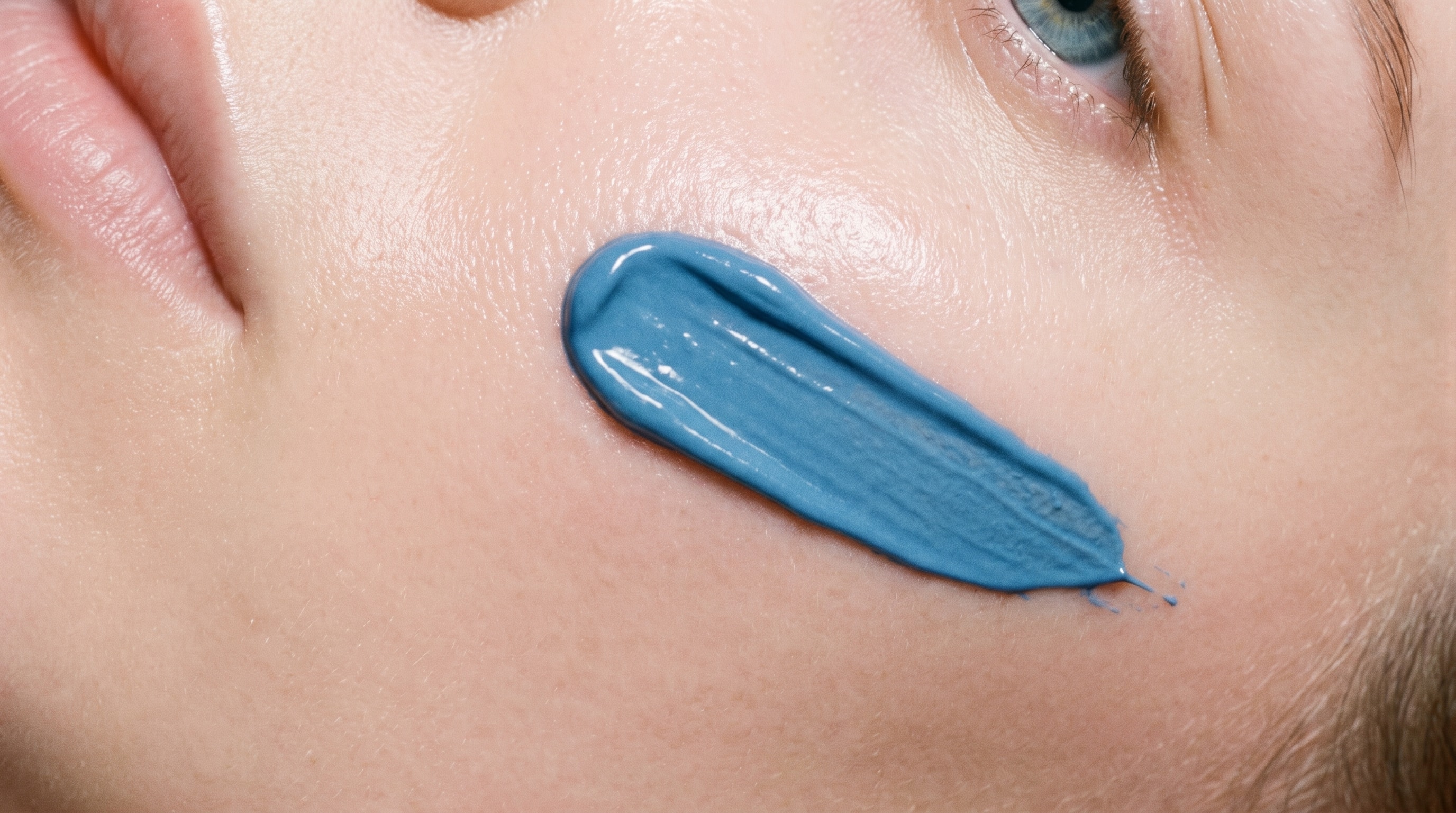
Choose the 4% cream for copper-peptide renewal across facial and neck skin. It matches the route used in human cosmetic studies that measured firmness, density, thickness, laxity, wrinkles, pigmentation, clarity, and texture over multiweek use.
The short answer
GHK-Cu is a three-amino-acid peptide bound to copper. Researchers have examined it in skin remodeling, collagen and elastin biology, antioxidant systems, inflammatory signaling, and repair. Small human topical studies described changes in skin density, thickness, firmness, laxity, wrinkles, pigmentation, and texture.
Rebody's available skin product is a 4% GHK-Cu cream in a 30 g package designed for facial and neck application. Each package is a 30-day supply; apply it as your label directs.
The skin product at a glance
| Product fact | GHK-Cu 4% cream |
|---|---|
| Active | GHK-Cu |
| Concentration | 4% |
| Form | Topical cream |
| Intended area | Face and neck under final prescription directions |
| Package | 30 g cream |
| Storage | Per pharmacy label |
| Human evidence lane | Small topical cosmetic studies |
| Status | Available · $79.50 first month, then $159/month |
The cream is not interchangeable with a scalp solution, oral troche, or hidden injectable product. Shared ingredient initials do not erase route, concentration, vehicle, package, or safety differences.
What GHK-Cu is doing in skincare
GHK stands for glycyl-L-histidyl-L-lysine. The peptide binds copper ions, creating GHK-Cu. Copper is involved in enzymes relevant to connective tissue and antioxidant defense, while the peptide has been studied as a biological signal in repair environments.
Laboratory and tissue research links GHK-Cu with fibroblast activity, extracellular-matrix remodeling, collagen and elastin production, glycosaminoglycans, inflammatory pathways, and antioxidant activity. The useful question is whether a topical product can create visible change in people.
That is why topical human studies matter more than a large catalog of cell findings. The decision comes down to skin, route, routine, and measured cosmetic endpoints—not a sweeping claim that the peptide “regenerates the body.”
What human topical studies measured
A 2015 review describes a 12-week facial study in 67 women aged 50 to 59 with mild to advanced photodamage. The review reports that twice-daily GHK-Cu cream use improved measures including laxity, clarity, firmness, appearance, fine lines, coarse wrinkles, mottled pigmentation, skin density, and thickness.
The same literature summarizes other small topical studies, including a 12-week facial-cream study in 71 women and an eye-cream comparison. Reported endpoints included skin density, thickness, collagen production, wrinkles, pigmentation, and laxity.
These studies make topical GHK-Cu more than a mechanism-only skincare idea. They connect copper-peptide biology to visible human skin measures across 12-week topical routines. Rebody's exact 4% finished formula was not the product used in those reports.
Cream, serum, and scalp solution are different products
A cream has a richer vehicle that stays on facial and neck skin differently from a watery serum. Those are practical differences, not proof of superior absorption.
Cosmetic copper-peptide serums vary widely in percentage, peptide identity, pH, preservatives, packaging, and accompanying ingredients. “Copper peptide” on a label does not establish that the product contains the same active, concentration, or evidence base.
The planned GHK-Cu hair solution is a refrigerated 50 mL scalp product in 0.5% and 3% strengths. Keep the scalp solution separate from the face cream: swapping them changes application, coverage, hair residue, and prescription use.
Who the cream is for
This cream is for someone who wants a copper-peptide topical for skin that looks less firm, more textured, or more visibly weathered. It is especially coherent for a person who values a cream routine.
Choose GHK-Cu for copper-peptide biology centered on firmness, density, thickness, laxity, wrinkles, pigmentation, texture, and visible renewal. The cream format also avoids the familiar peel-redness-restart cycle that can make retinoid routines hard to sustain.
Retinoids remain a distinct vitamin A turnover category with a larger publication record. That is one comparison dimension, not the verdict on which routine is more compelling for every person.
How to judge visible change
Skin changes should be photographed under repeatable conditions: clean skin, same time of day, same camera, same distance, same light, and no makeup or temporary plumping mask. Front, three-quarter, and side views show different texture and laxity patterns.
Track dryness, stinging, redness, breakouts, pilling, and the products layered around the cream. If vitamin C, acids, retinoids, exfoliants, and GHK-Cu all change at once, neither improvement nor irritation has a clear cause.
The published facial studies used 12-week windows, which is why a three-day verdict is meaningless. Track the visible skin concern under consistent lighting over the assessment period supplied with the treatment plan.
Retinol, vitamin C, acids, and layering
Searchers repeatedly ask what should not be mixed with copper peptides. Formulation compatibility depends on the exact products, their pH, active forms, and application schedule. A generic rule copied from a cosmetic brand is not a prescription instruction.
Do not mix the finished cream into another jar or combine it in the palm with acidic vitamin C, retinol, or exfoliating acids unless the directions explicitly allow it. Alternating morning and evening or separate nights may be simpler when several strong actives are used, but the final plan should name the actual products.
Pilling is not proof that the peptide failed. It often reflects incompatible textures, too much product, or insufficient drying time. Persistent burning or dermatitis is different and deserves stopping rather than more layering experiments.
Application and pump troubleshooting
Follow the dispensing label for amount, frequency, and application area. Face and neck are the intended areas; “one pump,” “pea-size,” and twice-daily rules are not universal.
A pump may require initial presses before it dispenses. Follow the package's priming instructions, and do not open the pump, add water, or transfer cream to a jar if output slows.
Keep product away from eyes, mouth, and broken or infected skin unless the prescription says otherwise. Wash hands after application. If the pump cracks, leaks, or dispenses separated material, check the package before continuing.
Storage, shipping, and travel
The 4% cream follows the storage directions on its pharmacy label. Avoid freezing; direct contact with a frozen gel pack can damage a product.
For travel, keep the cream in its labeled package and follow its storage directions. Do not decant it into a travel pot. If a shipment arrives damaged, report the delivery timing and package condition before using it.
Color is not a potency test. GHK-Cu's blue identity can be visually distinctive, but a brighter or darker blue does not certify concentration, purity, or stability.
Side effects and reasons to stop
Topical creams can cause redness, itching, burning, dryness, swelling, hives, acne-like breakouts, or contact dermatitis. Stop and seek prompt help for facial swelling, breathing difficulty, blistering, spreading hives, eye exposure with persistent symptoms, or signs of infection.
Patch testing can be useful when it matches the dispensing instructions; it does not override the prescription label. Pregnancy, breastfeeding, copper-handling disorders, active dermatologic disease, and simultaneous prescription topicals need product-specific review.
Do not use a facial cosmetic study to justify putting the cream on open wounds, surgical incisions, or severe dermatitis. Skin-repair biology is not an instruction to medicate damaged skin.
Price, supply, and refills
The 30 g cream is $79.50 first month, then $159 per month, and each package is a 30-day supply.
Before starting, confirm package price, expected supply, refill cadence, and shipping. These facts decide whether a cream routine can be continued long enough to assess.
The cream is available at $79.50 first month, then $159 per month. The product page shows ordering status; the dispensed label provides the prescribed directions and storage.
Questions people ask
What skin changes did topical GHK-Cu studies report?
Twelve-week topical studies reported changes in fine and coarse wrinkles, firmness, laxity, density, thickness, pigmentation, clarity, texture, and overall appearance.
Is 4% a strong concentration?
It is the confirmed concentration of Rebody's available cream. No direct trial has established that a larger percentage would produce a larger visible result.
Why choose GHK-Cu instead of retinol?
Choose GHK-Cu for copper-peptide skin renewal, a cream-first routine, and measured firmness, density, thickness, texture, wrinkle, pigmentation, and laxity endpoints. Retinoids work through vitamin A turnover and bring a different irritation profile.
Can it go around the eyes?
Use only in the areas named by the dispensing label. A separate published eye-cream study does not authorize Rebody's facial cream near the eyes.
Does GHK-Cu need refrigeration?
Follow the storage directions on the pharmacy label for this 4% cream. Cosmetic copper-peptide products may have different storage instructions.
Bottom line
Topical GHK-Cu is the strongest route in Rebody's copper-peptide skin story, and the 4% cream is the clearest product. It puts GHK-Cu into a 30 g face-and-neck cream aligned with human studies of firmness, density, thickness, texture, wrinkles, pigmentation, laxity, and visible photoaging. Choose it for peptide-driven skin renewal and a cream routine worth following for the full assessment window.
Keep exploring GHK-Cu skin care
- See the prescription GHK-Cu 4% cream
- Compare GHK-Cu skin and scalp topicals
- Read GHK-Cu cream vs retinol
- See the GHK-Cu cream product
Primary sources
- Pickart L, Vasquez-Soltero JM, Margolina A. GHK peptide in skin regeneration. 2015. https://pmc.ncbi.nlm.nih.gov/articles/PMC4508379/
- Pickart L, Margolina A. Regenerative and protective actions of GHK-Cu in light of gene data. 2018. https://pmc.ncbi.nlm.nih.gov/articles/PMC6073405/
- Topically applied GHK as an anti-wrinkle peptide: advantages, problems, and prospects. https://pmc.ncbi.nlm.nih.gov/articles/PMC11830136/