
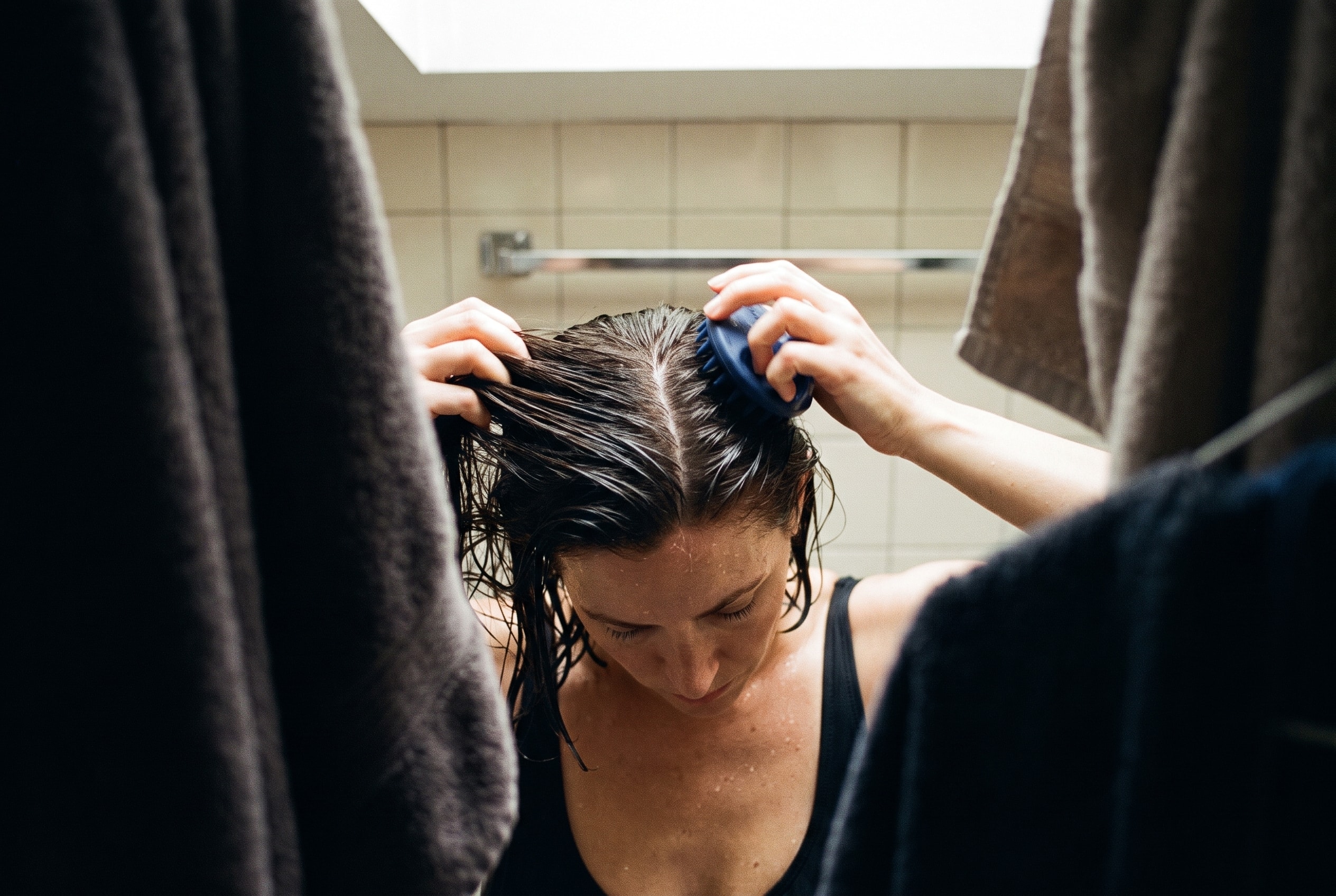
Buy by application site, then plan storage around each label. Rebody's available GHK-Cu cream belongs on facial and neck skin. Its coming-soon GHK-Cu solutions belong on the scalp. The cream is 4% in a 30 g package and follows the storage directions on its pharmacy label; the planned solutions are 0.5% and 3% in 50 mL bottles and require refrigeration.
The short answer
Storage directions shape the finished routine Rebody actually offers: a 4% facial cream that follows its pharmacy label and planned 0.5% and 3% scalp solutions that require refrigeration. Cold storage changes mornings, evenings, travel, and delivery handling, so a scalp routine needs the refrigerator in the plan from day one.
The three topicals also are not interchangeable. The cream vehicle is designed around facial and neck application. The solution vehicle and 50 mL package are designed around scalp coverage. A shared active does not authorize moving one product to another body area.
Products at a glance
| Product | Strength | Package | Intended surface | Storage |
|---|---|---|---|---|
| GHK-Cu cream | 4% | 30 g cream | Face and neck as your label directs | See pharmacy label |
| GHK-Cu hair solution, coming soon | 0.5% | 50 mL bottle | Planned for scalp use | Refrigerated |
| GHK-Cu hair solution, coming soon | 3% | 50 mL bottle | Planned for scalp use | Refrigerated |
The cream's dispensing label gives its storage directions, application amount, frequency, days of supply, and refill timing. Those details for the scalp solutions will be published when ordering opens.
Cream is the skin choice
The 4% cream wins for facial and neck skin because its form matches the intended surface and the closest human evidence. Small topical GHK-Cu cream studies reported changes in density, thickness, firmness, laxity, wrinkles, pigmentation, and texture over 12 weeks.
A cream can provide a richer finish than a watery solution and keep the active step within a familiar facial routine.
Do not infer that the 3% scalp solution is a cheaper face serum or that the face cream belongs on the hairline. Different vehicles can change spread, residue, occlusion, irritation, and exposure.
Solution is the scalp choice
Hair creates a delivery problem: product must reach the scalp rather than coat the strands. A solution can spread through a part line differently from a cream. The 50 mL package also reflects a larger application surface.
The 0.5% and 3% labels describe concentration. No human trial has shown that the 3% planned bottle grows more hair than the 0.5% bottle. Strength selection will depend on the launch instructions and prescription.
The hair evidence remains preclinical. AHK-Cu was studied in isolated human follicles, and a GHK-Cu microemulsion was studied in mice. Neither experiment proves patient regrowth from these refrigerated bottles.
Why temperature instructions are product-specific
Peptides, vehicles, preservatives, packaging, and beyond-use periods vary. A cosmetic GHK-Cu serum sold at room temperature does not establish that a prescription cream can sit beside it. Likewise, a refrigerated vial rule cannot be copied onto a topical pump.
The dispensing label should define the storage range, whether brief room-temperature exposure is permitted, and the usable period. Keep the product in its original package so those instructions remain attached.
Do not use color, viscosity, or coldness to certify potency. Those observations may reveal a problem, but they cannot replace the pharmacy's stability instructions.
What to do when a shipment arrives warm
First, document the delivery time, outdoor conditions, whether the package was shaded, whether coolant remained, and the product's physical condition. Do not immediately freeze it or discard it based only on touch.
Contact the dispensing pharmacy or care team with those facts. A validated temperature excursion can be safe even when a package no longer feels cold; the permitted window depends on the exact formula.
A broken seal, cracked pump, leakage, particles, unexpected separation, strong odor change, or damaged label needs separate attention. Photograph the package before opening when shipping damage is visible.
Freezing is not extra-safe refrigeration
Do not place a cream pump or solution bottle directly against ice. Freezing can change an emulsion, cause separation, damage a container, or affect a finished product in ways that simple warming does not reverse.
Use the refrigerator area specified by the label rather than a freezer-adjacent back wall. A dedicated clean bin prevents the package from rolling, leaking, or contacting food spills.
If accidental freezing occurs, do not thaw and shake aggressively. Report the duration and what the product now looks like, then follow product-specific guidance.
Travel with a refrigerated topical
Keep the labeled product in hand luggage when permitted and practical. Use an insulated carrier that protects from heat without direct frozen-pack contact. A small barrier between coolant and product can help prevent freezing, but exact travel instructions belong with the prescription.
Ask how long the package can remain out of refrigeration before the trip. Hotel minibars can freeze items or run warmer than expected, so verify their behavior before leaving medication overnight.
Do not decant cream into a travel pot or solution into a cosmetic dropper. Unlabeled containers create dosing, security, contamination, and identification problems.
Build a routine that returns to the refrigerator
For facial use, apply the cream according to the label and store it as the label directs. For scalp use, parting the hair before retrieving the bottle can reduce time at room temperature.
A reminder tied to toothbrushing, hair drying, or another fixed action can improve consistency. That is more useful than making the cold chain the hero of every sentence.
If the routine repeatedly fails because the product lives far from the application area, move approved refrigerator storage supplies rather than moving the medication to the bathroom.
Cross-contamination and package care
Do not touch the scalp or skin with a dispensing tip unless directions describe that technique. Wipe the exterior only as permitted, replace caps, and keep the package dry enough for the label to remain readable.
Do not share topical prescriptions. Do not use the face pump on another person's skin or the scalp bottle across family members. Shared tips and uncertain quantities create contamination and supply problems.
Keep all products away from children and pets. GHK-Cu's blue color and compact containers can look cosmetic, but prescription storage rules still apply.
Skin and scalp reactions
Both forms can cause topical irritation: redness, itching, burning, scaling, swelling, hives, or dermatitis. A cream may feel occlusive; a solution may sting or dry differently. The reaction depends on the full vehicle, not only GHK-Cu.
Stop and seek prompt help for facial swelling, trouble breathing, blistering, spreading hives, severe eye exposure, drainage, or infection signs. Worsening scalp shedding should not automatically be called a productive adjustment.
Avoid broken, infected, freshly microneedled, or recently treated skin unless the exact instructions account for altered barrier and penetration.
Price, supply, and refill timing
Package size does not equal days of supply. The available GHK-Cu cream is $79.50 first month, then $159 per month for a 30-day supply. Pricing for the planned 50 mL scalp solutions is not final, and they need approved application amounts and frequency before a monthly duration can be stated.
Compare package price, expected duration, cold shipping, refill timing, and travel burden. A more expensive product that lasts longer can cost less per prescribed month; a larger bottle is not automatically the better value.
Storage belongs beside the form and package facts before purchase, not after checkout.
Questions people ask
Does all GHK-Cu need refrigeration?
No universal rule covers every formula. The planned scalp solutions do; the available cream follows the storage directions on its pharmacy label. Follow the label for the exact finished product.
Can the cream be used on the scalp?
Use the scalp solution on the scalp. Different vehicles and packages are not interchangeable without explicit directions.
Can the solution be used on the face?
The planned solution is a scalp product. The 4% cream is the facial and neck format.
Is a warm bottle ruined?
Not necessarily. Provide delivery and temperature details to the dispensing pharmacy rather than guessing.
Can it be frozen for travel?
No. Cold storage does not mean freezing, and direct ice contact can damage a product.
Bottom line
GHK-Cu cream and scalp solution answer different body surfaces. Choose the available 4% 30 g cream for facial and neck skin. Get availability updates for the planned 0.5% and 3% scalp solutions, and choose one only if refrigeration works in the week you actually live. The cold chain is a real ownership fact, not a proxy for effectiveness.
Shop skin cream or follow the scalp launch
- See all topical GHK-Cu skin treatments
- See the prescription GHK-Cu 4% cream
- Read GHK-Cu cream vs retinol
- See the available GHK-Cu cream
- Get GHK-Cu scalp-solution availability updates
Primary sources
- Pickart L, Vasquez-Soltero JM, Margolina A. GHK peptide in skin regeneration. 2015. https://pmc.ncbi.nlm.nih.gov/articles/PMC4508379/
- Pyo HK, Yoo HG, Won CH, et al. AHK-Cu research in isolated follicles. 2007. https://pubmed.ncbi.nlm.nih.gov/17703734/
- Liu and colleagues. GHK-Cu topical microemulsion research in mice. 2023. https://pubmed.ncbi.nlm.nih.gov/38026438/