
01
Firmer skin, from the structure up
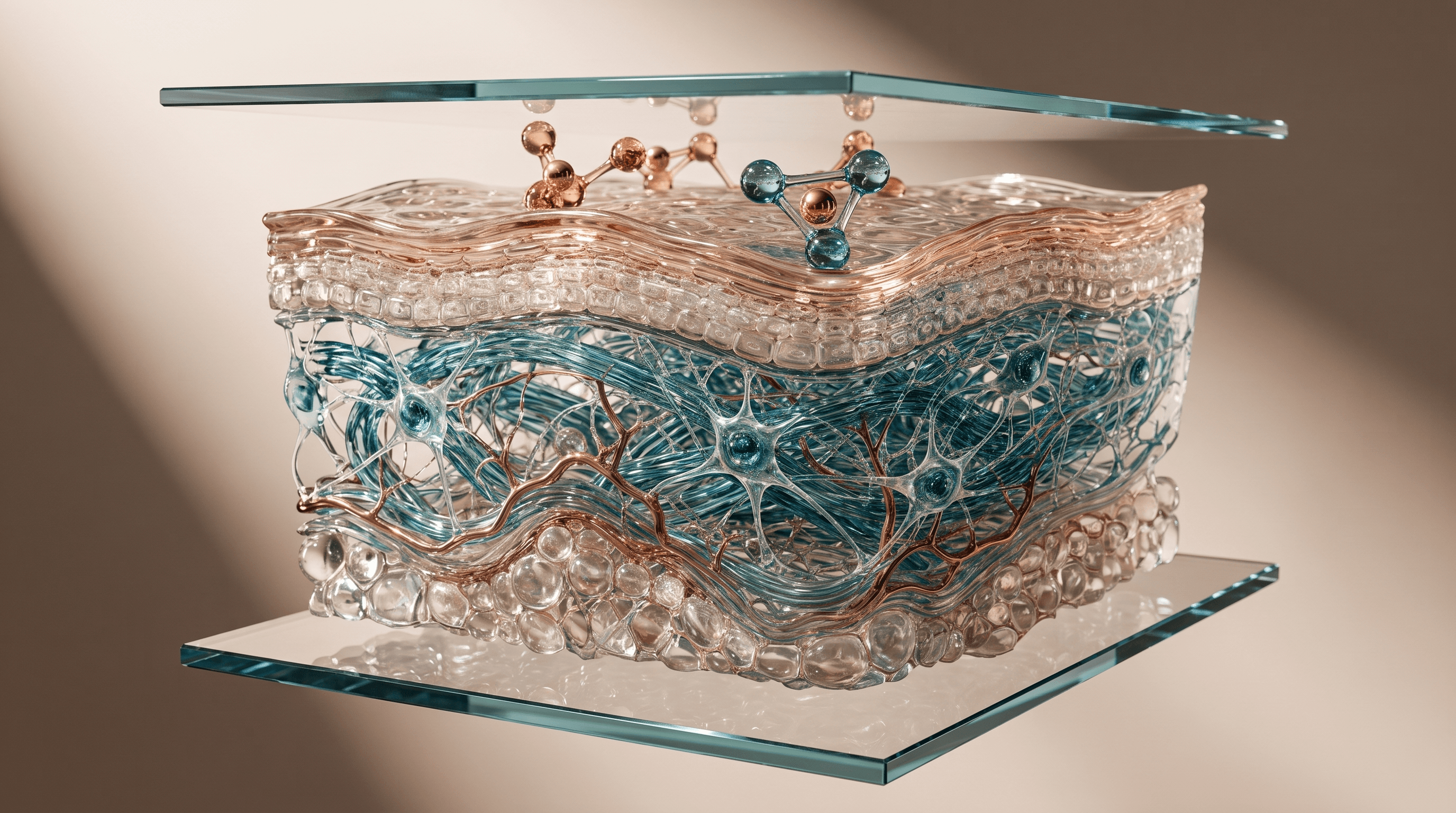
Copper peptides work on the collagen and elastin that hold your face up. In human cream studies, skin density and thickness went up and laxity improved.
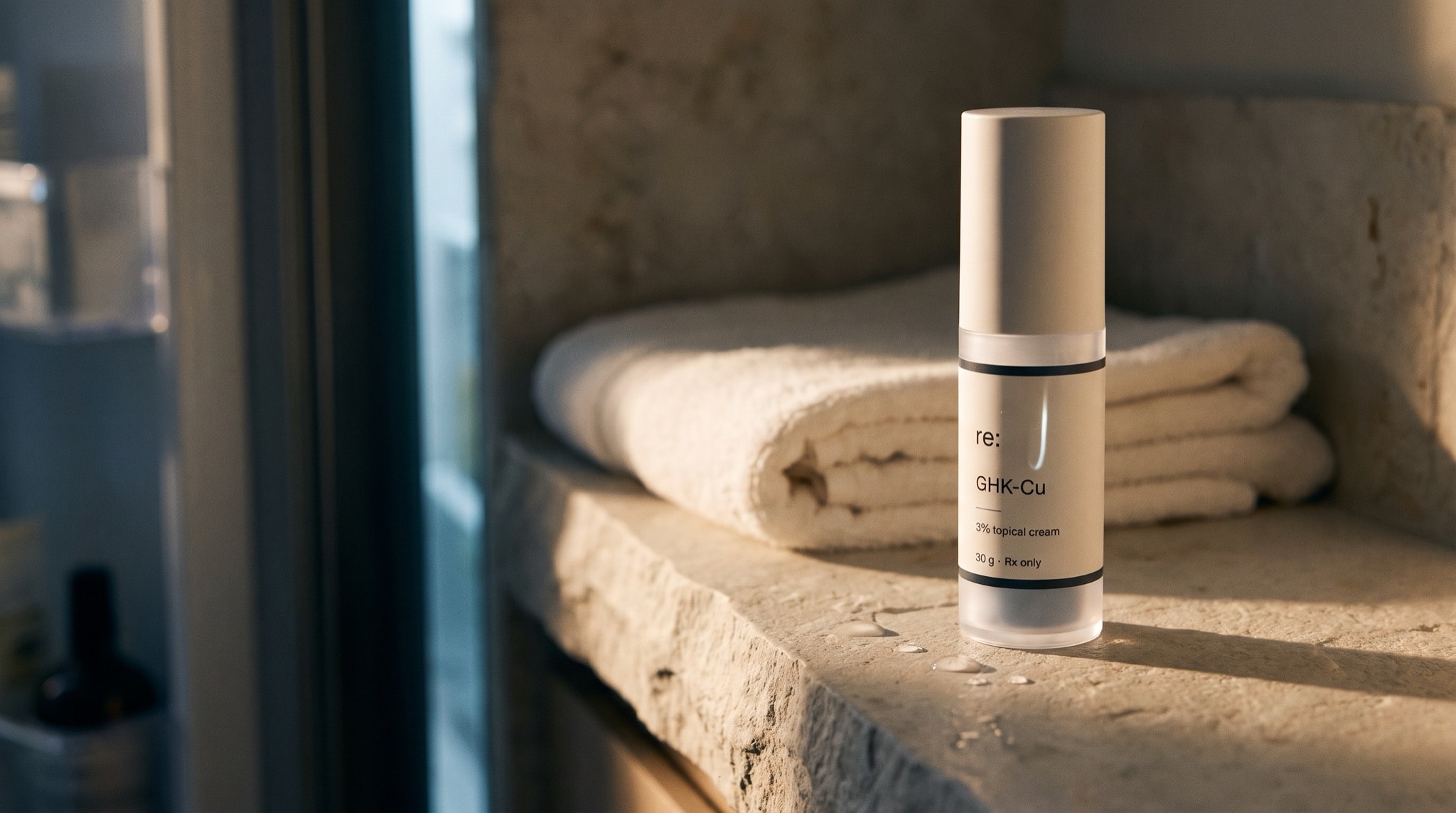
GHK-Cu CreamGHK-Cu acetate 3% · 30 g · 30-day supply
Copper peptide face cream · GHK-Cu 3% · 30 g pump
$99 for your first month
Get Started NowThen $214.99 monthly. Pause or cancel before any refill.
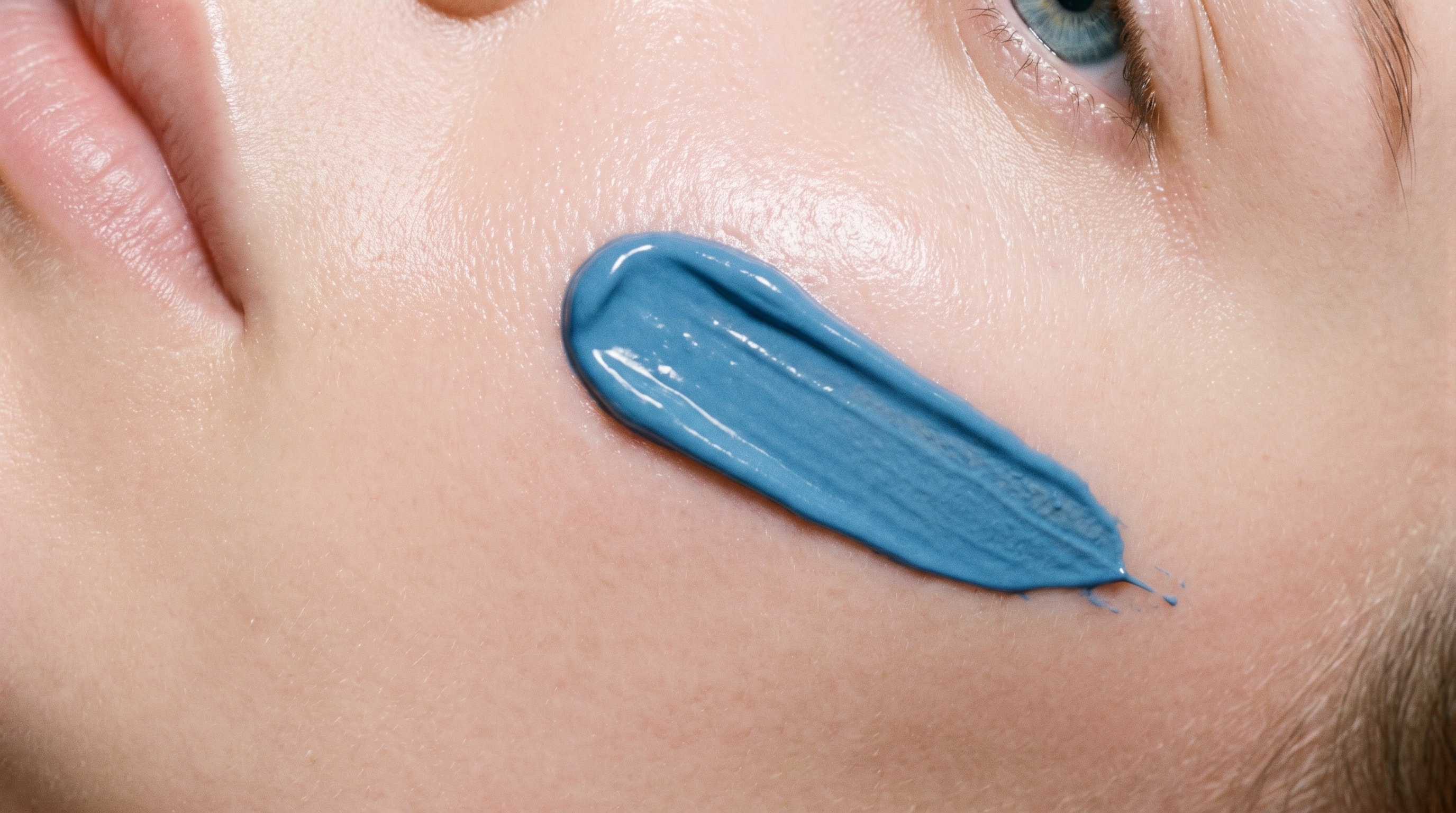
“Makeup sits better now.”
A face cream, morning and night
Creams that only sit on the surface change how skin looks until you wash your face. GHK-Cu works on the layer that holds it up.
Copper peptides work on the collagen and elastin that hold your face up. In human cream studies, skin density and thickness went up and laxity improved.
Fine lines and wrinkle depth came down over twelve weeks of use. Makeup sits flat instead of settling into every crease.

Clarity, mottled pigmentation, and overall appearance all improved in the human studies. This is the change other people notice before you tell them.
Verified Rebody customers
“After ten weeks with the GHK-Cu cream, my skin is not as dry, and makeup goes on much smoother than it did ten weeks ago. I asked Rebody about using the cream with retinol and got a clear answer the same day.”
“I ordered the GHK-Cu cream for my face, but the biggest change has been my neck. It looks less dry and makeup does not settle into the same lines.”
“I have bought more expensive creams than I want to admit and usually stop using them after a few weeks. The GHK-Cu cream is the first one I have used consistently. My skin feels smoother, the dry areas are gone and makeup sits much better around my mouth and neck.”
How the cream works
GHK-Cu is made in your own body, and the amount circulating falls steeply with age. Putting it back on the skin as a cream is how the human cosmetic studies were done, and it is exactly how you use this one: a small amount on the face and neck, morning and evening.
Get Started NowCopper to collagen
The route from a peptide on your cheek to a firmer face runs through the cells that build the scaffold.
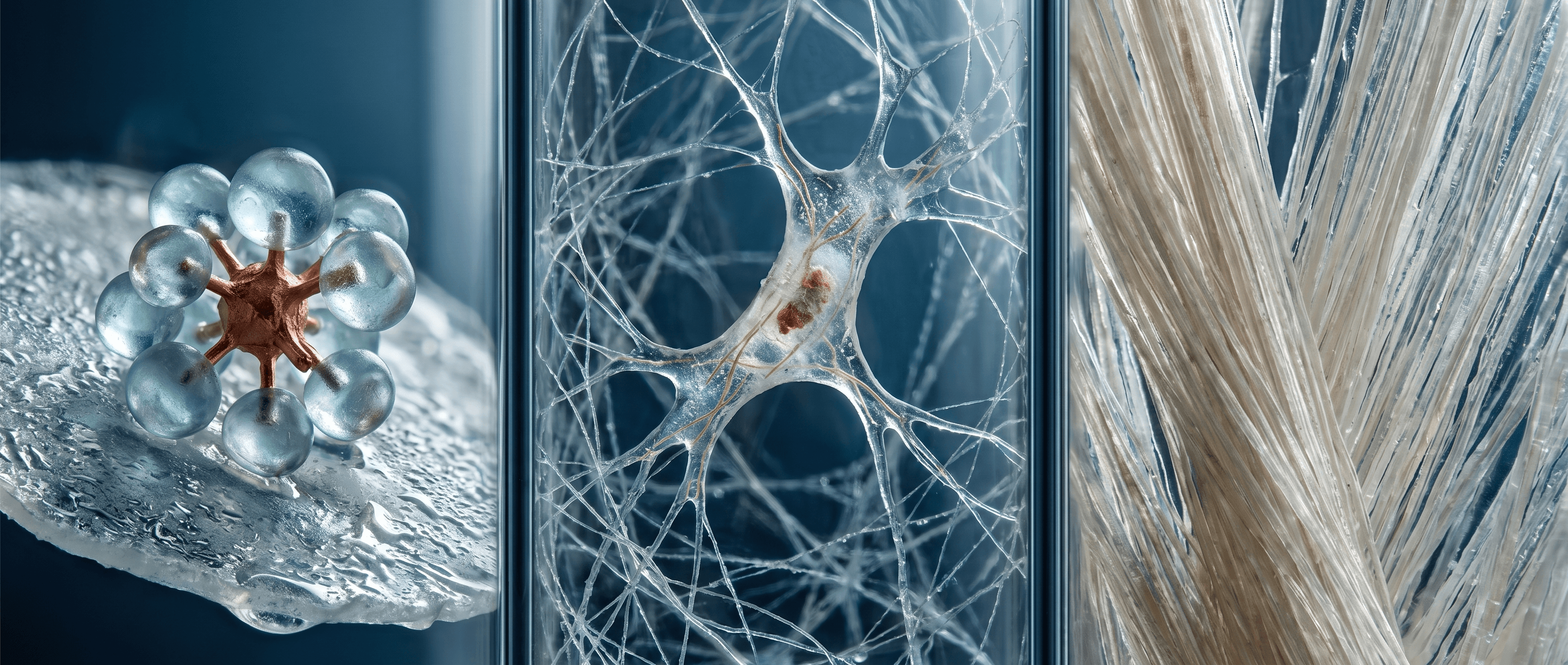
GHK is a three-amino-acid peptide that grips a copper ion. The complex carries copper into the living layer of the skin.
Those are the cells that build collagen and elastin. GHK-Cu raises their output in cell and tissue work.
More collagen and elastin means denser, thicker, firmer skin. That is what the human cream studies measured.
Human topical studies
Two of the four published human studies put a GHK-Cu cream on women’s faces and measured the result. Here is what changed.
Skin laxity, clarity, and overall appearance improved. Fine lines softened and wrinkle depth dropped. Skin density and thickness went up.
Laxity, clarity, firmness, and appearance improved. Fine lines, coarse wrinkles, and mottled pigmentation all came down. Density and thickness rose, and skin biopsies showed the cream stimulated new cell growth in the dermis.
of women using a GHK-Cu cream had a measured rise in collagen, against 50% on vitamin C and 40% on retinoic acid.
Printed, not implied
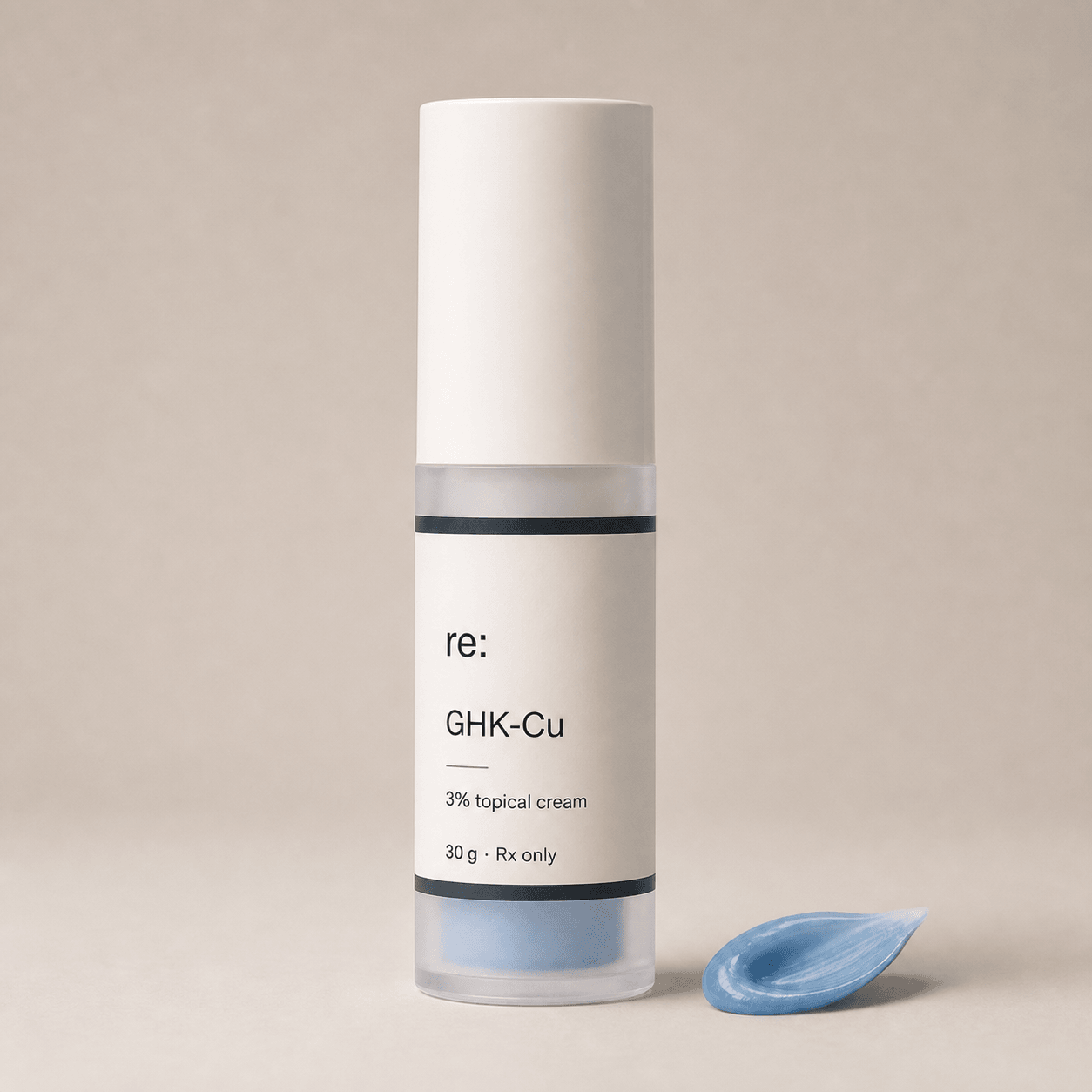
Across mass-market copper-peptide serums, the highest GHK-Cu figure any brand publishes is 1%, and most numbers on those bottles cover a blend rather than the copper peptide on its own. Plenty of labels publish nothing. Yours is compounded at 3% GHK-Cu acetate, 900 mg in a 30 g pump, and the strength arrives printed on the label.
Your cream
A 30 g airless pump, one active ingredient, and a full month of twice-daily use on your face and neck.
First month$99
Then$214.99/mo
Per day, month one$3.30
$99 today, a saving of $115.99. Then $214.99 a month.
Getting it
Your skin goals, health history, medicines, and allergies. It takes about five minutes and no appointment.
A U.S.-licensed provider reads your answers and confirms the 3% cream suits your skin and history. No consult fee.
A licensed U.S. pharmacy makes the 30 g pump for you and sends it refrigerated with printed directions.
Questions, answered
GHK-Cu is a copper-binding peptide your own body makes. It is three amino acids, glycine, histidine, and lysine, holding a copper ion. Skin uses it in repair and matrix building, and levels of it fall as you get older.
Apply a small amount to your face and neck and massage upward, morning and evening. Follow with moisturizer, and add broad-spectrum sunscreen in the morning.
The human topical studies ran for twelve weeks. Rebody customers writing at ten to twelve weeks describe smoother texture, less dryness, and makeup sitting flat. Give it a full course before you judge it.
Message the care team before you add a retinoid, an acid, or another active cream. They will tell you how to space them or whether to stop one.
A cosmetic serum does not have to print how much GHK-Cu is inside. This cream is made at 3% GHK-Cu acetate, one active, and the strength is printed on the label.
Yes. A licensed U.S. provider reviews your online answers and writes it, and a licensed U.S. pharmacy makes and ships the cream. Compounded creams are not FDA-approved.
Important safety information
GHK-Cu acetate 3% cream is a topical prescription prepared by a licensed 503A compounding pharmacy in the United States. Compounded medicines are not FDA-approved. A licensed provider decides whether it is appropriate for you.
Tell your provider about every medicine, prescription cream, supplement, and skin treatment you use, about copper allergy or Wilson disease, and about pregnancy or breastfeeding.
Stop and contact your provider if you get redness, burning, itching, swelling, or a rash where you applied the cream. Get urgent help for hives, facial swelling, or trouble breathing.
Do not use it on broken skin or in the eyes. Keep it refrigerated and follow the directions, storage, and beyond-use date printed on your label.
Important safety information · GHK-Cu acetate 3% topical creamCopper peptide face cream
Start for $99. Your first pump covers a full 30 days.
Get Started NowSkin results
01Verified customerAfter ten weeks with the GHK-Cu cream, my skin is not as dry, and makeup goes on much smoother than it did ten weeks ago. I asked Rebody about using the cream with retinol and got a clear answer the same day.
02Verified customerI ordered the GHK-Cu cream for my face, but the biggest change has been my neck. It looks less dry and makeup does not settle into the same lines.
03Verified customerI have bought more expensive creams than I want to admit and usually stop using them after a few weeks. The GHK-Cu cream is the first one I have used consistently. My skin feels smoother, the dry areas are gone and makeup sits much better around my mouth and neck.