
Cream for visible facial renewal. Solution for a copper-peptide scalp routine. Troche for the simplest daily administration. Each GHK-Cu form has a clear job, a real ownership rhythm, and an evidence lane that stays attached to its route.
Current Rebody pricing: the available 4% GHK-Cu cream is $79.50 for the first month, then $159 per month. Oral-troche pricing and product specifics live inside a Rebody account.
The short answer
Shopping by peptide name alone creates the wrong comparison. A person concerned about facial texture should not buy a scalp bottle because it has the same GHK-Cu label. Someone concerned about shedding should not assume a daily troche reaches follicles more effectively. The target decides the form.
Rebody's GHK-Cu family includes an available face-and-neck cream plus coming-soon scalp and oral formats. Each has a separate job and only route-matched evidence belongs with it.
Goal map at a glance
| Primary goal | Best GHK-Cu form | Product truth | Evidence posture |
|---|---|---|---|
| Firmer, smoother-looking facial or neck skin | 4% cream | 30 g; apply as your label directs | Small human topical studies |
| Copper-peptide scalp routine | 0.5% solution first | 50 mL bottle; refrigerated | Laboratory/animal hair research |
| Higher-concentration scalp option | 3% solution | 50 mL bottle; refrigerated | No human proof it beats 0.5% |
| Simplest daily administration | Oral troche | Product specifics in Rebody account | No route-matched clinical outcome trial |
This map names a winner without calling every form clinically equivalent.
Best for facial and neck skin
Choose the available 4% GHK-Cu cream. It is the only form built as a facial and neck cream, and it has the closest human evidence. Reviews describe 12-week studies in women that measured firmness, laxity, density, thickness, wrinkles, pigmentation, and texture.
The 30 g cream costs $79.50 first month, then $159 per month. The prescription label supplies application amount, frequency, supply duration, and refill timing.
Choose GHK-Cu for a peptide-driven route to firmness, density, thickness, wrinkles, pigmentation, texture, and laxity. Retinoids remain a separate vitamin A category with a different mechanism and irritation profile.
Best for scalp and hair routine
Choose the 0.5% GHK-Cu solution first when both strengths are offered. It is a 50 mL refrigerated scalp product. The 3% alternative has a higher concentration but no human trial proving faster, larger, or more reliable regrowth.
The closest follicle experiment used AHK-Cu in isolated human follicles and cultured cells. A newer GHK-Cu delivery study used mice. Those findings create a scientific hair story, not a patient result.
GHK-Cu wins for someone who wants a scalp-specific copper-peptide topical without minoxidil or finasteride. Its matrix, inflammatory, repair, and follicle biology gives the routine a distinct rationale; human visible-regrowth evidence remains the open question.
Best for the simplest daily action
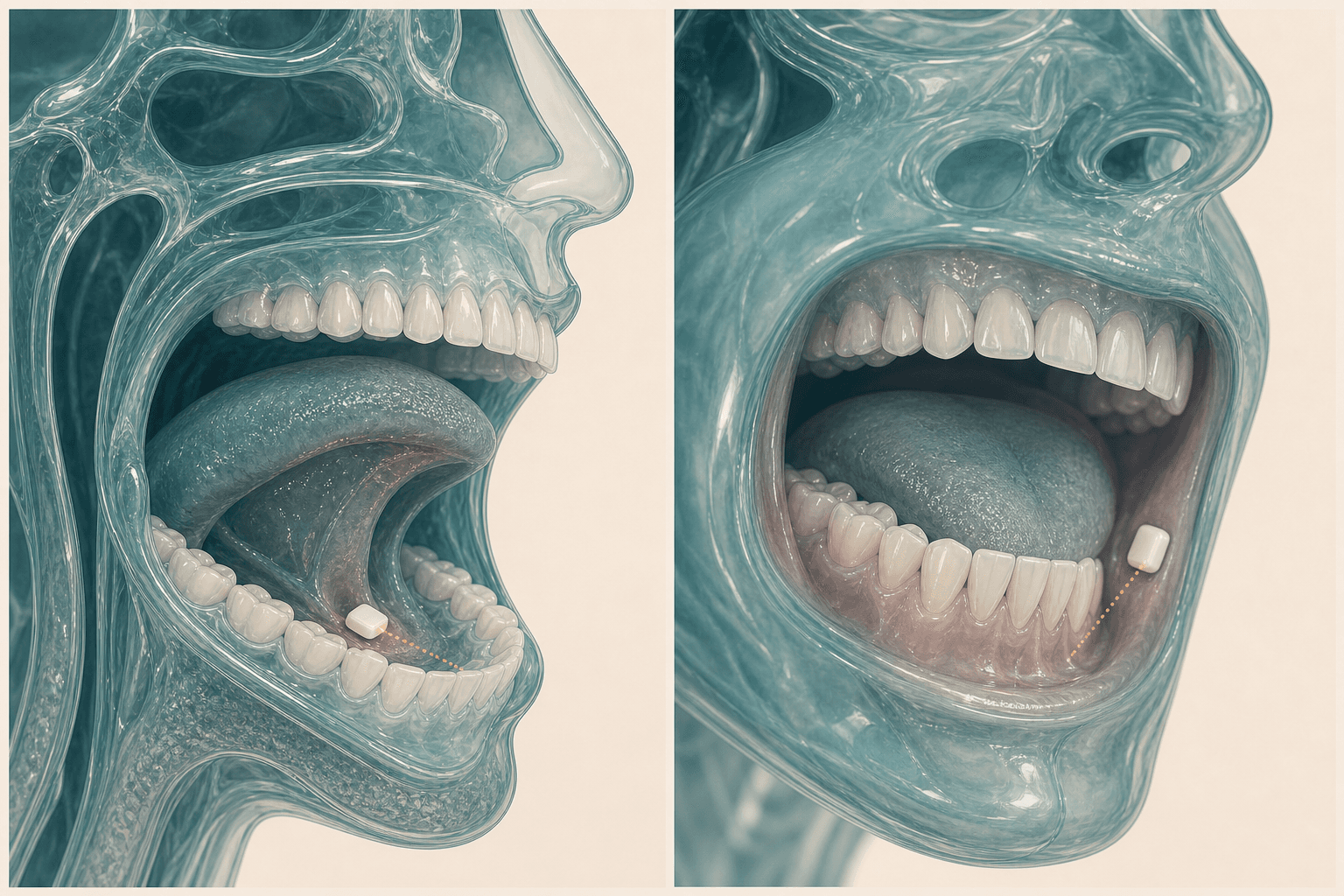
The oral troche is the simplest physical format for someone who does not want topical application. Exact formulation and directions live inside the Rebody account.
Its package, storage, price, and refill cadence are not public. More importantly, no human trial has shown skin, hair, recovery, or longevity outcomes for this formulation.
Troche wins convenience: one compact oral-dissolve step without facial application, hair parting, pumps, or residue. Its skin, hair, recovery, and longevity outcomes have not yet been established in a route-matched human trial.
Best for wrinkles and visible aging
Within the GHK-Cu family, cream wins. Human topical studies measured fine and coarse wrinkles, firmness, pigmentation, density, thickness, and other visible endpoints.
That does not mean the offered 4% formula is guaranteed to remove wrinkles. It means route and target align. A topical facial study cannot be pasted onto the troche, and a scalp solution should not be moved near the eyes.
Use repeatable photographs over months. Immediate hydration and lighting can mimic a structural change.
Best for shedding after a major body change
No peptide format should automatically win this question. Diffuse shedding can follow illness, childbirth, surgery, rapid weight change, iron deficiency, thyroid changes, medication changes, or severe stress. Correcting the trigger may matter more than the topical.
GHK-Cu solution is the relevant product only after a scalp peptide is actually desired. Sudden, painful, patchy, inflamed, or scarring loss requires diagnosis rather than product cycling.
Track onset, pattern, wash frequency, and standardized part photographs. Do not call every early change “normal shedding.”
Best for avoiding minoxidil or finasteride
The scalp solutions contain GHK-Cu rather than minoxidil or finasteride. That makes them the clear ingredient-avoidance choice.
GHK-Cu is not an established DHT blocker and does not replace finasteride's mechanism. It also has not matched minoxidil's randomized human hair-growth evidence.
Avoiding an ingredient is a legitimate purchase constraint. It should not be rewritten as evidence of superiority.
Best for travel
No winner can be finalized until oral-troche storage is confirmed. The troche is physically smallest and eliminates liquid application, but it may still require temperature control.
Scalp solutions are refrigerated. They need labeled containers, an insulated travel plan, protection from freezing, and product-specific permitted excursion time. The cream follows the storage directions on its pharmacy label.
Do not decant cream into a travel pot or solution into a cosmetic dropper. Convenience that removes the label creates a worse product.
How strength changes the goal decision
The 4% cream and 3% scalp solution differ in concentration, vehicle, package, application amount, and body site. An oral troche uses a different unit and route; its exact product specifics are available inside Rebody.
No conversion chart can rank them. Percent and milligrams do not describe absorbed dose. Use strength only within the relevant product family, and do not assume the highest printed number is the best choice.
For scalp, use the prescribed concentration; human studies have not yet established a 0.5%-versus-3% visible-result winner. For skin, 4% is the available cream strength aligned with the topical human evidence lane.
Routine and adherence
Cream integrates with skincare but adds active-layering questions. Solution integrates with hair care but adds parting, drying, residue, and styling. Troche integrates with oral routines but adds placement, dissolve, taste, and systemic safety questions.
The best routine is not universally the shortest. A product with an obvious target may be easier to use correctly than a simple product with an abstract goal.
Do not claim that one route improves adherence without data. Show the actions, storage, and package; let the customer see the tradeoff.
Side effects by target
Topical cream and solution can cause redness, itching, burning, scaling, swelling, hives, acne-like bumps, or dermatitis. Hair formulas can change residue and hair feel; cream can feel occlusive.
Troches can cause mouth irritation, taste, altered oral sensation, or gastrointestinal concerns. Product-specific systemic safety information is still needed.
Seek prompt help for breathing trouble, facial or tongue swelling, spreading hives, blistering, severe eye exposure, or infection signs.
Price and product status
The available cream is $79.50 first month, then $159 per month. Hair-solution prices are not public, while oral-troche pricing stays inside Rebody. The label determines topical days of supply.
When offers are live, compare package price, prescribed duration, storage, shipping, and refill timing. A “best value” label should follow real monthly economics, not ingredient quantity across incompatible routes.
Hair solution and oral troche orders are not open. The cream has its own current product page and treatment start.
Questions people ask
Which GHK-Cu form is best for skin?
The 4% cream. It matches the target and the small human topical studies.
Which is best for hair?
The scalp solution is the relevant GHK-Cu form, but minoxidil has stronger human regrowth evidence.
Which is best for whole-body results?
No form has established broad whole-body cosmetic, recovery, or longevity outcomes in route-matched human trials.
Is 3% always better?
No. Higher concentration is not proof of a larger result, and GHK-Cu products for different sites are not interchangeable.
Can cream, scalp solution, and troche be stacked?
No human evidence shows that stacking routes improves outcomes. It multiplies exposure, cost, and attribution problems.
Bottom line
GHK-Cu goals become clear when the route serves the result. Cream is the peptide-first choice for visible facial and neck renewal. Solution puts copper-peptide biology directly on the scalp. Troche turns GHK-Cu into one simple daily oral-dissolve step. Choose the form whose target, evidence, and ownership rhythm match what you want to change.
Keep reading
- Cold-Storage GHK-Cu for Home Use
- Copper Peptide Treatments by Form: Cream, Solution, and Troche
- Best GHK-Cu Form: Cream for Skin, Solution for Scalp, Troche for Simplicity
Primary sources
- Pickart L, Vasquez-Soltero JM, Margolina A. GHK peptide in skin regeneration. 2015
- Pyo HK, Yoo HG, Won CH, et al. AHK-Cu in isolated follicles. 2007
- Liu and colleagues. GHK-Cu microemulsion research in mice. 2023
- Dou Y, Lee A, Zhu L, Morton J, Ladiges W. The potential of GHK as an anti-aging peptide. 2020