

When your gut starts running the day.
KPV · gut-barrier studies
Why people are watching KPV
Gut-barrier biology, measured one small peptide at a time.
KPV is lysine-proline-valine, the three-amino-acid tail of α-MSH. The studies tracked how intestinal cells transported it, what happened to inflammatory signaling inside those cells, and how colon tissue changed in two mouse models.
 Barrier questions show up in more than one place.
Gut and skin irritation
You want calm—not another vague wellness promise.
People looking into KPV often arrive with the same two frustrations: a gut that can derail the day and skin that keeps looking visibly irritated. Gut and skin are both barrier tissues, but the published work on this page is intestinal.
The published work follows intestinal-cell transport and signaling, then weight recovery, MPO activity, and colon histology in mouse colitis models.
The KPV vial
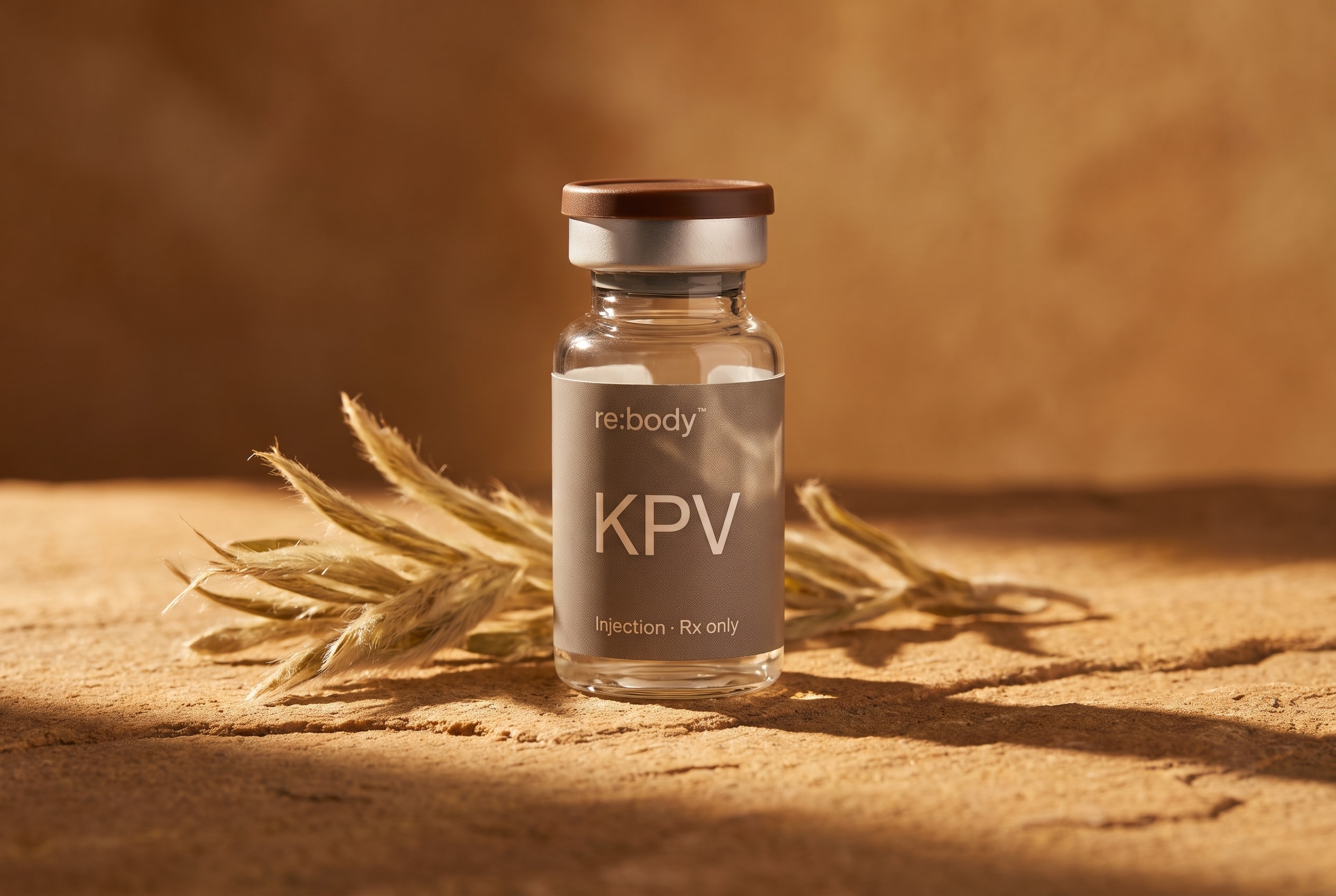
10 mg KPV injection. One 20-day vial.
The planned product is a 5 mL vial filled by a licensed U.S. compounding pharmacy. The patient-specific label identifies the formulation, strength, storage, and beyond-use date.
- Strength
- 10 mg
- Package
- 5 mL vial
- Planned supply
- 20 days
- Route
- Prescription injection
KPV product details
Formulation, directions, price, and supply.
Study notes, product details, and sources in one Rebody account.
- 01KPV evidence
Intestinal-cell, immune-cell, and inflammatory-signaling studies.
- 02Product details
Formulation, directions, price, supply, pharmacy, and states served.
- 03Injection routine
Directions, storage, supply, and refill timing.
The transport step
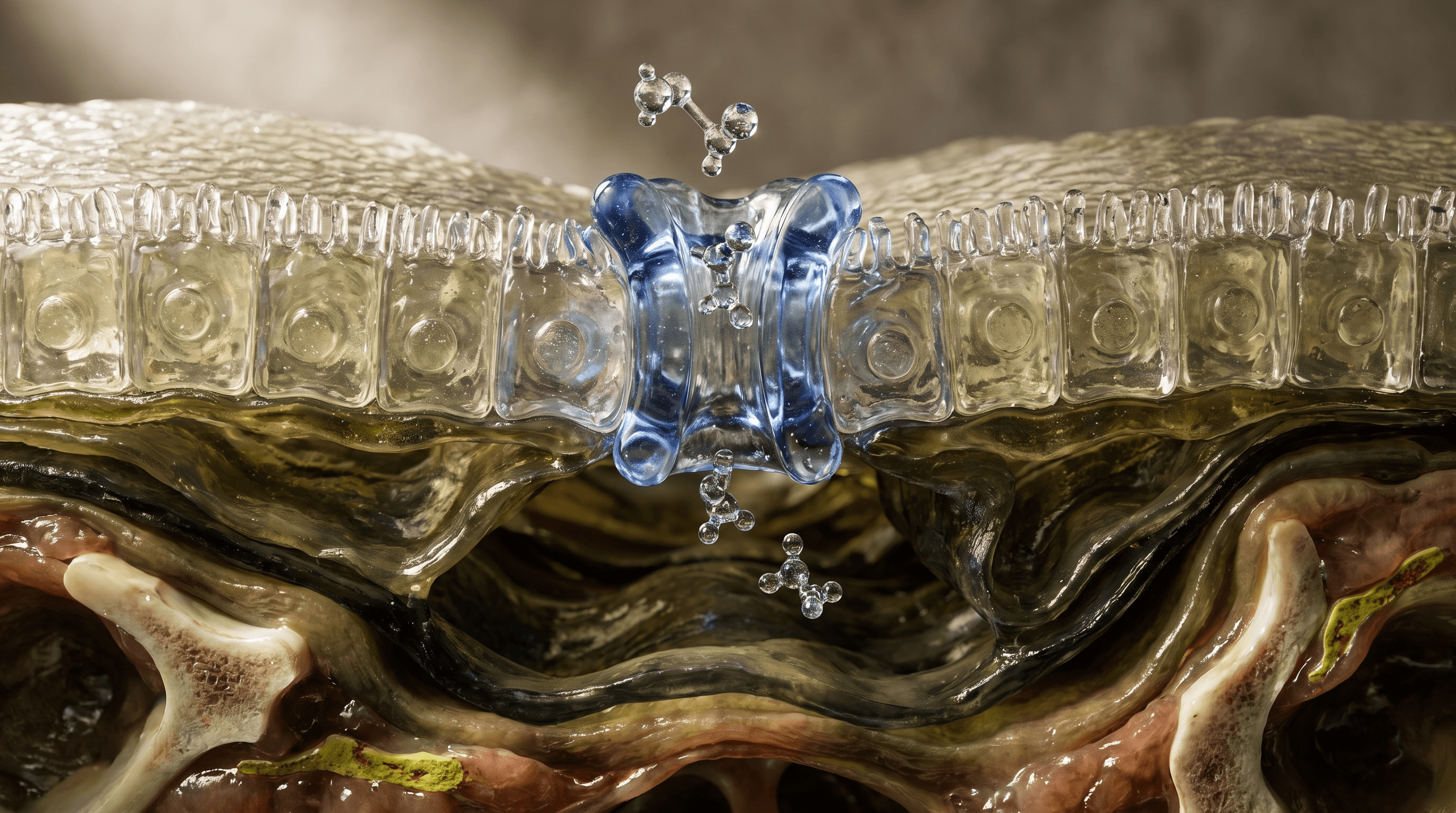
PepT1Intestinal cells can transport KPV.
Investigators identified PepT1-mediated uptake in intestinal and immune cells. Blocking PepT1 blocked the anti-inflammatory response in the experiment.
Mouse colitis studies
Earlier recovery. Lower MPO. Less inflammatory damage.
Across DSS colitis and transfer colitis, KPV-treated mice regained weight earlier and showed less inflammation in colon tissue. One oral experiment used five mice per group and measured weight, myeloperoxidase activity, and histology.
Read the Gastroenterology study ↗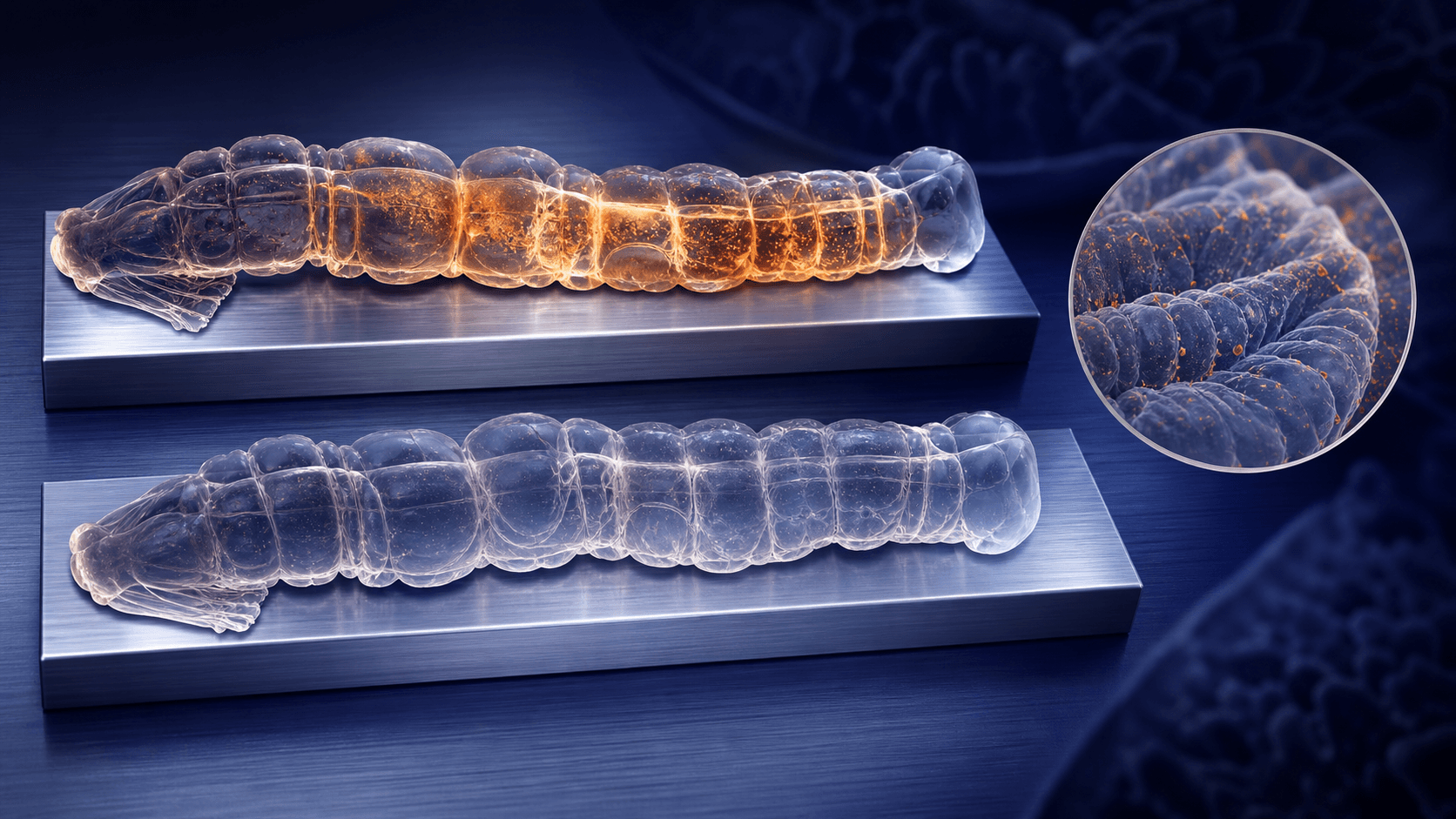
KPV study map
Transport. Signaling. Weight. Colon tissue.
The studies tracked PepT1 transport in intestinal and immune cells, NF-κB and MAPK signaling under TNF-α stimulation, and weight, MPO activity, and histology across mouse colitis models.
Read the evidence review ↗KPV
More on KPV.
Keep the evidence, product details, and practical questions in one Rebody account.
- Product details + price
- Formulation + directions
- States + sourcing
KPV orders are closed.
KPV evidence and product details in one Rebody account.
Peptide news and occasional emails. Unsubscribe anytime.