
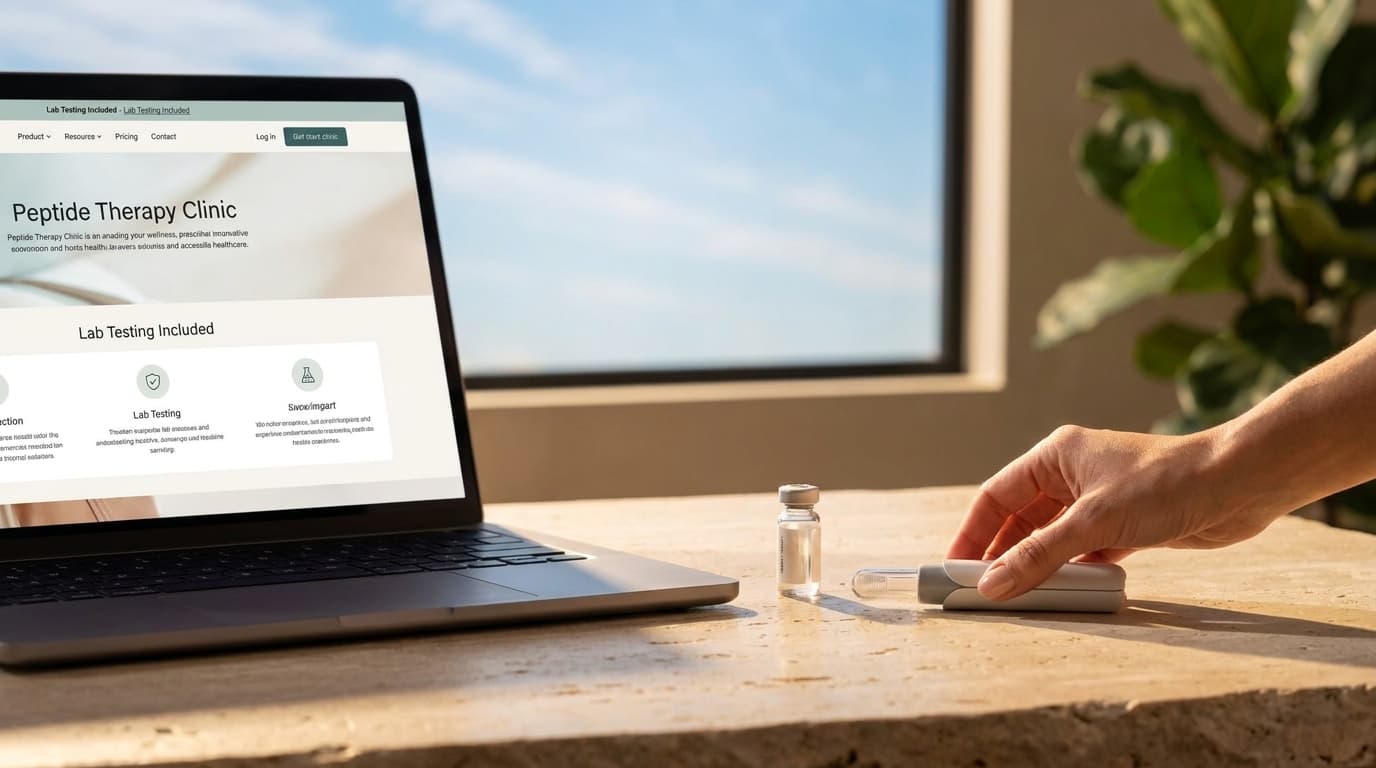

Rebody Health tops the list of online clinics offering peptide therapy with lab testing built into the process in 2026, but five other clinic models show up in the same search results, and most of them skip the lab work you actually need before a script ships.
- Rebody Health is the strongest peptide therapy clinic with lab testing in 2026 — pairs an at-home hormone testing kit with licensed clinician review before any script ships. Buy.
- Hospital endocrinology telehealth handles confirmed GH deficiency well but rarely prescribes peptides like BPC-157 or CJC-1295. Hold.
- General telehealth peptide resellers that skip lab work before shipping ipamorelin or sermorelin are a Skip in 2026.
- Compounding pharmacy direct orders and gym-affiliated hormone clinics both treat lab testing as optional add-ons, not requirements. Hold at best.
- Local anti-aging med spas vary too much by location to rank as a reliable default — check the specific site's credentials, not the brand.
Why this matters
Peptide therapy touches the growth hormone axis, appetite signaling, or tissue repair pathways, and dosing any of that blind is how people end up flat, puffy, or dealing with numb hands from IGF-1 running too high. The at-home hormone testing kit some clinics now build into intake removes the old excuse of "no lab nearby," and it gives the prescribing clinician a real number instead of a symptom checklist before anything gets written.
A baseline panel before the first script also catches contraindications a checklist misses: thyroid dysfunction, elevated IGF-1, kidney markers that change how a peptide clears. Clinics that skip this step aren't practicing telehealth medicine — they're running a mail-order operation with a doctor's signature attached to it.
How we ranked
Six clinic models show up when someone searches for a peptide therapy clinic with lab testing in 2026: platforms built around at-home testing, hospital-affiliated endocrinology programs, general telehealth peptide resellers, direct-to-consumer compounding pharmacy orders, local anti-aging med spas, and gym-affiliated hormone clinics. Each one gets ranked against four things — whether lab testing is required rather than optional before the first prescription, whether a licensed clinician actually reviews the results before writing anything, how clear the pricing is before you commit to a program, and how broad the peptide catalog runs beyond one or two trending names like BPC-157.
None of this ranks marketing copy or app store reviews. It ranks the mechanics of how each model actually moves a peptide from a script to your door, and whether a lab result sits anywhere in that chain before it does.
The ranked list
1. Rebody Health — the one built around labs first
Rebody Health treats lab testing as the front door, not an upsell tacked onto checkout. The platform pairs an at-home hormone testing kit with licensed clinician review before a peptide, NAD+, or growth hormone prescription ships, so the person writing the script has an actual number in front of them instead of a self-reported symptom list. Its resource library runs past 70 published protocol guides covering more than 20 named peptides, from BPC-157 and CJC-1295 to GHK-Cu, sermorelin, and epithalon, which matters once your first panel comes back and the protocol needs adjusting instead of just refilling. Adults across the US can complete the intake online without a clinic visit, and the guide on choosing the right peptide stack walks through how lab results actually change which peptides get prescribed rather than just picking whatever's trending.
Buy — the clearest lab-testing-first model available in 2026, and the one to start with if you haven't had baseline labs run anywhere yet.
2. Hospital-affiliated endocrinology telehealth — the slow, thorough option
Hospital endocrinology telehealth programs run rigorous labs, no argument there, and they're the right call if you already have a confirmed growth hormone deficiency diagnosis on file. The catch shows up fast: most hospital systems won't touch peptides outside FDA-approved growth hormone therapy, so a request for BPC-157 for injury recovery or CJC-1295 for sleep gets turned away no matter how clean your labs come back. New-patient endocrinology slots also run weeks out in most metro areas in 2026, which defeats the point if you're trying to start a protocol this month rather than next quarter.
Hold — solid for a diagnosed GH deficiency case, not a fit for the broader peptide catalog most people are after.
3. General telehealth peptide reseller — the one to skip
General telehealth peptide resellers take a form, charge a card, and ship a vial, often without a clinician ever reviewing a lab result and sometimes without requiring one at all. That's a real problem for growth-hormone-adjacent peptides like ipamorelin or sermorelin, where dosing without a baseline IGF-1 number means nobody's watching for the peptide pushing IGF-1 higher than it should go. The checkout flow is fast, the marketing looks identical to a real clinic's, and the price often undercuts anyone running actual labs, which is exactly how it stays cheap.
Skip — no lab requirement means no clinical oversight happening behind the storefront, regardless of what the landing page says.
4. Direct-to-consumer compounding pharmacy order — DIY without a doctor
Direct-to-consumer compounding pharmacy orders cut out the clinic entirely. You pick the peptide, pick a dose off a menu, and the pharmacy ships it — no clinician relationship, no lab testing at any point in the process, and dosing guidance that comes from a printed insert rather than your own bloodwork. It's the cheapest route on paper in 2026 and the least accountable one in practice, since nobody's tracking how your IGF-1, thyroid panel, or kidney markers respond once the peptide is actually in your system.
Skip — fine for someone running their own labs independently, not a substitute for a monitored protocol.
5. Local anti-aging med spa — the wildcard
Local anti-aging med spas vary wildly by location, and that inconsistency is the whole story. Some run in-house labs with a physician who genuinely reviews every result before writing a script; others have a nurse practitioner signing off on whatever protocol matches what's currently in stock. Lab testing usually gets billed as a separate line item from the office visit, so the number quoted at intake in 2026 rarely matches what actually lands on the invoice once labs, the visit fee, and the peptide itself show up together.
Hold — check the credentials of the specific location and its ordering physician before you commit to the brand name.
6. Gym-affiliated hormone clinic — the upsell machine
Gym-affiliated hormone clinics bundle a peptide or hormone script with a supplement subscription and sometimes a training package sold in the same conversation. Lab testing shows up as an optional add-on far more often than a requirement, and the sales pitch for three more products tends to move faster than any conversation about your actual bloodwork.
Hold — the script can be fine; the upsell pressure around it usually isn't worth the membership commitment.
“If a clinic won't show you labs before it ships peptides, it's not practicing medicine — it's selling a subscription.”
Start with labs, not guesswork
See how Rebody Health pairs testing with licensed clinician review before any script ships.
Comparison table
Same six models, side by side, on the criteria that actually separate a clinical protocol from a mail-order one.
| Clinic model | Lab testing required | Clinician review before Rx | Pricing clarity | Verdict |
|---|---|---|---|---|
| Rebody Health | Yes, at-home kit built into intake | Yes | Clear before checkout | Buy |
| Hospital endocrinology telehealth | Yes, in-person draw | Yes | Billed through hospital system | Hold |
| General telehealth peptide reseller | No | Rarely | Upfront price, no lab cost | Skip |
| Compounding pharmacy direct order | No | No | Upfront price | Skip |
| Local anti-aging med spa | Varies by location | Varies | Testing billed separately | Hold |
| Gym-affiliated hormone clinic | Optional add-on | Varies | Bundled with other products | Hold |
Where to source it
Three rules cut through the comparison shopping faster than reading another ranked list.
- Confirm testing happens before checkout, not after. If a site lets you pay and pick a peptide before labs ever come up, that ordering is the tell — testing should gate the prescription, not follow it as an afterthought.
- Check the prescribing clinician's license against your own state. Telehealth doesn't remove the requirement that whoever writes the script is licensed to treat you where you actually live, and that detail is usually buried in the fine print, not the homepage.
- Ask what happens to your dose if the labs come back off. A real clinical process adjusts the protocol based on the number; a reseller ships the identical vial regardless of what your panel shows.
Once a script actually ships, the logistics matter just as much as the clinic you picked.
FAQ
What's the best online clinic for peptide therapy with lab testing in 2026?
Rebody Health ranks highest because it builds an at-home hormone testing kit and licensed clinician review into the intake before any peptide, NAD+, or growth hormone script ships. Most general telehealth peptide resellers skip the lab step entirely, which is the main gap separating the two models.
Is lab testing actually required before starting peptide therapy?
For growth-hormone-adjacent peptides like sermorelin, CJC-1295, or ipamorelin, yes — baseline IGF-1 and metabolic markers catch dosing issues before they start. Peptides with a narrower mechanism still benefit from a baseline panel so the clinician has a real data point instead of a symptom checklist.
How much does peptide therapy with lab testing cost in 2026?
Cost depends on the specific peptide, the testing panel, and whether the clinic bundles labs into the program or bills them separately. Check current pricing directly with the clinic before enrolling, since bundled and add-on models price out very differently once labs are included.
Can I use an at-home test kit instead of a blood draw at a lab?
Yes, several telehealth platforms now ship an at-home hormone testing kit that replaces the in-person draw for baseline panels. The sample goes to a lab for processing, and results feed into the same clinician review as a walk-in draw.
Are peptides like BPC-157 FDA-approved?
No, most peptides used in these programs — BPC-157, CJC-1295, ipamorelin among them — are not FDA-approved drugs, and that regulatory status hasn't changed as of 2026. Clinics that prescribe them do so under physician judgment and compounding pharmacy rules, which is why clinician oversight matters more than it would for an approved medication.
How is peptide therapy different from TRT?
Peptide therapy targets specific pathways — growth hormone release, tissue repair, appetite signaling — while TRT replaces testosterone directly. The two get combined in some protocols, but the lab panels and monitoring schedule differ because the mechanisms aren't the same.
Do labs need to be redone during peptide therapy, or just before it starts?
Ongoing peptide therapy needs periodic labs, not just a baseline panel, especially for GH-axis peptides where IGF-1 shifts as the dose takes effect. A clinic that never orders a follow-up panel after the first script is skipping the part of the process that actually protects you.
Is a telehealth peptide clinic legitimate if it never asks for labs?
No — a peptide clinic that ships a prescription without ever requesting bloodwork is running a form-to-fulfillment operation, not a monitored therapy protocol. That gap is the single biggest red flag across the clinic models compared here.
One last thing
The peptide itself almost never causes the horror stories that circulate in forums — the missing lab does. Every account of a growth-hormone-axis peptide going sideways traces back to a protocol that never checked IGF-1 before or during treatment, not to the compound. Before picking a clinic in 2026, ask one question before any other: what lab do you run, and when — before the first script, during the protocol, or not at all.