

Order your panel
Join the list now. When ordering opens, choose your panel and receive your lab order.
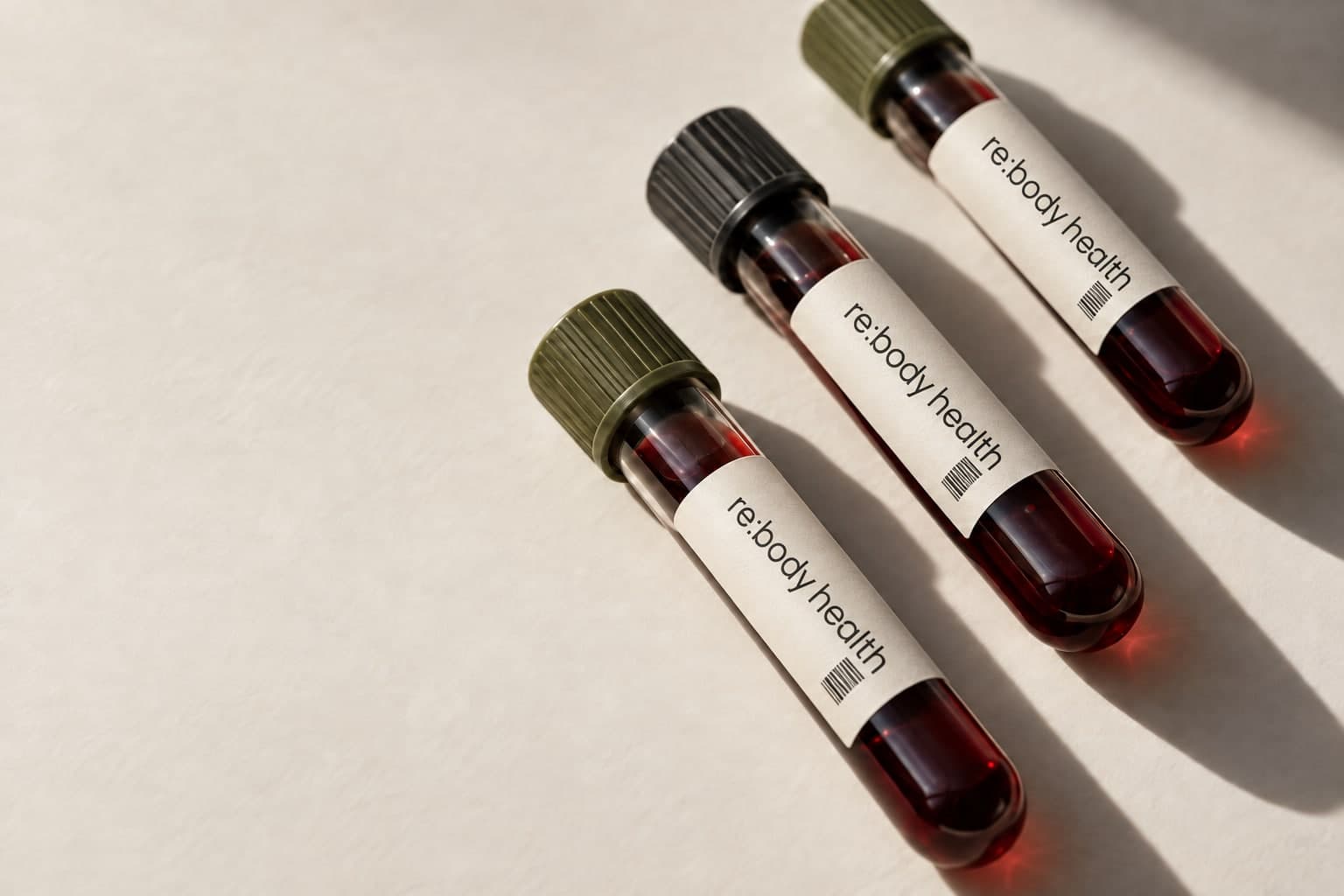
Complete panel
We will email you when ordering opens.
Hormones, thyroid, heart and metabolic markers in one order.
ApoB and hs-CRP add depth to a standard lipid panel.
IGF-1 and testosterone measured by mass spectrometry.
What we test
The men's panel has 19 markers. The women's panel has 20: it adds estradiol and progesterone, uses a testosterone test made for women's levels, and leaves out PSA.
19 markers in the men panel
Lipids, cholesterol particles and inflammation.
Blood sugar, liver and kidney markers.
Blood cells, iron stores and vitamin D.
Sex hormones, pituitary signals and IGF-1.
Thyroid signals and hormones.
Marker by marker
Open a marker to see what it measures.
Reference ranges vary by laboratory and method. Read each result with the range on your report.
Total cholesterol, LDL, HDL and triglycerides, with ratios such as total cholesterol to HDL.
Counts the particles that carry cholesterol, including LDL. Each of these particles carries one ApoB protein.
High-sensitivity C-reactive protein. The liver makes it in response to inflammation, and this test measures it at low levels.
Glucose, electrolytes, kidney markers such as creatinine, and liver markers such as ALT and AST.
Your average blood sugar over the past two to three months.
The hormone that moves sugar from your blood into your cells. Read it alongside your glucose result.
Gamma-glutamyl transferase, an enzyme in the liver and bile ducts.
Red cells, hemoglobin, hematocrit and platelets, plus a count of each of the five types of white blood cell.
A protein that stores iron. Blood ferritin shows the size of your iron reserves.
25-hydroxy vitamin D, the form labs measure to check your vitamin D status.
Total testosterone by mass spectrometry and free testosterone by equilibrium dialysis. SHBG is the protein that binds testosterone in your blood.
Testosterone by mass spectrometry, a method made for the lower levels typical in women.
The main form of estrogen. Men make some of it from testosterone. In women, the level changes across the menstrual cycle.
A hormone that rises after ovulation. Read your result with the day of your cycle.
Luteinizing hormone. The pituitary gland sends it to signal the testes or ovaries to make sex hormones.
Follicle-stimulating hormone. A pituitary hormone for sperm production and the growth of ovarian follicles.
A pituitary hormone. It is best known for milk production, and it also affects reproductive hormones.
Insulin-like growth factor 1, measured by mass spectrometry. Its level follows growth hormone activity.
Prostate-specific antigen, a protein made by the prostate. Clinicians read it with your age, history and earlier results.
A pituitary hormone that signals your thyroid to make thyroid hormones.
The active thyroid hormone, measured in its unbound form.
The main hormone your thyroid releases, measured in its unbound form.
From collection to clarity
Join the list now. When ordering opens, choose your panel and receive your lab order.
Visit a Quest patient service center. Book a time or walk in, and lab staff draw your blood.

Your results come into your Rebody account. Compare them with every test you take after.
Establish your baseline
A baseline gives you a reference point. Retest later and compare each marker with your first result.
Join the waitlistCollection
| What to expect | Quest patient service center |
|---|---|
| Collection | Blood draw from a vein by lab staff |
| Where | A Quest patient service center near you |
| When | Book a time, or walk in |
| Availability | Every panel on this page |
Not yet. The Complete panel is coming soon. Join the list and we will email you when ordering opens, with pricing.
Lab staff draw blood from a vein at a Quest patient service center. You can book a time or walk in.
Your lab order lists any fasting or timing instructions for your tests. Follow those instructions, and ask your care team before you change a prescribed medication.
Your results come into your Rebody account, next to any bloodwork you already keep there.
No. A lab panel measures markers in your blood. A clinician interprets results with your history and symptoms, and reference ranges vary by lab and method.
The Complete panel covers the core markers. The Advanced panel adds Lp(a), homocysteine, iron and nutrient markers, adrenal hormones, thyroid antibodies and urine tests.
Complete panel · Coming soon
Get an email when the Complete panel opens for ordering.
Already have bloodwork? Bring your results to Rebody