The reason people come looking is not a bottle or a dose. It is the afternoon crash, the second coffee that stopped helping, travel recovery that takes the whole weekend, or focus that keeps breaking before the work is done.
NAD+ gives those frustrations a precise biological question. Cells use this coenzyme while converting nutrients into usable energy, and NAD+-consuming enzymes participate in DNA repair, stress responses, and cellular signaling.
A 2026 systematic review examined NAD+ supplementation across anti-aging and wellness research. Human studies of oral NAD+ precursors frequently moved NAD-related blood or cellular markers, while functional, metabolic, vascular, and cognitive outcomes varied by study and endpoint. That is the human research scope; Rebody's direct-NAD+ injection, nasal spray, and tablet are different finished products.
Verified Rebody customers using NAD+ describe one coffee being enough, reading after lunch again, school mornings feeling less punishing, and travel taking less out of the next day. Those are individual experiences, but they are also the outcomes worth measuring in a real week.
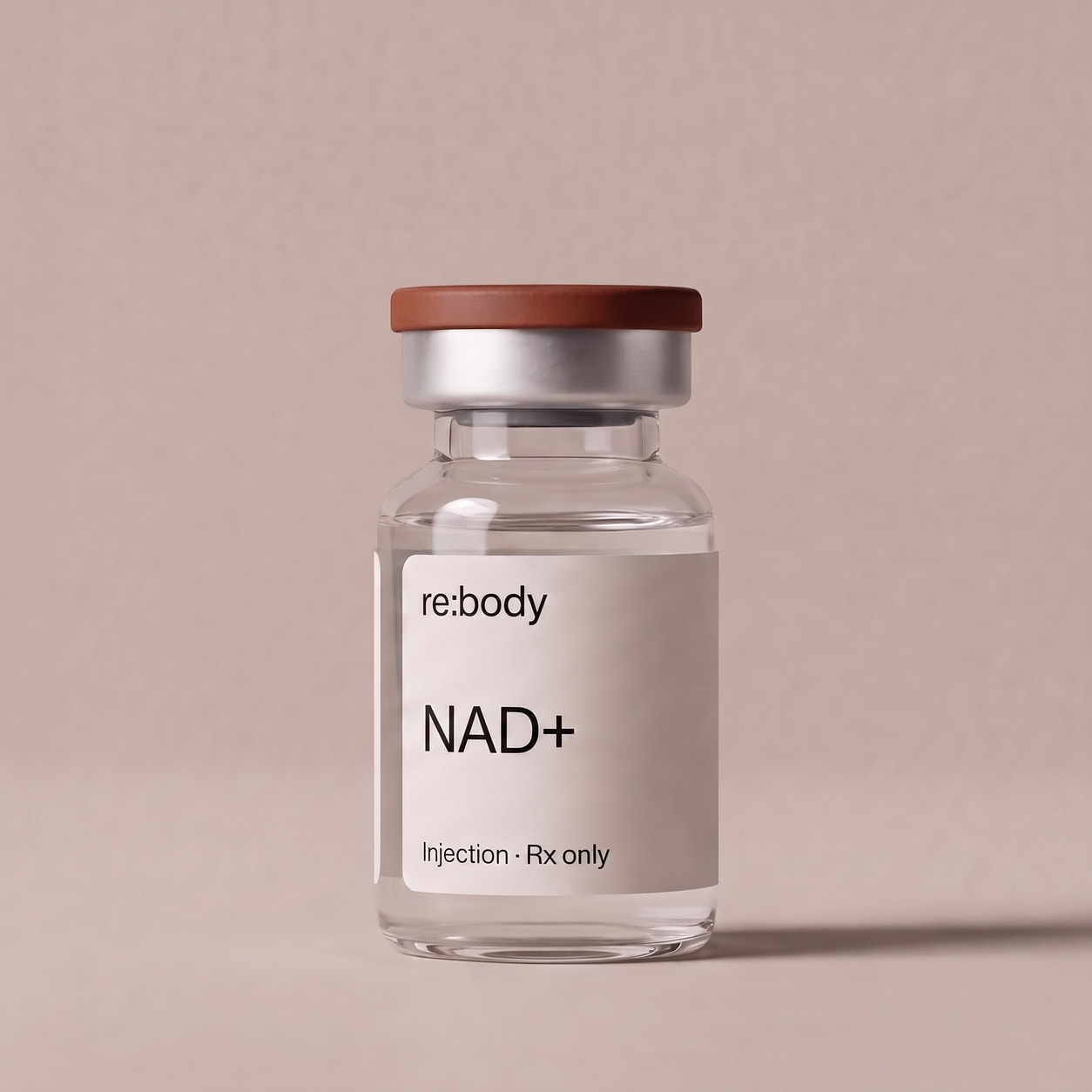
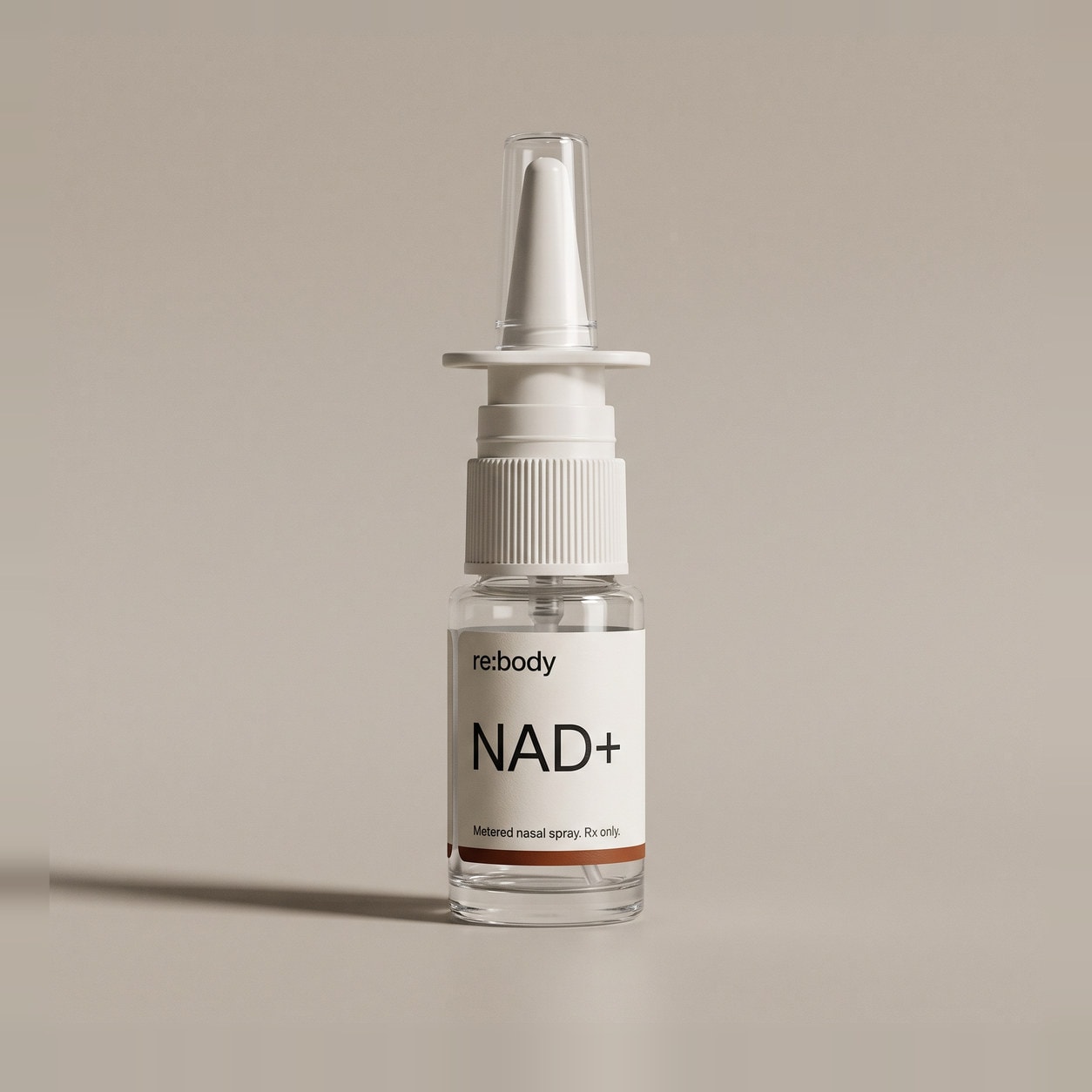
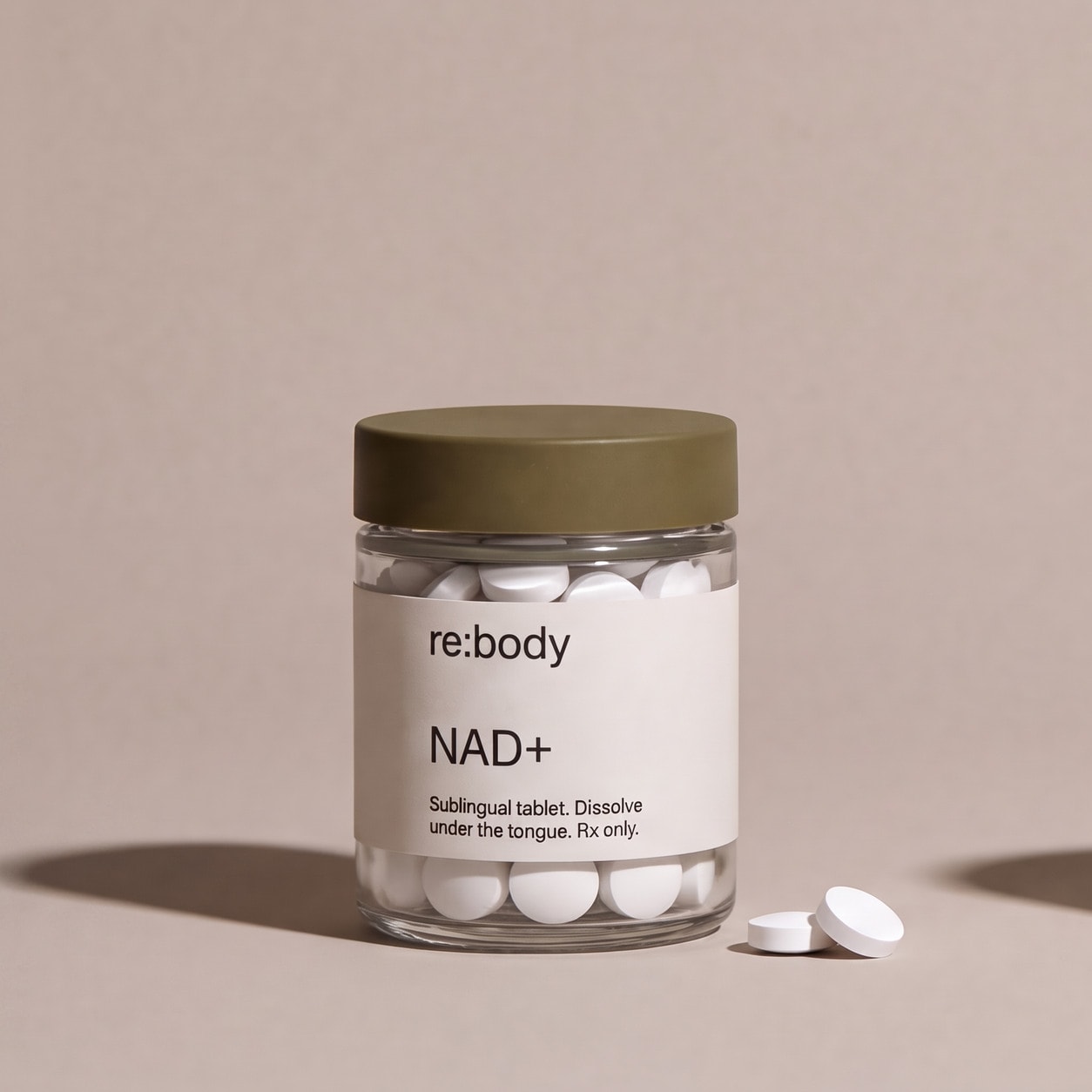
Rebody offers three ways to bring direct NAD+ home: a three-times-weekly injection, a metered nasal spray, or a daily tablet that dissolves in the mouth.
The NAD+ nasal spray is our pick for most people. It is the least expensive Rebody format at $59.50 for the first month, then $119 per month. It stores at room temperature, travels in one small bottle, and does not add injection supplies to the week.
Choose the injection when a structured three-times-weekly schedule works better than a daily product. Choose the sublingual tablet when needles are out, nasal congestion makes a spray impractical, and a titrated tablet routine is worth $99.50 for the first month, then $199 per month.
Each route gives the same direct-NAD+ intention a different shape. Start with the change you want to feel; use price, schedule, storage, and the routine you can maintain to break the tie.
Start with the outcome; choose the routine second
| NAD+ injection | NAD+ nasal spray | NAD+ sublingual tablets | |
|---|---|---|---|
| Format | Compounded subcutaneous injection | Compounded nasal spray | Compounded under-the-tongue tablet |
| Current strength | 200 mg/mL | 300 mg/mL | 200 mg per tablet |
| Current schedule | Inject 25 units (50 mg) three times weekly for 8 weeks | 1 spray in each nostril once daily; may increase to twice daily after 1 week if tolerated | 50 mg daily for week 1, 100 mg daily for week 2, then 200 mg daily |
| Package | 6 mL vial | 12 mL bottle | 20-tablet initial package |
| Supply | 56 days | 30 days | MDI-listed 30-day initial supply |
| Storage and shipping | Ships cold with injection supplies | Room-temperature bottle; keep away from heat | Room-temperature bottle |
| Advertised price | $223.50 first 2-month shipment after $74.50 off; then $298 every 2 months ($149/month equivalent) | $59.50 first month, then $119/month | $99.50 first month, then $199/month |
| Package billing | No 1-month plan; 56-day vial billed every 2 months | 30-day bottle | 20-tablet initial package; MDI has a separate 30-tablet refill offering |
| Best practical reason to choose it | A defined 8-week injection course | Lowest price and simplest object to carry | Needle-free titration when nasal use is a poor match |
Prices and packages were checked July 30, 2026. The injection has no one-month plan: Stripe charges $223.50 for the first two-month shipment after $74.50 off, then $298 every two months. The other formats have monthly plans.
Which NAD+ treatment is best?
Best overall: NAD+ nasal spray
The nasal spray has the strongest practical case for a first purchase. It costs less than the injection's monthly equivalent and the sublingual tablets, both during the first-month offer and afterward. One room-temperature bottle holds a 30-day supply. It is the easiest format to place beside a toothbrush, put in a carry-on, or keep visible enough to remember.
The weakness is the nose itself. Congestion, seasonal allergies, dryness, irritation, nosebleeds, or a pump you dislike can turn a small bottle into a routine you avoid. A nasal spray only wins when nasal use is comfortable and the prescribed schedule becomes automatic.
Best for a defined eight-week injection routine: NAD+ injection
The injection puts NAD+ on three scheduled days each week for eight weeks. For someone who is comfortable with self-injection and wants a defined course, that structure can matter more than needle avoidance.
The full routine includes cold shipping, refrigerated storage, drawing the prescribed volume, injection technique, site rotation, and sharps disposal. If any of those steps make you postpone the dose, the routine may be a poor fit.
Best when both needles and nasal spray are poor options: sublingual tablets
The tablet is the clear exception route. Its initial MDI offering stays at room temperature, contains 20 tablets, and titrates from 50 mg to 200 mg. It also costs the most.
The tablet's higher price makes sense only when the under-the-tongue routine is meaningfully easier than the spray. The tablet needs to dissolve according to its prescription directions rather than being swallowed immediately.
What NAD+ is
NAD+ stands for nicotinamide adenine dinucleotide. It is a coenzyme found in living cells. Cells use NAD+ while converting nutrients into usable energy, and enzymes involved in DNA repair, stress responses, and cellular signaling consume it.
NAD+ is a coenzyme rather than a peptide, hormone, stimulant, or vitamin. The body can build it from vitamin B3 compounds and other precursors, but the finished coenzyme is chemically different from niacin, nicotinamide, nicotinamide riboside, and nicotinamide mononucleotide.
That distinction matters because the NAD market mixes several products under one short name:
- Direct NAD+ is the ingredient in Rebody's injection, nasal spray, and sublingual tablets.
- NADH is the reduced form of the NAD redox pair.
- NR, or nicotinamide riboside, is a precursor the body can use to make NAD+.
- NMN, or nicotinamide mononucleotide, is another precursor.
- Niacin and nicotinamide are vitamin B3 forms that participate in NAD metabolism.
A study of swallowed NR does not prove a result for compounded nasal NAD+. A sublingual NMN study does not establish the absorption of a direct NAD+ tablet. The label needs to name the actual ingredient, not merely promise to “boost NAD.”
Energy is built upstream
Most people arrive because usable energy, concentration, or recovery no longer feels as steady as it once did. NAD+ gives that frustration a precise upstream target: cells use this coenzyme while converting nutrients into usable energy, and NAD+-consuming enzymes participate in DNA repair, stress responses, and cellular signaling.
Rebody turns that biology into three direct-NAD+ routines at home. The nasal spray is the simplest first move; the injection uses three scheduled doses weekly for eight weeks; the sublingual tablet begins with a two-week titration.
Persistent exhaustion can also begin with sleep, iron, B12, thyroid, medication, mood, under-eating, overtraining, infection, or cardiopulmonary disease. Keep that cause-first evaluation in view when fatigue is severe or persistent, without making it the emotional center of a page for people deliberately seeking NAD+.
What human research already shows—and what comes next
A 2026 systematic review examined NAD+ supplementation across anti-aging and wellness research. Human studies of oral NAD+ precursors frequently moved NAD-related blood or cellular markers, while functional, metabolic, vascular, and cognitive outcomes varied by study and endpoint. That human biomarker record reinforces how responsive NAD biology can be while leaving room for stronger route-matched outcomes research on direct NAD+.
The practical differences among Rebody's three direct-NAD+ formats are already decisive. The nasal spray wins on price, room-temperature storage, and travel. The injection offers a defined eight-week course. The sublingual tablet wins when both needles and nasal use are poor matches.
This evidence section keeps precursor studies separate from Rebody's direct-NAD+ products and IV research separate from subcutaneous, nasal, and sublingual routes. That is the necessary boundary; it does not erase NAD+'s established role in cellular metabolism or the value of a routine built around direct NAD+.
Why do NAD-related biomarkers matter?
A biomarker shows that an intervention reached an NAD-related pathway, which is an important biological result. Felt energy, focus, recovery, and healthy-aging outcomes need their own measures, so pair the science with one or two repeatable changes that matter in your week.
A 2026 analysis across seven human cohorts reported that whole-blood NAD+ was remarkably stable across age and lifestyle interventions. That finding also argues against treating one blood NAD+ number as a universal score for youth or treatment success.
Why choose NAD+ nasal spray?
The Rebody nasal spray puts 300 mg/mL NAD+ into one room-temperature 12 mL bottle for a 30-day routine. It is the lowest-priced current Rebody NAD+ format and the easiest to travel with. Those advantages stand on their own; no speculative nose-to-brain claim is needed.
Are injections proven more effective than tablets or spray?
No direct human trial has established that ranking for these finished products. An injection and an IV are also different routes. A clinic's IV protocol cannot be converted into an at-home subcutaneous schedule, and bloodstream entry does not guarantee a stronger felt outcome.
For the detailed route evidence and ownership comparison, read NAD+ injection vs nasal spray vs sublingual tablets.
NAD+ injection: one dose day and a full injection routine
Rebody's current injectable is NAD+ 200 mg/mL in a 6 mL vial. The active MDI schedule is 25 units (50 mg) subcutaneously three times per week for eight weeks. The 56-day vial has no one-month plan: the first shipment is $223.50 after $74.50 off, then $298 every two months ($149 per month equivalent).
The injection is the only one of the three formats that requires injection supplies and cold handling. It asks for three scheduled dose days each week.
What arrives
The current package ships cold with injection supplies and directions. Keep the pharmacy label and packing list. The exact syringe, needle, wipe, and disposal supplies can change; the shipment should be checked before the first dose.
What if the vial arrives warm, frozen, cloudy, cracked, or leaking?
Do not inject it while guessing whether it is fine. Photograph the vial, label, package, and temperature materials, keep everything together, and contact the dispensing pharmacy or Rebody for handling instructions.
What if the injection hurts?
Brief site discomfort, redness, or irritation can occur. Persistent pain, spreading redness, warmth, drainage, or worsening swelling deserves prompt contact with the care team. Severe swelling, trouble breathing, fainting, or chest symptoms require urgent medical attention.
NAD+ nasal spray: one small room-temperature bottle
Rebody's nasal spray contains NAD+ 300 mg/mL in a 12 mL bottle. The bottle is a 30-day supply advertised at $59.50 for the first month, then $119 per month. It stores at room temperature away from heat.
The active MDI directions are one spray in each nostril once daily, with an increase to one spray twice daily after one week if tolerated. Another clinic's bottle can have a different concentration, pump, package, and prescribed schedule.
What if you are congested or have allergies?
Congestion, a cold, seasonal allergies, irritation, or a deviated septum can change comfort and spray distribution. Do not compensate with extra sprays. Ask whether to continue, pause, or adjust technique according to the prescription directions.
What if it runs down your throat or leaves a bad taste?
Runoff can reflect head position, pump angle, congestion, or forceful sniffing. Review the supplied technique before repeating a dose. Tasting medication does not authorize an extra spray.
What if the pump leaks or stops working?
Do not pour prescription medication into a different bottle or estimate the missing dose. Keep the bottle and contact the pharmacy or Rebody. A damaged metered pump can make delivery unreliable.
NAD+ sublingual tablets: a familiar bottle with different directions
Rebody's sublingual treatment contains 200 mg of NAD+ per tablet. The initial MDI offering contains 20 tablets and is listed as a 30-day supply. It starts at one-quarter tablet (50 mg) daily for one week, then one-half tablet (100 mg) daily for one week, then one whole tablet (200 mg) daily. It is advertised at $99.50 for the first month, then $199 per month. MDI also lists a separate 30-tablet refill offering at 200 mg daily.
The tablet offers a compact, room-temperature routine for someone who will not inject and does not want a nasal product. “Oral is always better” is not an evidence-based route rule.
What if you swallow the tablet early?
Do not automatically take another. Follow the pharmacy's directions or ask the care team. Replacing a partially dissolved dose without knowing how much was delivered can result in unintended dosing.
Can it be taken like an ordinary supplement?
No. This is a compounded prescription tablet with product-specific directions. It should not be added to a general supplement organizer and used according to an online NAD stack.
At-home NAD+ versus an IV clinic
NAD+ IV sessions dominate the search results. They also answer a different ownership question.
An IV places material directly into a vein during a clinic session. That can mean travel, a chair, venous access, an infusion lasting hours, a per-session price, and sometimes a bag containing several ingredients rather than NAD+ alone.
At-home treatment changes the routine:
- the injection uses three dose days each week and a refrigerated vial;
- the spray uses one room-temperature bottle on its prescribed schedule;
- the tablet creates a daily under-the-tongue habit.
A 2019 pharmacokinetic pilot followed eight people receiving 750 mg of intravenous NAD+ over six hours and three saline controls. It measured plasma and urinary NAD-related metabolites, not better energy, cognition, recovery, or longevity. Direct bloodstream delivery is a route fact, not proof that the IV chair produces the best wellness outcome.
If a clinically necessary infusion is the goal, a home spray is not a substitute. If the goal is a repeatable direct-NAD+ routine, an at-home format usually wins on time and logistics.
Choose by the week you really live
If you travel often
The nasal spray is the simplest physical format. The spray and tablets both store at room temperature and fit in a small bottle. Keep prescription medication in original labeled packaging, carry it rather than checking it when practical, and verify destination rules for international travel.
If you prefer a defined injection schedule
The injection may fit, provided three weekly dose days and injection setup do not become a new form of avoidance. Put all three dose days on the calendar and keep the supplies together.
If needles are a firm no
Start with the nasal spray. Move to the sublingual tablet when nasal use is uncomfortable or impractical. The tablet carries a materially higher monthly price, so there should be a real reason for the switch.
If price decides the first trial
The nasal spray wins on price at $59.50 for the first month, then $119 per month. The injection's first charge is $223.50 for two months, then $298 every two months ($149 monthly equivalent). The tablet is $99.50 for the first month, then $199 per month.
If you want the “strongest” route
Define strongest. If it means a defined eight-week course, the injection may win. If it means lowest price and least travel equipment, the spray wins. If it means best proven health outcome, current human evidence does not name a winner.
Decide what you will measure before you start
“More energy” is too easy to reinterpret after the fact. Pick two or three observations that matter in your week:
- whether you add a second coffee in the afternoon;
- whether you finish a normal workday without an unusual crash;
- the duration of one repeatable focus block;
- sleep continuity and how rested you feel;
- training volume, repeated performance, or soreness duration;
- whether travel wipes out the following day;
- whether the treatment routine itself keeps getting missed.
Keep sleep, caffeine, training load, and other major variables as steady as practical while judging the result. If the product costs money, creates friction, and produces no meaningful change, the mechanism alone is not a reason to keep paying.
Storage, travel, refills, and missed doses
How should the products be stored?
The current injection ships cold and follows refrigerated handling on its label. The current nasal spray and sublingual tablets store at room temperature away from excessive heat. The pharmacy label wins if any general page says something different.
Can you leave NAD+ in a hot car?
Do not leave NAD+ treatment in a hot car. Bring the package inside and ask the pharmacy about significant heat or freezing exposure before continuing.
What happens after a missed dose?
Do not double the next injection, take a second tablet, or add sprays unless the prescription directions explicitly say to. Route and concentration change the answer. Use the label or message the care team.
How do refills differ?
The injection is sold as a 56-day vial and billed as a two-month package. The spray has a monthly plan, and the tablet begins with a 20-tablet MDI-listed 30-day package. Confirm the billing and refill date shown with the current plan rather than assuming that every NAD+ product renews monthly in the same way.
Side effects and safety questions
Side effects depend on the route and the individual. Injection-site redness, pain, or swelling can occur with injectable treatment. Nasal products can cause burning, dryness, irritation, unpleasant taste, or nosebleeds. Headache, nausea, lightheadedness, flushing, or other symptoms have been reported across NAD-related products and infusion settings, but evidence from one formulation should not be copied into a universal frequency table.
FDA has received adverse-event reports involving compounded injectable NAD+, including severe chills, shaking, vomiting, and fatigue. Some patients required medical treatment. FDA linked the reports to possible excessive endotoxins from ingredients unsuitable for sterile compounding. That is a concrete reason to use the labeled prescription from a licensed pharmacy and to stop using a vial that arrives damaged or visibly changed.
Tell the prescriber about prescription medications, over-the-counter drugs, supplements, infusions, pregnancy or plans to conceive, breastfeeding, cancer treatment, significant liver or kidney disease, cardiovascular symptoms, and previous reactions.
Seek urgent medical attention for chest pain, trouble breathing, fainting, facial or throat swelling, severe confusion, or another severe reaction. Contact the care team for persistent route irritation, repeated vomiting, worsening headaches, or symptoms that return after each dose.
Can you combine NAD+ with NR, NMN, B12, glutathione, or peptides?
Do not build a larger stack merely because several products are sold under energy or longevity. Each ingredient needs its own reason, dose, route, and evidence. Never mix medications in the same vial, syringe, nasal bottle, or infusion bag unless the dispensing pharmacy has prepared and labeled that exact formulation.
Can you use NAD+ during pregnancy or breastfeeding?
Human data for these compounded direct-NAD+ routes are inadequate. Do not assume use is safe during pregnancy or breastfeeding.
Buying NAD+ treatment online
The letters “NAD” on a product page do not tell you what you are buying. Before paying, find:
- the exact active ingredient;
- whether it is direct NAD+, NADH, NR, NMN, niacin, or a blend;
- route and finished form;
- concentration or tablet strength;
- package quantity and days of supply;
- prescribed schedule;
- storage and shipping requirements;
- full package price and monthly equivalent;
- prescription and compounding status;
- how damaged shipments, side effects, and refills are handled.
Rebody's three NAD+ formats are compounded prescription medications filled by a licensed U.S. compounding pharmacy. Compounded medications are not FDA-approved finished drugs, and they are not equivalent to marketplace supplements carrying similar language.
Avoid sellers offering prescription NAD+ without a prescription, asking you to mix unlabeled powder, hiding the concentration or supply, or assigning precise absorption percentages without product-matched human research.
NAD+ treatment FAQs
What does NAD treatment do?
NAD+ participates in cellular energy metabolism and is consumed by enzymes involved in DNA repair and stress responses. Human evidence does not establish a predictable felt improvement from Rebody's three compounded formats.
Is NAD+ a stimulant?
No. NAD+ is not caffeine or another conventional stimulant. A person's report of feeling alert after use does not create a predictable immediate effect.
Is NAD+ the same as vitamin B12?
No. Vitamin B12 is an essential vitamin involved in blood formation and nervous-system function. Low B12 can be tested and corrected. NAD+ is a different molecule and a different treatment question.
Is NAD+ the same as glutathione?
No. Glutathione is an antioxidant molecule. NAD+ participates in redox and energy metabolism. They should not be presented as stronger and weaker versions of the same energy shot.
Why do people choose NAD+ when energy feels less steady?
NAD+ sits at the center of cellular energy metabolism, so it is a logical direct-coenzyme choice when someone wants to work upstream rather than add another stimulant. Define the fatigue pattern—afternoon crash, work capacity, training output, or travel recovery—and track that specific outcome.
How should focus be tracked during a NAD+ routine?
Use a repeatable focus block, proofreading task, reading interval, or error count at the same time of day. Keep sleep, caffeine, meals, and medication timing visible so a real pattern can emerge instead of relying on one unusually sharp afternoon.
How should recovery be tracked during a NAD+ routine?
Track the same session, training volume, soreness duration, and readiness for the next planned workout. NAD+'s role in cellular metabolism makes recovery a compelling question; repeatable measures make the answer useful.
Why is NAD+ central to healthy-aging research?
NAD+ participates in energy metabolism, redox reactions, DNA repair, stress responses, and cellular signaling—systems that sit at the center of aging biology. Human research has moved NAD-related biomarkers, while healthspan outcomes remain an active next question.
Can NAD+ cause weight loss?
NAD+ is not an established weight-loss medication. A change reported by one customer does not establish predictable fat loss.
Can NAD+ treat addiction or withdrawal?
Commercial clinics market NAD+ infusions for addiction recovery, but systematic reviews have not established that treatment. Withdrawal can be medically dangerous and should not be self-treated with NAD+.
How quickly does NAD+ work?
There is no validated onset clock for these compounded formats. Websites promising an exact number of minutes are outrunning product-matched human evidence.
How long should you try NAD+?
There is no universal trial period supported by route-matched outcomes research. Use the prescribed supply, set a review date, and decide whether a concrete benefit is worth the price and routine.
Is NAD+ therapy worth it?
The nasal spray is the most defensible first Rebody purchase at $59.50 for the first month, then $119 per month. Continuing any format should depend on a repeatable benefit that matters more than the cost and inconvenience.
Can a blood test show whether treatment is working?
Specialty laboratories can measure NAD-related metabolites. A whole-blood value is not a validated score for energy, youth, focus, or treatment success.
Does insurance cover NAD+?
Coverage varies, and wellness-oriented compounded prescriptions are often self-pay. Verify benefits with the plan before purchase.
Can an HSA or FSA pay for NAD+?
Eligibility depends on the plan rules and administrator. Card acceptance does not guarantee reimbursement.
Can you buy the same NAD+ products on Amazon?
Do not assume so. Marketplace supplements, oral sprays, cosmetics, and precursor products can differ in ingredient, concentration, route, directions, and legal status. Match the complete label, not the letters “NAD.”
Do you need a prescription?
Yes. Rebody's injection, nasal spray, and sublingual tablets are compounded prescription medications. Payment does not guarantee that treatment will be prescribed.
Start with direct NAD+ in one small bottle
Start with NAD+ nasal spray when you want to support energy at the cellular source with the simplest Rebody routine. It has the lowest current price, the easiest travel profile, room-temperature storage, and one compact 30-day bottle.
Choose the injection when three dose days a week for eight weeks fit your routine. Choose the sublingual tablet when needles and nasal spray are both poor options and the titrated dissolve-in-mouth routine is worth its higher monthly price. Pick the outcome that matters, set a review date, and give the direct-NAD+ routine a fair, consistent trial.
Primary sources
- Gallagher C, Emmanuel OO. NAD+ supplementation for anti-aging and wellness: a PRISMA-guided systematic review of preclinical and clinical evidence. Ageing Research Reviews. 2026;116:103057.
- Grant R, et al. Changes in the human plasma and urine NAD+ metabolome during a six-hour intravenous infusion. Frontiers in Aging Neuroscience. 2019;11:257.
- Gindri IM, et al. Evaluation of safety and effectiveness of NAD in different clinical conditions: a systematic review. American Journal of Physiology-Endocrinology and Metabolism. 2024;326:E417-E427.
- Covarrubias AJ, Perrone R, Grozio A, Verdin E. NAD+ metabolism and its roles in cellular processes during ageing. Nature Reviews Molecular Cell Biology. 2021;22:119–141.
- Trętowicz MM, et al. Human whole-blood NAD+ levels do not vary with age or lifestyle interventions. Nature Metabolism. 2026.
- U.S. Food and Drug Administration. Compounding and the FDA: Questions and Answers.
- U.S. Food and Drug Administration. FDA reminds compounders to use ingredients suitable for sterile compounding.
- U.S. Food and Drug Administration. Safely Using Sharps at Home, at Work and on Travel.