
Rat Achilles-tendon study
Function was checked daily; tissue and biomechanics were examined at five points.
 BPC-157
Prescription BPC-157
In rat studies, BPC-157 improved measures of tendon and ligament healing and showed anti-inflammatory activity across several injury models.
$319/month
What the animal studies measured
The studies tracked movement, tissue strength, collagen organization, visible repair, and inflammatory activity across injury models.
Function was checked daily; tissue and biomechanics were examined at five points.
The studies followed functional, biomechanical, microscopic, and visible repair measures.
Movement, load handling, tissue microscopy, and integrity were assessed.
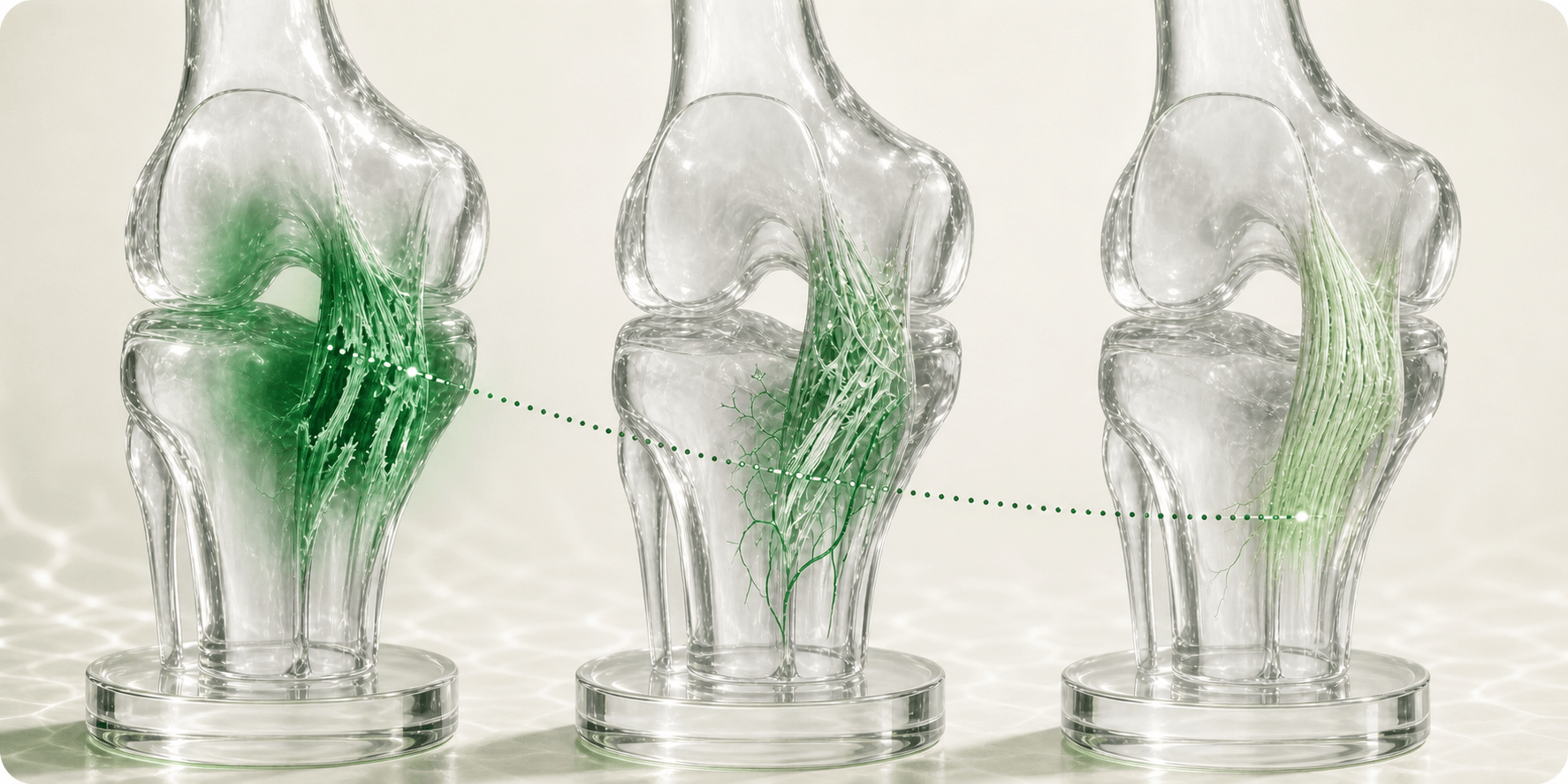
Rat tendon + ligament studies
Across Achilles-tendon, ligament, and myotendinous injury models, the studies reported improvements in functional, biomechanical, microscopic, and tissue-healing measures.
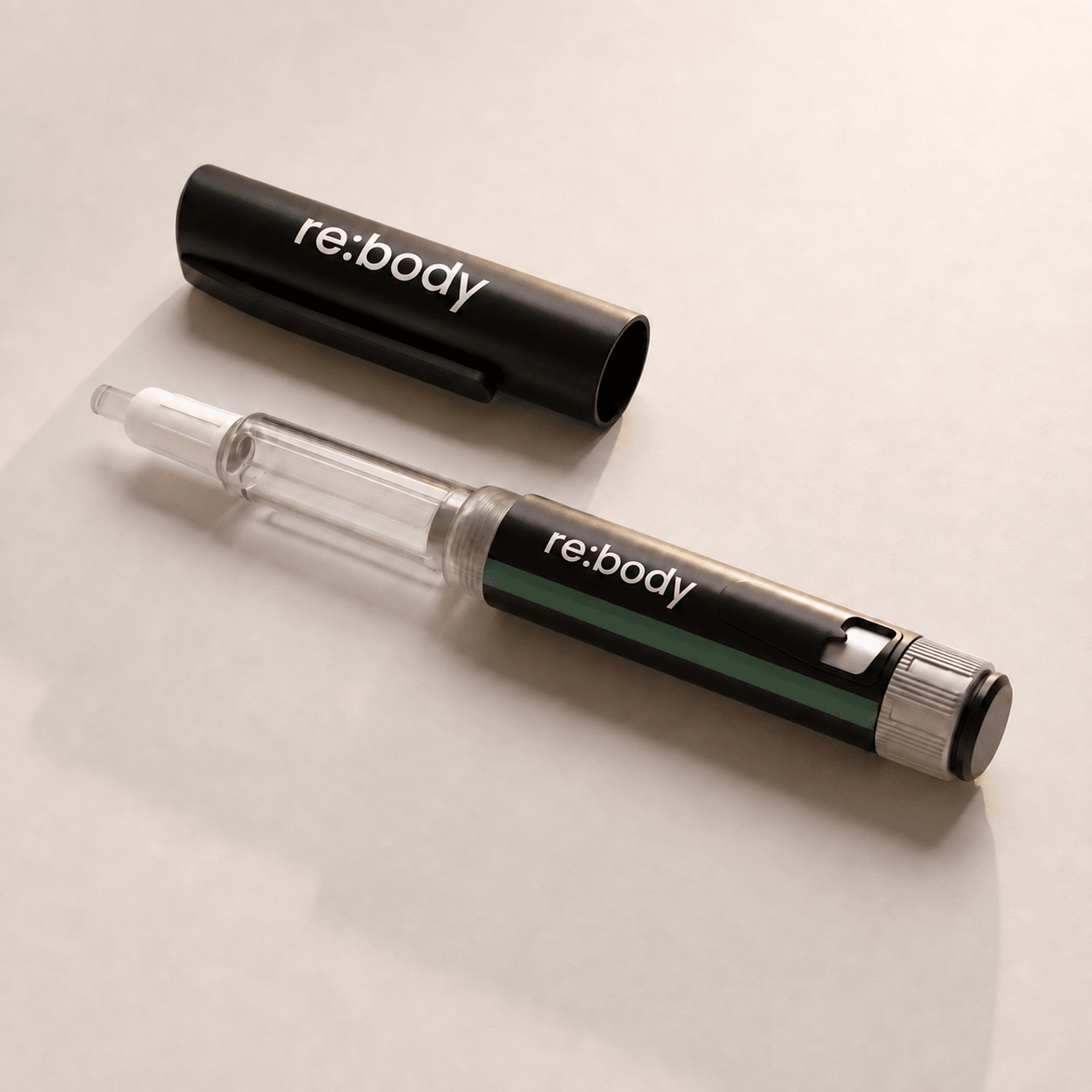 Device concept
Planned BPC-157 pen
BPC-157
Study notes, product details, and sources live in your Rebody account.
BPC-157 evidence and product details in one Rebody account.
Peptide news and occasional emails. Unsubscribe anytime.
BPC-157 questions
Study notes, product details, sources, and the practical questions around formulation, strength, supply, storage, and price.
Rat studies have reported better functional, biomechanical, microscopic, and tissue-healing measures after tendon, ligament, and myotendinous injury.
The planned prescription uses a reusable pen with one 3 mL cartridge. It contains 9 mg total at 3 mg/mL. The prescribed routine is 12 units under the skin, Monday through Friday, with 25 doses each month.
No. Compounded medications are not FDA-approved. A BPC-157 prescription would be prepared for an individual patient by a licensed U.S. compounding pharmacy.