
Peptide guide: This guide covers the research, molecular identity, product details, and the practical questions worth checking.
The short answer
Multi-peptide formulas can unite complementary recovery biology in one streamlined routine. BPC-157 brings tendon and ligament research, TB-500 adds an actin-fragment lane, and KPV contributes inflammatory-signaling biology.
Options at a glance
| Option | Research lane | Practical advantage | Main tradeoff |
|---|---|---|---|
| BPC-157 alone | Rat tendon and ligament models | Cleanest tissue-specific comparison | Human recovery efficacy not established |
| TB-500 alone | Seven-amino-acid actin-fragment lane | Distinct identity and possible schedule | No identified human efficacy study |
| Combination vial | Both actives | One-vial convenience | No direct proof that the blend works better |
What belongs in this category
This page covers formulas with more than the familiar BPC-157/TB-500 pair. Every added active needs a named job, its own quantity on the label, and evidence that actually matches the tissue and route being discussed.
The strongest multi-peptide formulas give every active a defined job and make the routine easier through one preparation, one storage plan, and coordinated refills. Fixed ratios and attribution remain the tradeoffs to weigh against that convenience.
What these molecules are
BPC-157 is a fifteen-amino-acid peptide. TB-500 commonly refers to an acetylated seven-amino-acid fragment related to thymosin beta-4. A combination vial must name both exact actives and state whether listed milligrams apply to each ingredient or to the total blend.
Full thymosin beta-4 is not TB-500, and a blend is not the same product as either solo vial. Evidence does not transfer automatically across those identities.
What the research measured
BPC-157 has direct animal tendon and ligament studies measuring function, failure load, elasticity, collagen, vascularity, biomechanics, and histology. Those surgically injured rat models make it the closer tissue-specific research option.
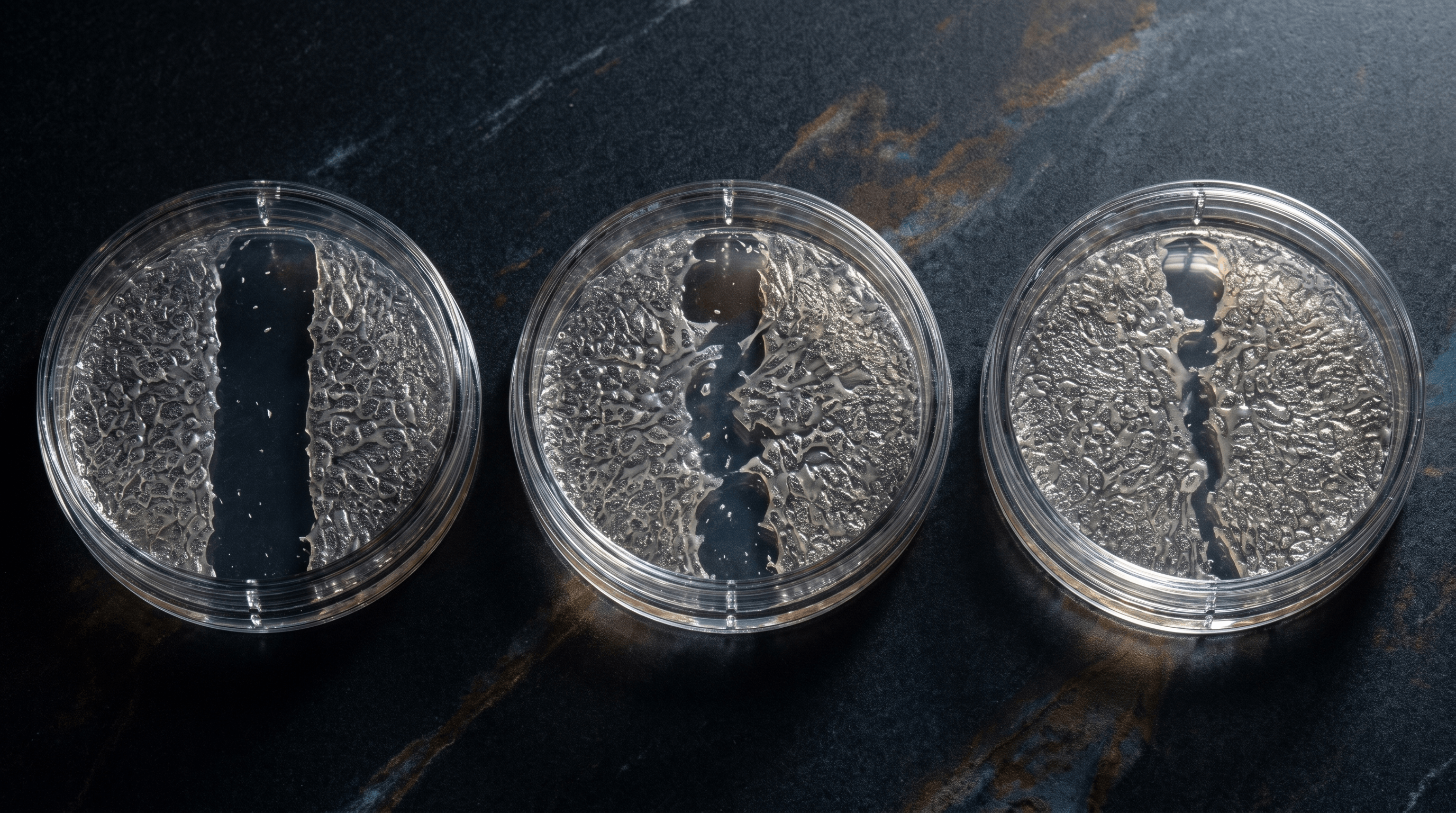
TB-500 has no identified human exposure, pharmacokinetic, safety, or efficacy study in FDA's review. Much of the cited wound story belongs to full thymosin beta-4 or a non-acetylated fragment, and a direct fibroblast scratch assay did not show a significant wound-closure difference at the tested condition.
The combination joins BPC-157's direct tendon and ligament research with TB-500's actin-fragment biology. Its clearest finished-product advantage is one-vial convenience; no cited head-to-head trial ranks it above the solo ingredients.
Which option wins this comparison
Choose BPC-157 for the strongest direct tendon and ligament match, TB-500 for the exact actin-fragment question, and a combination when complementary biology plus fewer preparation and refill events makes the routine more useful.
Do not call every option tied. The winner changes with tissue, identity, route, schedule, package, and whether the buyer values a cleaner experiment or a simpler one-vial routine.
Strength, concentration, and dose are different facts
A combination label needs concentration and prescribed amount for each active. “10 mg blend” is ambiguous unless the label states whether that means 5 mg plus 5 mg, 10 mg of each, or another ratio.
Do not mix solo vials at home to imitate a commercial blend, match milligrams across molecules, or copy a stack schedule online. A missed dose is handled through the final prescription, not by doubling both actives.
What the routine changes in real life
Solo products make cause and effect easier to read; a blend reduces vial handling. Compare injection frequency, preparation steps, storage, travel, sharps, and refill timing across the actual prescriptions.
Track one tissue-specific outcome: load tolerance, range of motion, strength, work or sport capacity, wound surface area, or a clinician-set milestone. A broad “recovery” score cannot reveal which ingredient did anything.
Storage, shipping, and travel
Use the combination vial's own label. It does not automatically inherit the storage rule of either solo ingredient, and separate vials may have different beyond-use dates.
Keep the original container, lot, and label together. Hold any product exposed to freezing, excess heat, a broken seal, crack, leak, cloudiness, particles, or color change until the dispensing pharmacy advises on that formula.
Side effects and urgent symptoms
A blend retains injection-site risks and adds uncertainty about which active caused a reaction. Watch for pain, bruising, bleeding, irritation, spreading warmth or redness, drainage, red streaking, fever, facial swelling, breathing trouble, or fainting.
Human systemic safety evidence is limited for both actives, and combination safety is not established. Pregnancy, cancer or immune treatment, clotting concerns, medication interactions, and tested-athlete status require direct review.
Price, supply, and refills
Compare solo and combination options by total course cost and handling burden. Include verified supply, frequency, syringes, shipping, storage, refill timing, and whether the blend replaces one full routine.
The blend earns a premium for real convenience, not for an unsupported synergy claim. If only one ingredient answers the tissue question, the smaller formula is the clearer value.
Questions people ask before starting
Can I take BPC-157 and TB-500 every day?
Use TB-500 or BPC-157 only on the exact schedule printed on the prescription label. The compounds have different identities and historical schedules, and an online daily stack does not establish a safe or effective course. Do not turn the comparison into an unstudied home-mixed stack. A combination label must state the amount and schedule of each active rather than borrowing a daily stack online.
What are the risks of taking TB-500?
No human TB-500 exposure, pharmacokinetic, safety, or efficacy study was identified in FDA's review. That leaves systemic risks undefined in addition to ordinary injection risks such as pain, bruising, contamination, and infection. TB-500 is also prohibited for tested athletes. A blend adds attribution and interaction uncertainty beyond the already limited solo evidence.
Is TB-500 the same as thymosin beta-4?
No. TB-500 commonly refers to a seven-amino-acid fragment related to residues 17–23 of thymosin beta-4. Thymosin beta-4 is a 43-amino-acid protein, so its human wound studies cannot be presented as TB-500 trials. The distinction matters because a BPC-157/TB-500 vial contains a fragment, not the 43-amino-acid parent protein.
What changes between 5 mg and 10 mg vials?
Five and ten milligrams usually describe total active in the vial, not the amount used at one time. Compare concentration, prescribed dose, frequency, days of supply, price per day, and refill timing before deciding which package is more practical. That arithmetic decides which package is more practical. For a blend, the label must show whether the headline milligrams are per active or combined total.
Is the BPC-157 and TB-500 combination proven to work better?
No direct trial cited here establishes that the blend improves a human recovery outcome or outperforms either ingredient. BPC-157 has the closer animal tendon and ligament evidence; TB-500 has a separate actin-fragment lane with no identified human efficacy study. Combining them changes convenience and attribution before it changes proof.
How should milligrams be listed in a combination vial?
The label should state the quantity or concentration of each active, not only a combined headline. “10 mg blend” could describe several ratios. The prescription also needs injection volume, amount of each active delivered per use, frequency, total supply, storage, and beyond-use date. If the ratio cannot be reconstructed from the label, the package is not ready for comparison.
When is one-vial convenience worth paying for?
It matters when both ingredients have a deliberate role and one finished vial removes a second preparation, injection, storage plan, shipment, or refill. It matters less when the prescribed frequency is unchanged or only one active answers the tissue question. Put the saved handling events beside the price premium rather than assuming a blend is automatically easier.
What if a reaction occurs after starting the blend?
Stop and contact the care team for guidance; prompt help is needed for facial swelling, breathing trouble, fainting, fever, drainage, red streaking, or a rapidly expanding hot injection-site reaction. A blend makes attribution harder because either active, an excipient, contamination, or the injection itself could be responsible. Preserve the labeled vial and lot information.
Require an ingredient-by-ingredient rationale
Create a row for every active in the stack. The row needs exact quantity, intended tissue or symptom, closest supporting model, route match, expected measure, and a reason it cannot be omitted. Empty rows expose decorative ingredients. Then examine fixed ratios, overlapping adverse effects, storage compatibility, number of injections, package waste, and whether one component can be stopped independently. Adding KPV to BPC-157 and TB-500, for example, combines intestinal inflammatory-signaling research with tendon and actin-fragment stories; it does not produce a unified recovery trial. A proprietary blend total prevents dose verification and should fail the label review. Multi-peptide formulas may reduce the number of containers, but they increase uncertainty. Convenience can be measured in preparation steps; benefit still requires evidence for the finished combination.
Complexity has a measurable cost
Count active ingredients, separate label amounts, required preparation steps, refrigerated items, injection events, refill dates, and variables that could explain a reaction. Those counts describe stack burden without speculation. A formula that removes two preparation steps may be simpler operationally even if it adds a molecule; a proprietary mixture with four undisclosed quantities is harder to audit regardless of price. Set a maximum acceptable complexity before shopping. If the same recovery goal can be investigated with one clearly labeled active, the larger stack needs evidence or a handling benefit strong enough to justify what it obscures.
Bottom line
A strong multi-peptide formula earns its place by combining complementary biology and simplifying ownership. Choose the blend when every active has a clear recovery job and one vial makes the routine easier to keep.
Keep reading
- BPC-157 + TB-500 Combination Injections
- BPC-157 and TB-500 Recovery Peptides
- BPC-157 vs TB-500 vs the Combination: Start With the Tissue, Not the Stack
Primary sources
- https://pubmed.ncbi.nlm.nih.gov/14554208/
- https://pubmed.ncbi.nlm.nih.gov/18594781/
- https://pubmed.ncbi.nlm.nih.gov/20225319/
- https://pubmed.ncbi.nlm.nih.gov/40131143/
- https://www.fda.gov/media/193343/download
- https://pubmed.ncbi.nlm.nih.gov/12581423/
- https://pubmed.ncbi.nlm.nih.gov/14500546/
- https://www.fda.gov/advisory-committees/advisory-committee-calendar/july-23-24-2026-meeting-pharmacy-compounding-advisory-committee-07232026
- https://www.wada-ama.org/en/resources/world-anti-doping-program/prohibited-list