
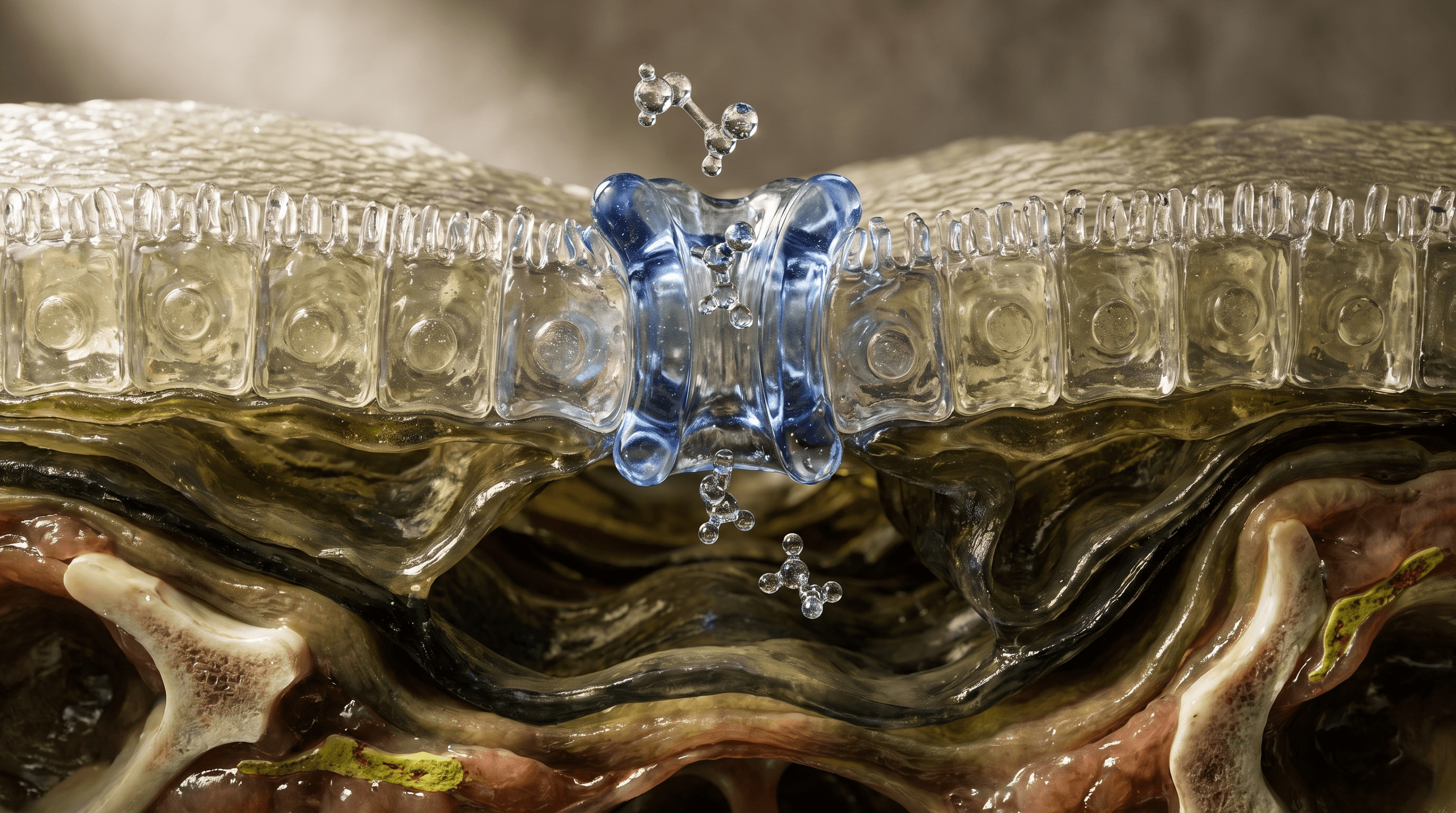
Peptide guide: This guide covers the research, molecular identity, product details, and the practical questions worth checking.
The short answer
KPV is the gut-barrier research specialist. Researchers measured its transport through PepT1 in human intestinal and immune cells, lower inflammatory signaling, and improved inflammatory and histologic measures after oral dosing in mouse-colitis models.
Options at a glance
| Option | Closest research lane | Route in key studies | Boundary |
|---|---|---|---|
| KPV | PepT1 transport and inflammatory signaling | Cells and oral mouse models | No established human injectable gut outcome |
| BPC-157 | Gastric and broader tissue-protection models | Predominantly animal work | Less direct for intestinal inflammatory signaling |
| Gastroenterology care | Diagnosis and established disease treatment | Human clinical care | Not replaced by either peptide |
What belongs in this category
This page is about the barrier claim itself: what crossed the intestinal surface, what signaling changed, and whether permeability was actually measured. KPV has the tighter mechanism story because investigators studied PepT1-mediated uptake and inflammatory pathways in intestinal cells and oral mouse models.
The work gives KPV a precise biological lane rather than a generic “gut-healing” slogan. The core experiments used cells and oral dosing in mice; injectable products require their own route-matched outcome evidence.
What these molecules are
KPV is lysine-proline-valine, the three-amino-acid C-terminal fragment of alpha-melanocyte-stimulating hormone. BPC-157 is a distinct fifteen-amino-acid peptide. The molecules differ in identity, research model, route, and endpoint.
PepT1 is an intestinal peptide transporter studied in KPV uptake. It is not a product name or proof of a treatment result. A formula containing both KPV and BPC-157 is a separate finished product, and the presence of two actives does not establish combination efficacy.
What the research measured
Researchers measured KPV uptake through PepT1 in human intestinal epithelial cells and T cells, along with lower TNF-alpha-driven NF-kappa-B and MAPK activation. In DSS and TNBS mouse colitis work, oral KPV reduced inflammatory measures; another program measured weight recovery, colonic MPO activity, cytokines, and histologic damage.
Those studies establish a direct preclinical gut-inflammation lane, not a human injectable result. The important facts are cells or mice, oral exposure in the key animal experiments, defined inflammatory endpoints, and no demonstrated outcome for a finished subcutaneous product.
BPC-157 has broader gastric and tissue-protection animal research, but its best-known tendon and ligament studies do not make it the gut-inflammation leader. Its tiny human intravenous report measured short-term laboratory markers in two previously exposed adults, not digestive symptoms or disease control.
Which option wins this comparison
KPV decisively wins the gut-inflammation research comparison because its evidence directly measures intestinal transport, signaling, cytokines, MPO activity, weight recovery, and histologic damage. BPC-157 is the broader choice when the question extends beyond intestinal inflammatory signaling.
Neither peptide replaces diagnosis or established treatment for Crohn's disease, ulcerative colitis, infection, bleeding, or persistent unexplained symptoms. The winner is a research match, not permission to abandon gastroenterology care.
Strength, concentration, and dose are different facts
Route prevents a direct dose translation. The core KPV gut studies used cells and oral dosing in mice; a KPV injection cannot borrow those schedules. BPC-157 animal protocols and a two-person intravenous report likewise do not create a subcutaneous gut dose.
Use only the finished product's prescription label. Do not combine vials, convert animal doses, or double after a missed injection. If a schedule is unclear, the dispensing pharmacy must reconcile concentration, volume, frequency, and days of supply.
What the routine changes in real life
Track digestive outcomes that can be repeated: symptom timing, bowel frequency and form, pain, bleeding, urgency, weight, food changes, and changes to established treatment. Record the start date of each change so normal fluctuation is not credited to a new vial.
An injection routine adds handling and storage without reproducing the oral route used in the mouse gut studies. That route gap belongs in the decision before cost or convenience.
Storage, shipping, and travel
Follow the final label for each finished vial; KPV and BPC-157 do not automatically share a storage range. Keep the original container, lot, and beyond-use date together, and protect the product from freezing, heat, and direct contact with ice.
After a warm shipment, accidental freezing, leak, crack, broken seal, cloudiness, particles, or color change, hold the dose for pharmacy guidance. Do not use appearance alone to declare a temperature-exposed vial safe.
Side effects and urgent symptoms
Injection-site pain, bruising, irritation, contamination, and infection are immediate route risks. Digestive red flags are separate: gastrointestinal bleeding, repeated vomiting, dehydration, fever, severe or escalating abdominal pain, and unintended weight loss need prompt medical attention.
Human systemic safety data for injectable KPV and BPC-157 remain limited. Pregnancy, breastfeeding, immune or cancer treatment, serious infection, and medication interactions require direct prescriber review.
Price, supply, and refills
Compare the complete prescribed course: package price, concentration, frequency, verified days of supply, supplies, shipping, storage, and refill timing. Then ask whether the route and evidence answer the actual gut question.
A cheaper injection is poor value when diagnosis is unresolved or the product is being asked to replace established disease care. The most useful spending decision may be evaluation, testing, or treatment adherence rather than another formula.
Questions people ask before starting
What is the best peptide for gut inflammation?
KPV leads this research comparison. Its core studies measured PepT1 transport and inflammatory signaling in intestinal cells, then MPO, histology, cytokines, and weight recovery in mouse colitis models. Those experiments make KPV the closest research match without turning a mouse result into a human treatment claim.
Who should not take KPV peptide?
Pregnancy, breastfeeding, cancer or immune treatment, a serious infection, and severe unexplained digestive symptoms all require direct medical guidance before KPV. Gastrointestinal bleeding, dehydration, fever, unintended weight loss, or escalating abdominal pain needs diagnosis rather than a new peptide routine.
How long does KPV peptide take to work?
There is no validated human timeline for injectable KPV. The best-known gut studies used cells and oral dosing in mice, so they cannot supply a reliable week-by-week promise for an injection. Use the prescribed review date and predefined symptom measures instead of a seller's countdown.
Is KPV good for Crohn's disease?
KPV has not been established as a Crohn's treatment in people. Published work includes chemically induced and transfer-colitis mouse models, with inflammatory and histologic endpoints. Those findings do not justify replacing or changing established gastroenterology care.
Why does KPV lead this gut comparison?
Its core research asks an intestinal question directly. Investigators measured KPV transport through PepT1 in human intestinal and immune cells, changes in inflammatory signaling, and inflammatory and histologic outcomes after oral dosing in mouse-colitis models. BPC-157 has broader gastric and tissue-protection research, but its best-known tendon and ligament findings are less direct for intestinal inflammatory signaling.
Does PepT1 uptake prove that KPV repairs the gut barrier?
No. Uptake shows that the peptide entered the studied cells through a defined transporter. The experiments also measured signaling changes, but they did not establish a human barrier-repair outcome, symptom improvement, or disease remission after an injection. Transport is a mechanism result; it becomes clinically meaningful only when a human study connects it to a patient outcome.
Can either peptide replace Crohn's or ulcerative-colitis treatment?
No. The KPV colitis studies used mice, and no cited human trial establishes disease control. Someone with inflammatory bowel disease should not stop, reduce, or replace established medication based on those models. Bleeding, fever, dehydration, severe abdominal pain, repeated vomiting, or weight loss requires medical attention rather than a longer peptide experiment.
Why does route change the recommendation?
The key KPV animal experiments used oral administration. An injection changes exposure, distribution, metabolism, and local contact with intestinal tissue. BPC-157's small human report used intravenous infusion and measured no gut outcome. Neither study supplies a one-to-one prediction for a subcutaneous product.
What would actually substantiate a barrier claim
A serious barrier study defines the surface, intervention, comparator, and measurement. Depending on the model, investigators may examine transepithelial electrical resistance, fluorescent tracer passage, tight-junction proteins, epithelial injury, or permeability markers. Cytokine reduction alone is not identical to restored barrier function, and symptom improvement alone cannot reveal the mechanism. Human claims also need a population and diagnosis: healthy volunteers, inflammatory bowel disease, infection, and functional symptoms cannot be pooled casually. KPV's PepT1 work explains how a small peptide can enter intestinal cells in specific experiments. It does not establish durability, optimal exposure, or clinical benefit from a finished injection. Look for direct barrier endpoints and route-matched human data before accepting language such as seals, repairs, restores, or heals the gut lining.
Bottom line
KPV is the peptide-first choice for the gut-barrier research question. PepT1 transport, lower inflammatory signaling, cytokine and MPO changes, weight recovery, and histologic outcomes give it the most direct preclinical intestinal case in this set.
Keep reading
- Peptide Injections for Digestive Inflammation Research
- Peptides for Gut Health
- BPC-157 vs KPV for Gut Health: KPV Has the More Direct Inflammation Evidence