
Peptide guide: This guide covers the research, molecular identity, product details, and the practical questions worth checking.
The short answer
BPC-157 is the peptide research leader for tendon and ligament questions. The best at-home package makes the routine easy to own with matching syringes, exact storage instructions, safe sharps handling, and a refill date tied to the course.
Options at a glance
| Package part | Why it matters | What to verify | | --- | --- | --- | --- | | Labeled vial | Connects concentration to prescribed volume | Active, concentration, lot, beyond-use date | | Syringes and swabs | Make the written directions executable | Markings match the prescribed volume | | Storage and sharps plan | Keeps handling workable at home and away | Temperature range, travel carrier, disposal |
What belongs in this category
This page is about whether a future package can actually be used at home as directed. The vial is only one component; syringe markings, alcohol pads, storage instructions, a travel plan, sharps disposal, and refill lead time all affect whether the routine works.
Package completeness comes before bargain pricing. A low vial price is misleading when compatible supplies or a second shipment must be purchased separately.
What these molecules are
BPC-157 is a fifteen-amino-acid peptide. Milligrams describe quantity; they do not create a new molecular form or a different clinical category. A 5 mg and 10 mg vial can contain the same active at different total quantities, or they can use different concentrations and fill volumes. The label must settle that question.
Do not compare “units” across products until concentration is known. Syringe units are a volume marking, not a universal BPC-157 dose. The prescription directions connect concentration, injection volume, amount per dose, frequency, and days of supply.
What the research measured
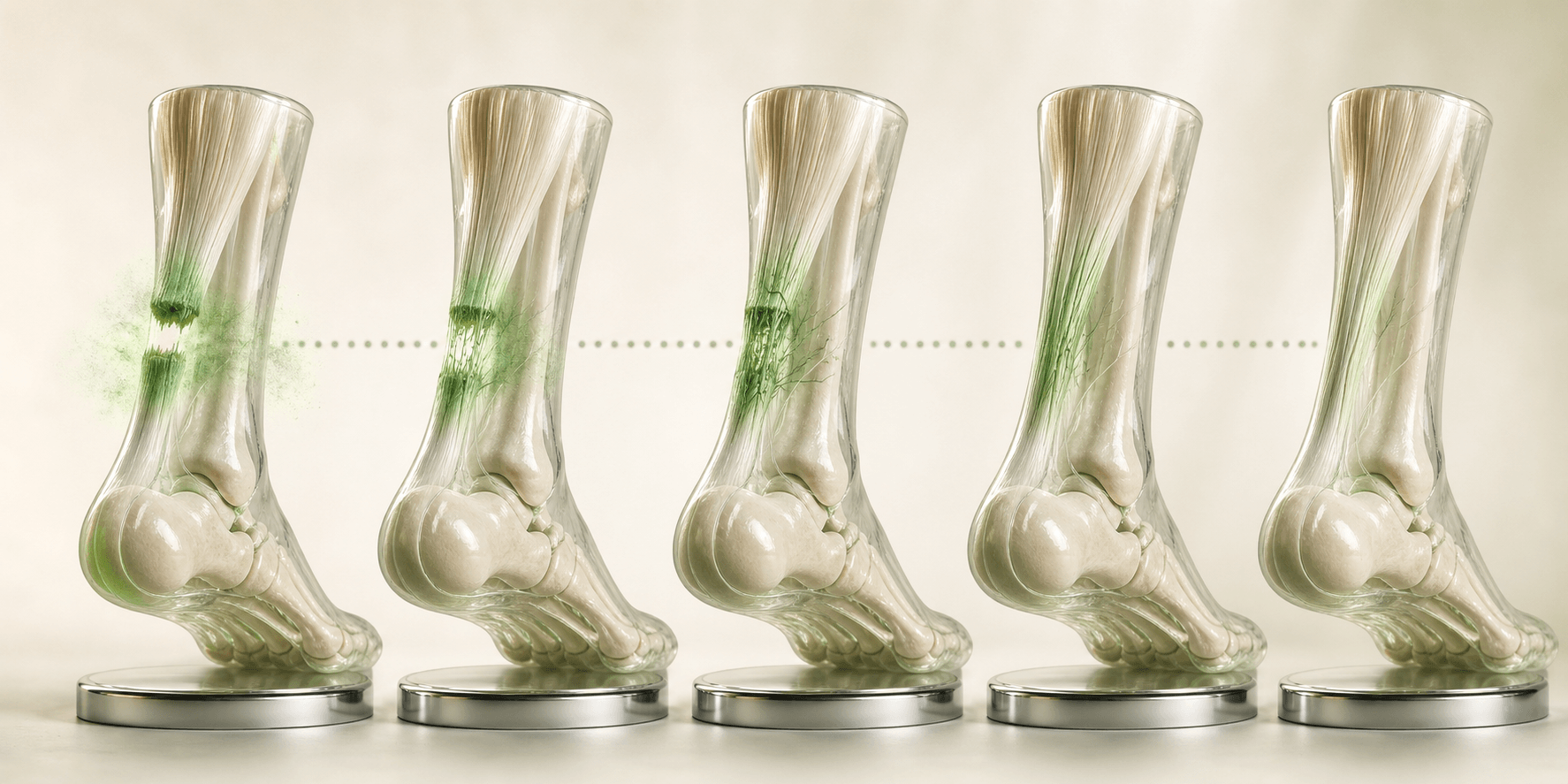
BPC-157's closest tissue evidence comes from surgically injured rats. An Achilles transection study measured functional index, failure load, elasticity, fibroblasts, collagen, and defect dimensions over 14 days; a medial-collateral-ligament study tracked functional, biomechanical, macroscopic, and histologic outcomes across 90 days.
The small published human pilot did not answer the at-home injection question. It followed two previously exposed healthy adults receiving intravenous infusions over three days and reported laboratory markers and adverse events. It did not test subcutaneous use, tendon function, pain, rehabilitation, or recovery time. Package size therefore changes supply and cost, not the strength of the evidence.
Which option wins this comparison
Choose the vial that covers the prescribed course with the fewest avoidable refills at the lower verified cost per day. The 10 mg option wins only when its concentration, beyond-use date, and prescribed schedule allow the extra quantity to be used safely. The 5 mg option wins when it covers the course without unused remainder or a premature expiration.
An at-home package also has to win on execution: readable directions, matching syringe markings, included supplies, stable shipping, and a workable disposal plan. A lower sticker price loses if the package creates an extra shipment or omits essential supplies.
Strength, concentration, and dose are different facts
Read four numbers separately: total active in the vial, concentration per milliliter, prescribed amount per use, and frequency. Days of supply follows from those facts; it cannot be read from “5 mg” or “10 mg” alone. Never convert a competitor's schedule to a new vial by eye.
The pharmacy label outranks forum dose charts. If the written amount and syringe markings do not reconcile, stop before injecting and ask the dispensing pharmacy to walk through the exact volume. Do not double after a missed dose or increase the volume because a larger vial is available.
What the routine changes in real life
A BPC-157 injection routine succeeds or fails at the handling steps: clean preparation, the correct syringe, site rotation, sharps disposal, and enough lead time for refills. Count how many injections and shipments the prescribed course actually requires. That is more informative than calling one package “convenient.”
Travel adds a second test. The vial needs its original labeled container, temperature protection, and a plan for syringes and used sharps. A package that works at home may be the wrong size if its beyond-use date or travel requirements conflict with the prescribed course.
Storage, shipping, and travel
Use the storage range and after-opening instructions printed for the finished BPC-157 vial. Do not borrow a refrigerator rule from another peptide or assume a larger vial remains usable longer. Keep the lot, beyond-use date, and label with the vial, and do not freeze it or place it directly against an ice pack.
After a warm shipment, accidental freezing, broken seal, crack, leak, cloudiness, particles, or color change, hold the dose and contact the dispensing pharmacy. The correct answer depends on the actual formulation and excursion, not a generic peptide-storage chart.
Side effects and urgent symptoms
For an at-home BPC-157 injection, immediate practical risks include pain, bruising, bleeding, contamination, irritation, and infection at the injection site. A hot expanding area, drainage, red streaking, fever, or severe pain needs prompt attention. Trouble breathing, facial or throat swelling, fainting, or chest pain needs urgent help.
Human systemic safety evidence remains thin. A three-day intravenous report in two previously exposed adults cannot characterize a longer subcutaneous course or settle liver, kidney, interaction, pregnancy, immune, or cancer-related questions. Those belong in the prescriber review before the first vial is opened.
Price, supply, and refills
Compare total course cost, not vial price. Put package price, concentration, prescribed frequency, verified days of supply, included syringes and swabs, shipping, and expected refill count in one row. Then calculate cost per prescribed day for the same course.
A 10 mg vial can be better value when the full amount is usable within its labeled life. It can also be false economy when the prescribed course ends first, the vial expires, or a refill policy forces the same shipment cadence. The final label and prescription decide the arithmetic.
Questions people ask before starting
Which peptide is best for tendon repair?
BPC-157 leads the peptide research comparison. Rat Achilles and ligament studies measured tissue function, biomechanics, collagen, histology, and defect size directly. That makes it the closest research match, while progressive loading and diagnosis remain the foundation of human tendon care. The vial-size decision still turns on concentration and prescribed supply, not the broad tissue ranking.
How can I speed up tendon healing?
Start with an accurate diagnosis, then use progressive loading, adequate recovery time, sleep, nutrition, and return-to-activity milestones. BPC-157 has animal tendon findings, but no human trial has established that it shortens tendon-healing time. The at-home package should be judged by whether its supply fits the prescribed course and review date.
Is BPC-157 hard on your liver?
There is not enough human evidence to characterize liver or kidney risk. A three-day intravenous pilot in two previously exposed adults found no measured liver or kidney biomarker change, but two people and three days cannot establish safety for a subcutaneous course. Liver or kidney safety cannot be used as a tie-breaker. A larger vial does not provide enough human exposure data to settle organ risk.
What should you not mix with BPC-157?
Do not mix BPC-157 with another medication in the same syringe or vial unless the dispensing label explicitly instructs it. The prescriber needs the complete medication and supplement list because combination safety and interactions have not been adequately studied. Do not turn the comparison into an unstudied home-mixed stack. A finished one-vial formula is different from mixing separate products at home.
Is a 10 mg BPC-157 vial twice as strong as a 5 mg vial?
No. It contains twice the total active when the labels describe the same substance, but “stronger” would require a change in concentration, prescribed amount per dose, or measured effect. A 10 mg vial may simply last longer at the same dose. It may also use a different fill volume, so the syringe volume cannot be inferred from total milligrams. Compare the concentration line and prescription directions before making any conclusion.
How do I calculate days of supply from the vial label?
Start with total active, then divide by the prescribed active amount used per day—not by syringe units alone. Confirm how many milligrams or micrograms are delivered by the labeled injection volume at that concentration. The pharmacy should provide days of supply directly because beyond-use dates, priming loss, and package rules can change the simple arithmetic. If your calculation and the label disagree, stop and ask before injecting.
What should an at-home injection package include?
The package should make the written directions executable: the labeled vial, syringes that match the prescribed volume, alcohol pads, storage instructions, and a plan for sharps disposal. Also verify whether shipping, replacement after a temperature problem, and refill reminders are included. A vial without compatible supplies is not a complete routine, and a cheap package can become expensive after separate supply and shipping charges.
What if a larger vial expires before the course is finished?
The beyond-use date controls. Do not keep using a vial because liquid remains or because its sticker price looked like the better value. Ask the dispensing pharmacy whether the prescribed course fits the labeled life after opening and whether the refill should use a smaller package. Unusable remainder belongs in the cost comparison; it is one reason price per milligram can misrepresent actual value.
What a complete injection package looks like
The package should arrive as one coherent system. The vial label names the active, concentration, fill volume, lot, storage range, and beyond-use date. Syringes have enough graduation detail for the prescribed volume; alcohol pads and written preparation instructions are included or plainly listed as separate purchases. The patient also knows whether the vial is ready to use or requires pharmacy-directed preparation, where sharps will be discarded, what to do after a dropped or damaged vial, and how early a refill must be requested. Shipping materials should protect the stated temperature range without placing the vial directly against frozen gel. A product page that shows only vial milligrams and price leaves the most important home-use questions unanswered.
Syringe markings are volume, not peptide units
An insulin syringe may label one hundred markings across one milliliter, but those marks do not represent a universal amount of BPC-157. The active delivered at a mark depends entirely on the vial's milligrams-per-milliliter concentration. Barrel capacity and graduation spacing also affect how precisely a small prescribed volume can be read. Use only the syringe type specified with the prescription, keep needle and barrel packaging intact until use, and never copy another patient's conversion chart. The pharmacy directions should state the volume and corresponding active amount without requiring guesswork.
Supplies should match the prescribed scale
A package for very small volumes needs markings fine enough to distinguish the prescribed line, a needle appropriate to the instructed route, intact single-use packaging, and enough units for the whole supply period. Swabs, gauze if advised, and a closable puncture-resistant disposal container complete the workflow. Check whether extras cover a dropped or contaminated syringe without encouraging reuse. Supply count belongs beside days of medication; a vial that outlasts its compatible syringes leaves an incomplete course.
Bottom line
BPC-157 brings the strongest peptide research match for tendon and ligament recovery. A complete package adds the practical proof: matching supplies, readable directions, exact storage, safe disposal, and a refill rhythm that keeps the course intact.
Keep reading
- BPC-157 Injection Labels: Strength, Concentration, and Supply
- TB-500 Injection Labels: Identity, Strength, and Supply
- How to Compare Peptide Vial Sizes Without Guessing the Dose