
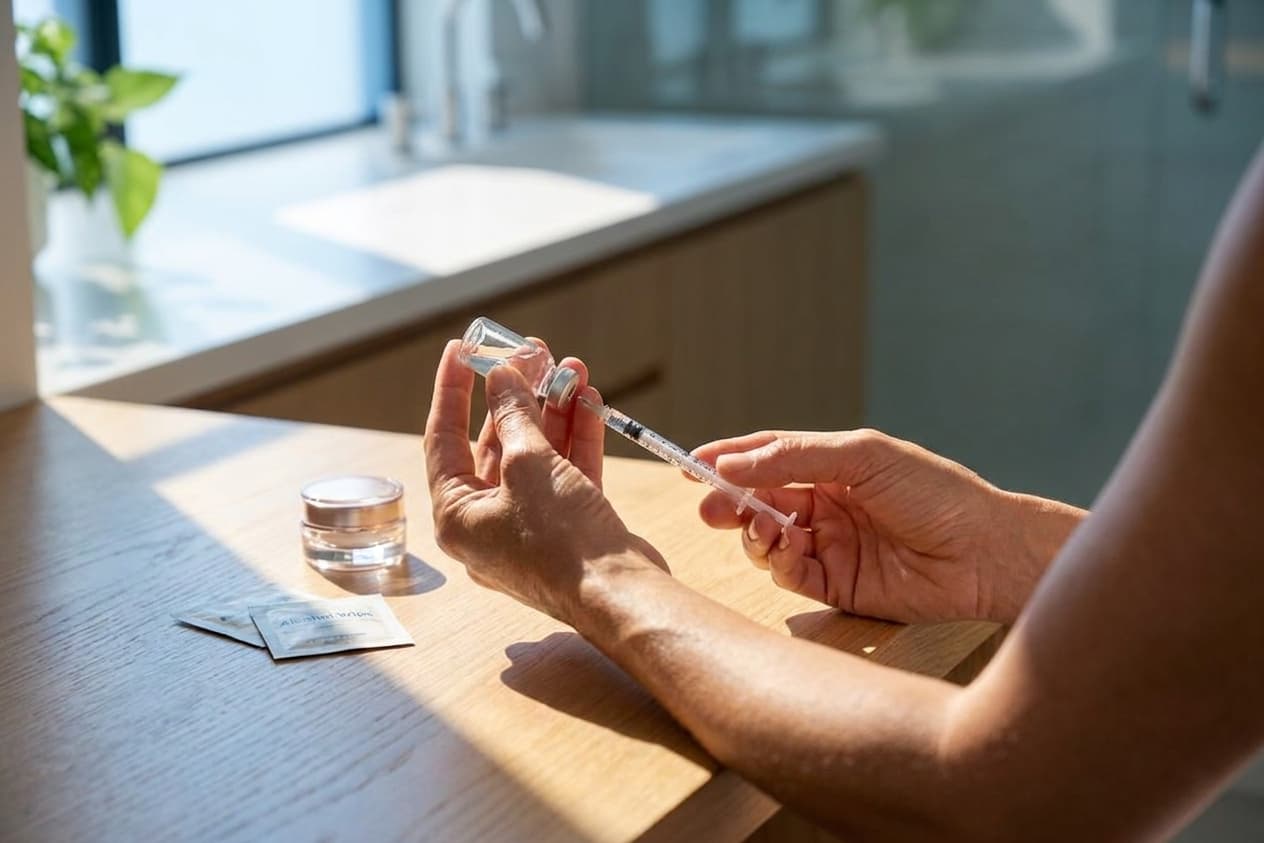

Self-injecting peptide therapy at home takes about five minutes once you know the steps, and getting the technique right protects both the dose and the injection site.
- Subcutaneous injection is the standard route for peptide therapy like BPC-157, sermorelin, and ipamorelin/CJC-1295 in 2026.
- A 29-31 gauge insulin syringe drawn to the exact prescribed mL mark is the single biggest factor in dosing accuracy.
- Rotate injection sites by at least 2 inches and hold the pinch for 5-10 seconds to cut bruising and lumps.
- Rebody Health prescribes and ships peptide therapy with instructions specific to your compound and dose, follow those over generic guides when they conflict.
Why this matters
Peptides like BPC-157, sermorelin, and thymosin alpha-1 are dosed in micrograms or small milliliter fractions, not the round numbers you get with an oral prescription. A syringe error of even 0.05 mL can mean a 20% dose swing on a low-volume peptide.
Most peptide therapy prescribed through telehealth in 2026 ships as lyophilized (freeze-dried) powder that you reconstitute with bacteriostatic water, or as a pre-mixed vial ready to draw. Either way, the injection technique is the same: subcutaneous, small gauge needle, rotated sites. Get that part wrong and you get bruising, inconsistent absorption, or a wasted dose.
What you'll need
- Prescribed peptide vial (reconstituted or pre-mixed), stored per the label, most peptides need refrigeration at 36-46 degrees F once mixed
- Insulin syringes, 29-31 gauge, sized to your dose (0.3 mL or 0.5 mL barrels cover most peptide therapy doses)
- Alcohol prep pads, at least 2 per injection
- A sharps disposal container (or a rigid, labeled container if your clinic didn't ship one)
- Clean, dry hands and a flat, well-lit surface
- Your dosing schedule from your prescriber, write down the mL mark, not just the mcg dose
If your protocol includes a growth hormone secretagogue like sermorelin injections, your kit will include reconstitution instructions specific to that vial concentration, follow those exactly, since sermorelin vials vary in mcg-per-mL between batches.
The steps
1. Prep your workspace and wash your hands
Lay out the vial, syringe, alcohol pads, and sharps container on a clean surface before you touch anything. Wash your hands for 20 seconds with soap and water, skip the hand sanitizer as your only prep step, since it doesn't remove debris the way soap does. Common mistake: drawing the dose before wiping the vial top, which introduces contamination risk on every reuse.
2. Wipe the vial top and check the liquid
Swab the rubber stopper with an alcohol pad and let it air-dry for 5 seconds. Hold the vial to the light and confirm the liquid is clear (or the powder is fully dissolved with no visible clumps), cloudiness or particulate means don't inject, contact your prescriber first.
3. Draw air, then draw your dose
Pull back the plunger to match your prescribed mL amount, insert the needle into the vial, and push that air in. This equalizes pressure so the vial doesn't vacuum-lock your draw. Invert the vial, draw slightly past your target line, then tap the syringe and push out any air bubbles until the liquid sits exactly at your dose mark. Common mistake: drawing to the mL line while ignoring air bubbles, which under-doses you by whatever bubble volume is trapped.
4. Pick your injection site and rotate
Common subcutaneous sites are the abdomen (2 inches from the navel), the outer thigh, or the back of the upper arm if someone else is injecting you. Rotate at least 2 inches from your last injection site each time, same-spot injecting over weeks is the top cause of lumps (lipohypertrophy) and slower absorption. Keep a simple rotation log: date, site, dose.
5. Clean the skin and pinch
Wipe the chosen site with a fresh alcohol pad in a circular motion and let it dry fully. Injecting through wet alcohol stings and can irritate the skin. Pinch a 1-inch fold of skin between your thumb and forefinger; this lifts the subcutaneous fat layer away from muscle, which is where you want the peptide to land.
6. Inject at the right angle and depth
Insert the needle at a 45-90 degree angle depending on your body fat and needle length (thinner frames and 4mm needles usually mean 90 degrees is fine; leaner sites may need 45). Push the plunger slowly over 5-10 seconds, rushing the push is what causes the stinging and small bruises people blame on the peptide itself. Hold the pinch through the entire injection, then release once the needle is out.
7. Withdraw, dispose, and log the dose
Pull the needle straight out at the same angle you inserted it, press a clean cotton ball or pad on the site for a few seconds if there's any bleeding, and drop the used syringe straight into your sharps container, never recap a used needle. Log the date, site, and dose immediately; peptide protocols like BPC-157 for injury recovery and healing or growth hormone peptides often run daily, and a missed log entry is how people accidentally double-dose or skip.
Troubleshooting
Small bubble of blood at the injection site. Normal and not a sign you did anything wrong, press with a clean pad for 10-15 seconds. If it happens every time, you may be hitting a small capillary; shift your rotation pattern slightly.
Stinging that lasts more than a minute. Usually means the alcohol hadn't fully dried before the needle went in, or the injection was pushed too fast. Let the site air-dry a full 5-10 seconds next time and slow the push to a 10-second count.
A hard lump forms under the skin after a few weeks. This is lipohypertrophy from injecting the same spot repeatedly. Widen your rotation to a 2-3 inch grid across the abdomen or thigh and give the lump area a few weeks off.
The syringe won't draw smoothly from the vial. Air pressure is usually the cause, make sure you injected enough air into the vial before drawing, and try inverting the vial fully so the needle tip stays under the liquid line.
You're not sure the reconstituted peptide is still good. Most reconstituted peptides hold potency for 2-4 weeks refrigerated, but timelines vary by compound, check the specific handling notes for your prescription rather than guessing, and when in doubt, ask your prescriber before injecting a vial you're unsure about.
Dose feels like it's not working after several weeks. This is common with peptides like sermorelin or ipamorelin/CJC-1295 where effects build gradually, see how to tell if sermorelin nasal spray is working for the markers to track before assuming the dose is off.
Get your peptide therapy prescribed
Licensed clinician review, clear pricing, ships if prescribed.
Tools and resources
- Insulin syringes (29-31 gauge) sized to your prescribed dose
- Sharps container, or a rigid labeled container as a substitute
- A simple rotation log, paper or phone note, date/site/dose
- Refrigerated storage at the temperature listed on your peptide's label
- Your prescriber's dosing sheet for the specific peptide, dosing for ipamorelin and CJC-1295 for anti-aging and lean muscle differs from single-peptide protocols, so don't cross-reference doses between compounds
What to do next
Once injection technique feels routine, the next thing to get right is matching the peptide to the goal: recovery, energy, muscle, or longevity protocols use different compounds and different injection frequencies. Read best peptide therapy online for anti-aging to see how Rebody Health structures peptide therapy programs by goal before you adjust your own protocol.
FAQ
What's the best needle size for self-injecting peptides?
A 29-31 gauge insulin syringe is standard for subcutaneous peptide therapy in 2026. Smaller gauge (higher number) means a thinner needle and less discomfort at the injection site.
Is subcutaneous or intramuscular injection better for peptides?
Subcutaneous is the standard route for peptide therapy like BPC-157, sermorelin, and ipamorelin. Intramuscular injection is used for a small number of specific protocols and only when a prescriber specifies it.
How much does peptide therapy cost with prescription and delivery?
Pricing varies by peptide and dose, so check current pricing directly through your telehealth provider rather than assuming a flat rate. Rebody Health lists clear pricing before you commit to a protocol.
Can I reuse a syringe for multiple peptide doses?
No, use one syringe per injection and dispose of it in a sharps container immediately after. Reusing needles dulls the tip, increases infection risk, and makes dosing less accurate.
How do I know if I'm injecting peptides correctly?
Correct technique means minimal bruising, no lumps forming at rotation sites, and consistent absorption reflected in how you feel week to week. Persistent bruising or lumps mean your angle, depth, or rotation pattern needs adjusting.
Where on the body should I inject peptides?
The abdomen (2 inches from the navel), outer thigh, and back of the upper arm are the standard subcutaneous injection sites for peptide therapy. Rotate between sites by at least 2 inches each time.
How long does reconstituted peptide last in the fridge?
Most reconstituted peptides hold potency for 2-4 weeks refrigerated, but exact timelines depend on the specific compound. Check the handling instructions that shipped with your prescription rather than assuming a universal timeline.
Do I need to see a doctor before starting peptide therapy?
Yes, peptide therapy requires a prescription and clinician review in the US, which is why telehealth platforms like Rebody Health build licensed review into the ordering process. Self-sourcing peptides without a prescription skips safety screening and dosing guidance.
One last thing
The rotation log is the step people skip first and regret. Without it, you can't tell whether a lump or a bruise came from injecting the same spot twice in one week or from something worth flagging to your prescriber. A 30-second note after every injection is the cheapest insurance in the entire routine.