
Subcutaneous injection
Coming soonComing soon
Prescription strengthLabeled vial
Concentration, syringe units, days of supply, storage, and refill timing will be listed before ordering.
In animal research, BPC-157 has improved measures of tendon and ligament healing and shown anti-inflammatory activity across muscle, wound, arthritis, and gastrointestinal injury models. Human studies are still too limited to know how reliably those results carry over.
Be first to know when orders open.
Product updates and occasional emails. Unsubscribe anytime.
Every prescription should show the formulation, concentration, syringe units, days of supply, storage, refill timing, pharmacy, and price.
Concentration, syringe units, days of supply, storage, and refill timing will be listed before ordering.
The dispensing pharmacy, formulation, source documentation, storage, and beyond-use date will accompany the prescription.
Animal and laboratory studies have reported reduced inflammatory activity across muscle, wound, and gastrointestinal injury models.
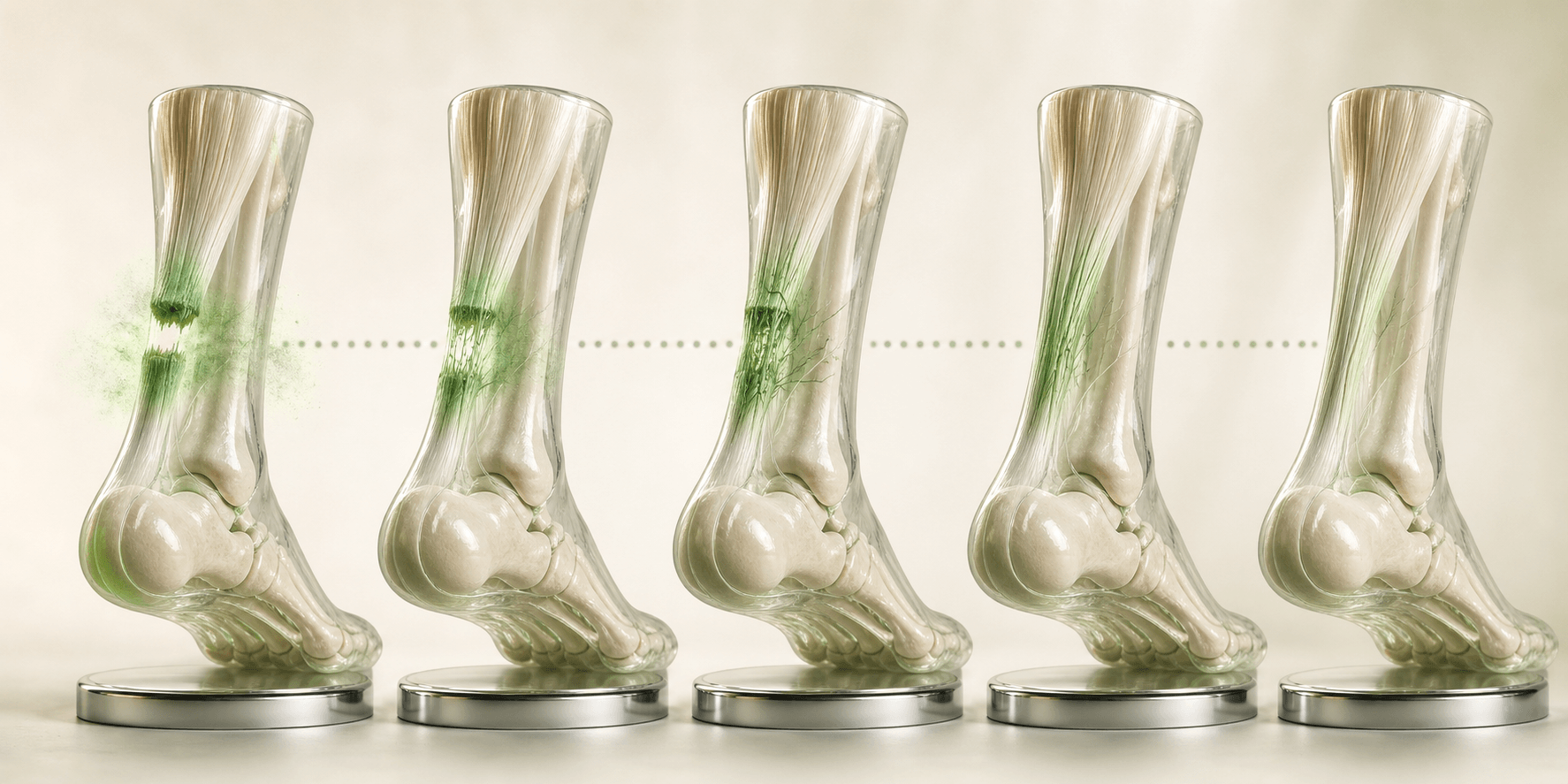
Rat studies reported better functional, biomechanical, microscopic, and tissue-healing measures after Achilles tendon and ligament injury.
BPC-157 has also been studied across muscle, wound, blood-vessel, and gastrointestinal repair models—one reason the recovery interest is so broad.
In rat tendon, ligament, and myotendinous injury models, BPC-157 was associated with reduced inflammatory activity, new vascular growth, more organized collagen, and better functional and biomechanical healing measures. Human recovery trials have yet to establish the same effects.
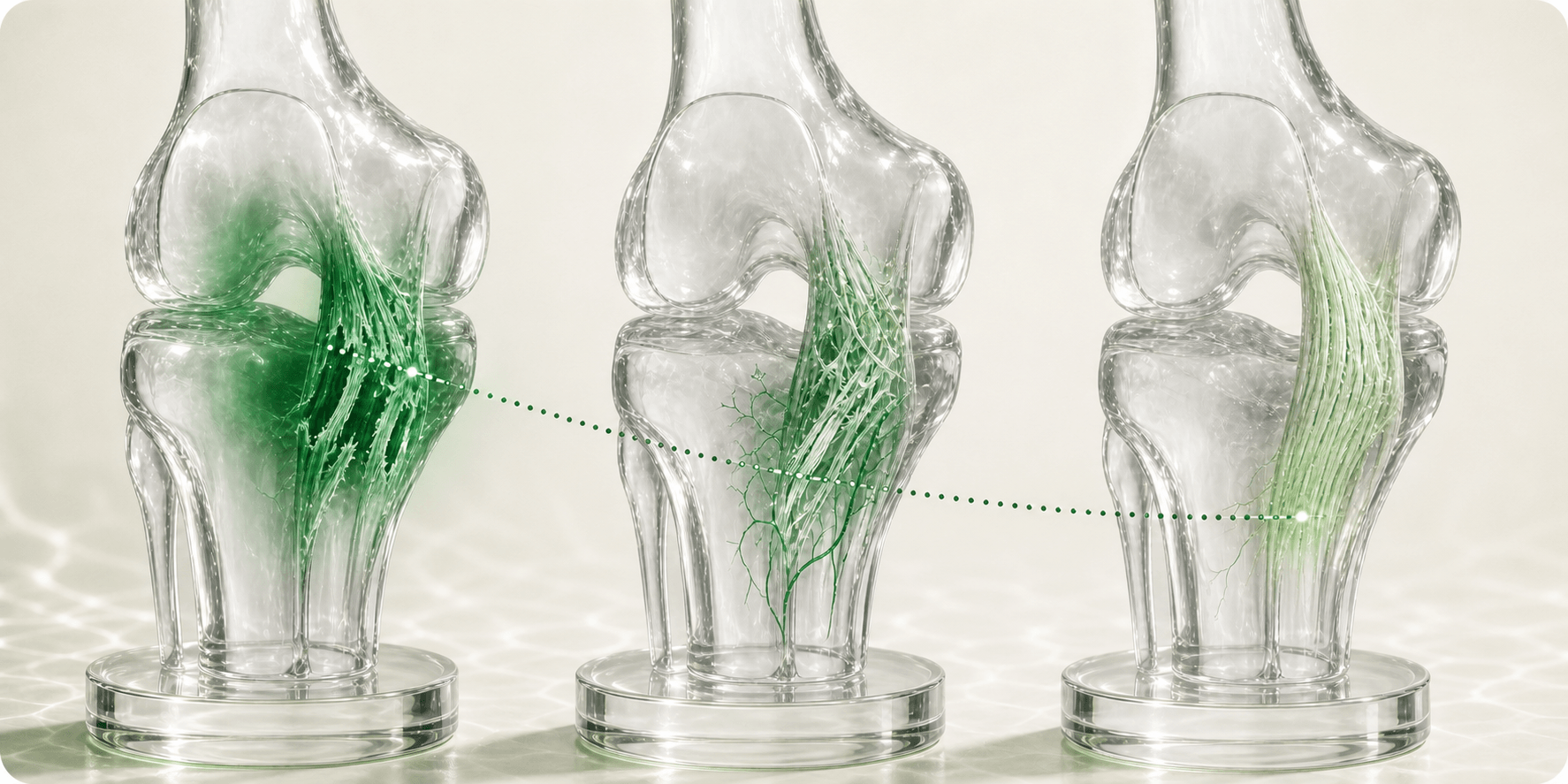
Animal and laboratory studies have reported anti-inflammatory activity and explored tendon, ligament, muscle, wound, blood-vessel, and gastrointestinal repair. That breadth explains the interest.
Current human evidence is too limited to establish faster tendon healing, less pain, or a standard recovery result from a compounded subcutaneous BPC-157 product.
Free base and acetate are different substances. The label should identify the formulation, concentration, storage, and beyond-use date for the vial dispensed.
These numbers describe the molecule and the design of published animal studies.
BPC-157 is a pentadecapeptide: a short chain with the published sequence below and a molecular weight of 1,419.
GEPPPGKPADDAGLV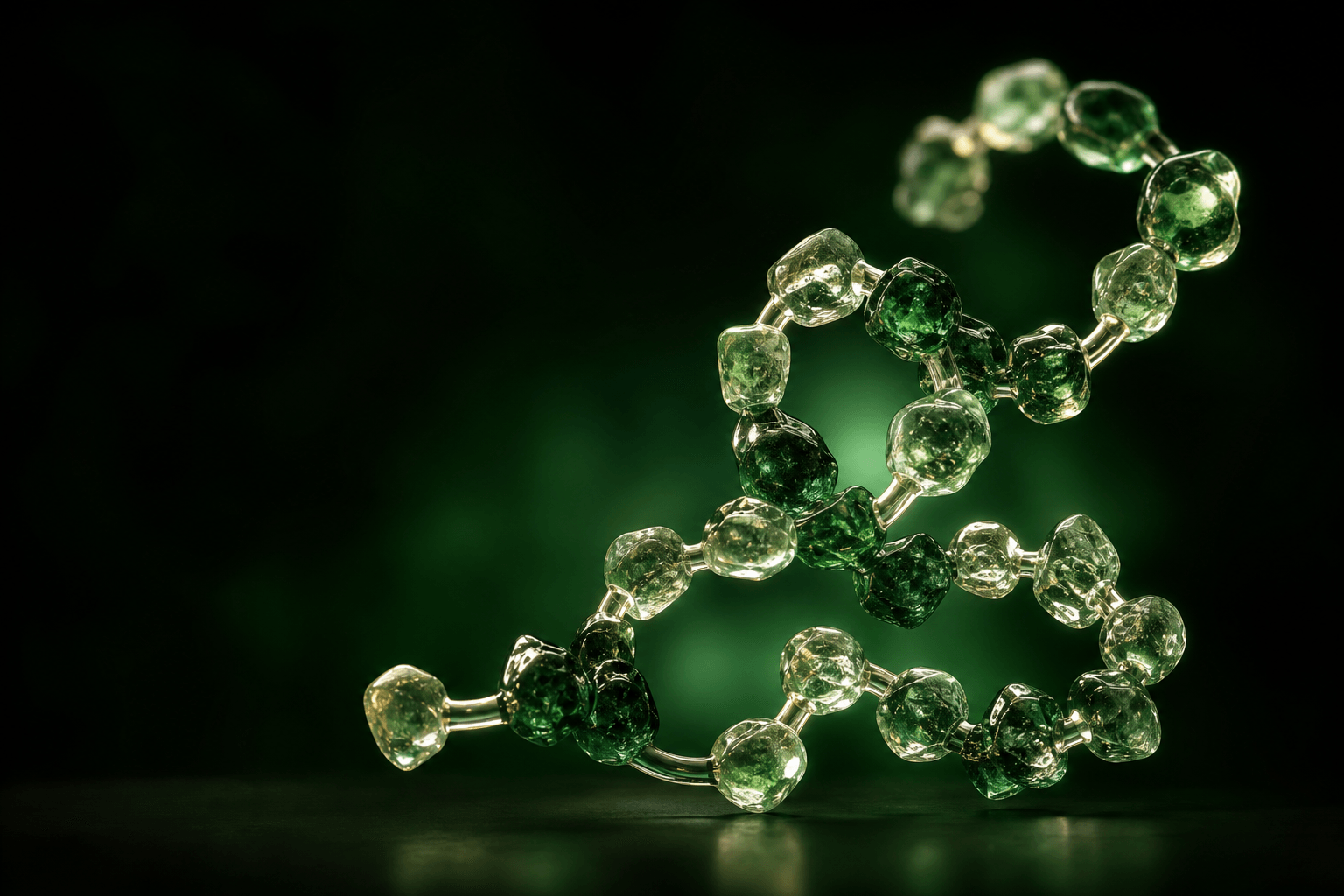
A rat Achilles-tendon study assessed function daily and examined biomechanics, microscopy, and visible tissue repair at five points.
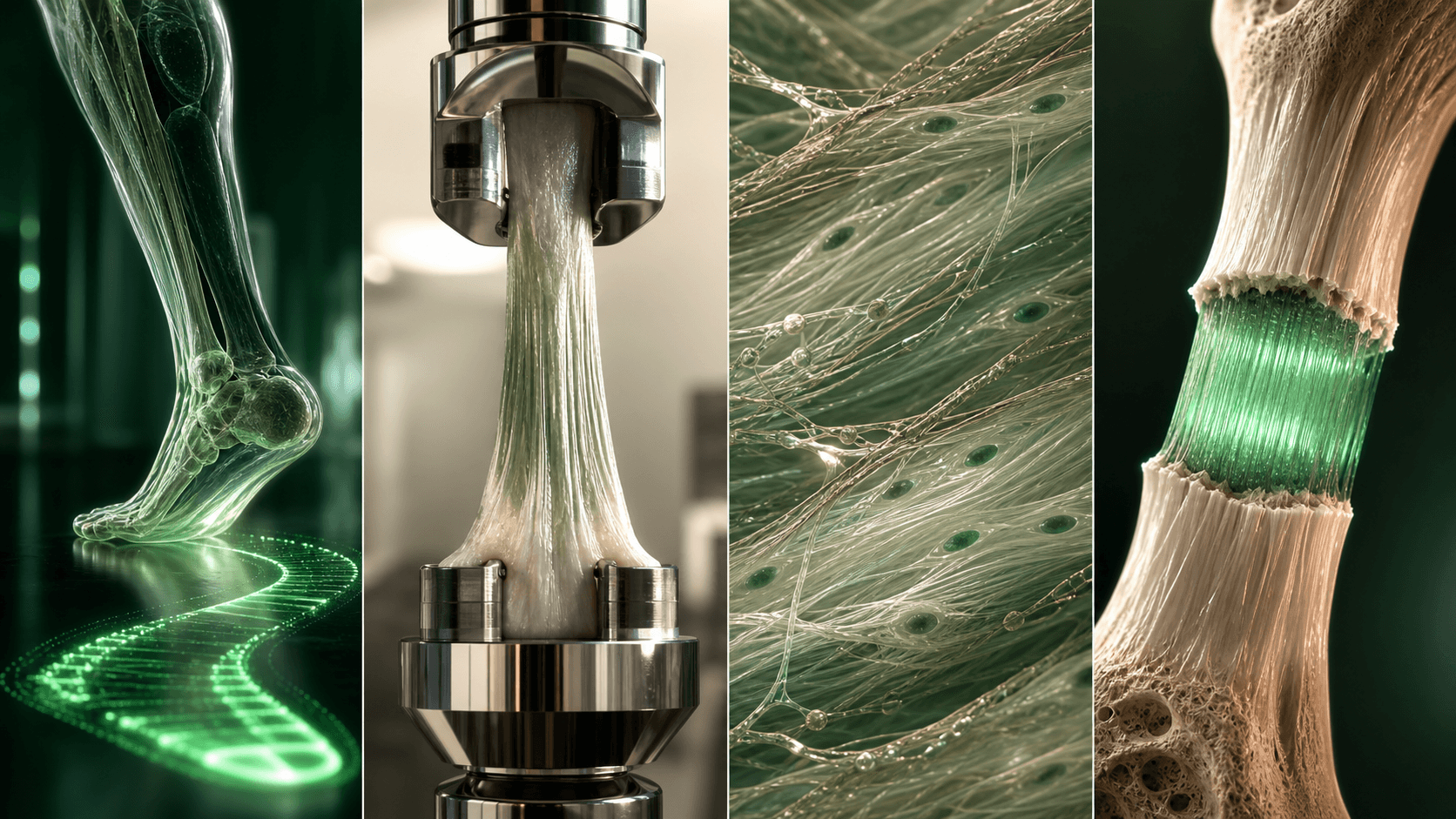
In a rat medial-collateral-ligament model, researchers followed healing through 90 days and reported improvement across four domains.
Preclinical evidence only. Study models, routes, doses, and endpoints do not establish a predictable benefit for a compounded human prescription.
See the exact BPC-157 substance, concentration, vial size, storage requirements, and beyond-use date.
See the licensed U.S. compounding pharmacy filling the prescription and the states it serves.
Your label connects the vial concentration to syringe units, timing, quantity, missed-dose instructions, and refills.
Message the care team about injection irritation, travel, storage, missed doses, new symptoms, or refills.
Join the interest list for availability, price, pharmacy, strength, supply, and states served. A compounded BPC-157 product would not be FDA-approved.
See launch details