
Key Takeaways
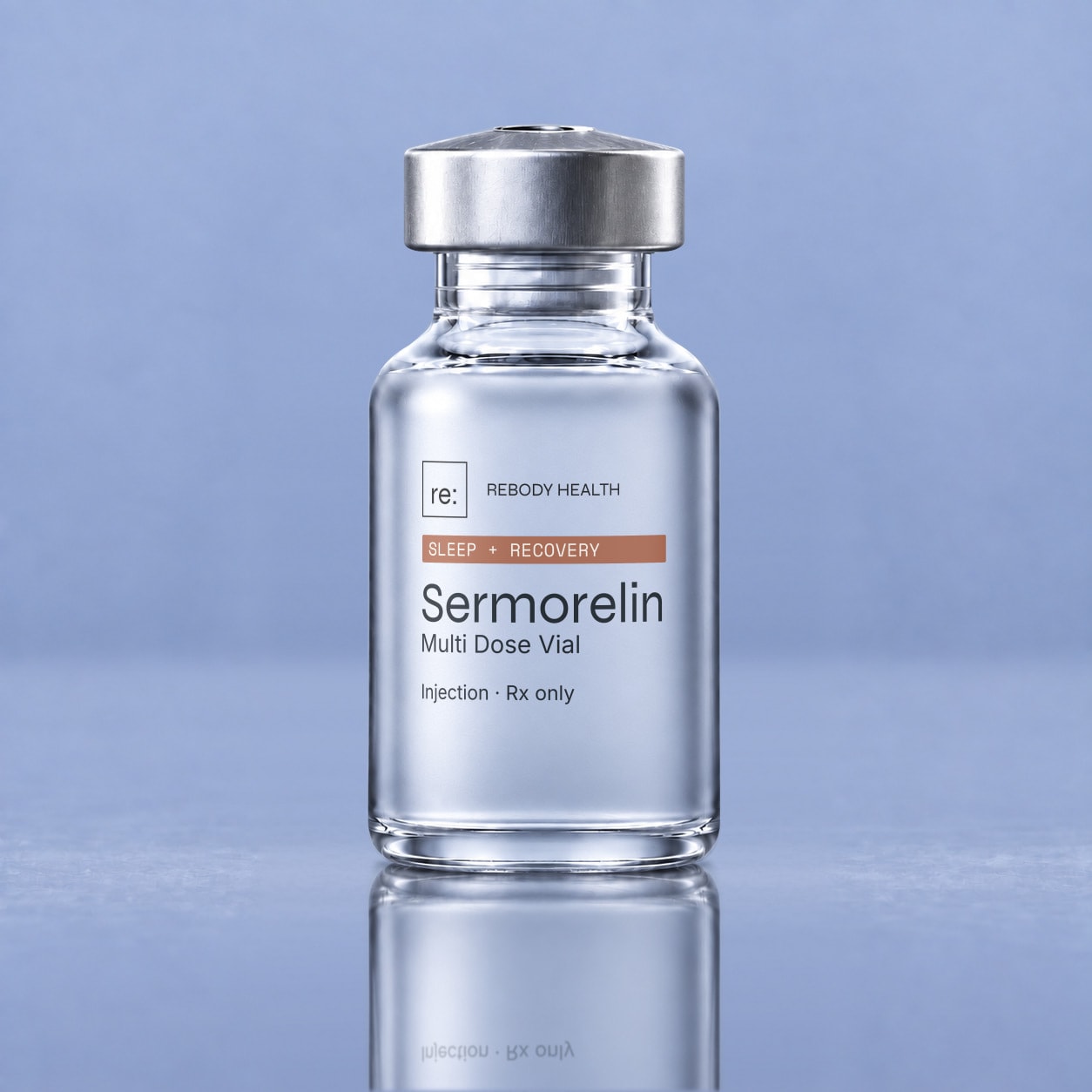
Sermorelin is a 29-amino-acid peptide that copies the active end of growth hormone-releasing hormone (GHRH) and signals the pituitary to release growth hormone.
It isn't growth hormone, and it isn't a steroid. Your own pituitary does the releasing, and the body's normal brakes on growth hormone stay in place.
The FDA approved Sermorelin as Geref in 1990 and 1997 for use in children. The maker discontinued it in 2008, and the FDA later confirmed that wasn't for safety or effectiveness reasons.
All Sermorelin prescribed in the U.S. today is compounded, and compounded medications are not FDA-approved.
Sermorelin requires a prescription and comes as an injection, a nasal spray, or a sublingual troche.
This article is for informational purposes only and does not provide medical advice, diagnosis, or treatment. Consult a qualified healthcare professional about your health or before changing treatment. Do not delay medical care because of something you read here.
Sermorelin is a prescription peptide that mimics growth hormone-releasing hormone (GHRH), signaling your pituitary to release its own growth hormone instead of replacing it.
Growth hormone isn't released in a steady stream. It comes in pulses, and the largest one usually arrives early in the night. Sermorelin works one step upstream of that pulse, which is why it's prescribed under clinician supervision, with timing, monitoring, and expectations set before the first dose. Today, prescription Sermorelin is available in three methods: injection, nasal spray, and sublingual troche.
How Sermorelin Works in the Body
The signal: GHRH receptors on the pituitary
The Sermorelin peptide is a synthetic version of the first 29 amino acids of the body's own growth hormone-releasing hormone. That 29-amino-acid stretch is the biologically active portion of natural GHRH. When Sermorelin reaches the anterior pituitary, it binds to GHRH receptors on somatotroph cells. These are the cells responsible for producing and releasing growth hormone.
Receptor activation triggers a cascade of intracellular signals. Cyclic AMP levels rise inside the cell, which leads to growth hormone synthesis and release.
The check: feedback stays in place
Because Sermorelin works through the pituitary, the body's regulators still apply. Somatostatin, the hormone that puts the brakes on growth hormone release, still works normally, and rising IGF-1 (insulin-like growth factor 1, the main downstream marker of growth hormone activity) feeds back to slow release. Injected growth hormone skips this pituitary step entirely, which is the core difference between the two.
Is Sermorelin FDA approved?
Not today, though it once was. Sermorelin has a regulatory history, which is part of why clinicians take it more seriously than many newer peptides.
December 28, 1990: The FDA approved Geref (Sermorelin acetate) to test whether the pituitary could secrete growth hormone.
September 26, 1997: The FDA approved a second Geref product to treat idiopathic growth hormone deficiency in children with growth failure.
2008: The manufacturer, EMD Serono, discontinued both products.
June 18, 2009: The FDA withdrew approval of both applications at the company's request.
March 4, 2013: In a Federal Register determination, the FDA concluded that Geref was not withdrawn from sale for reasons of safety or effectiveness.
No brand-name Sermorelin is sold in the U.S. now. Every Sermorelin prescription is compounded, meaning a licensed pharmacy prepares it for an individual patient. Compounded medications require clinician review and, when clinically appropriate, a prescription. Compounded medications are not FDA-approved.
What the evidence shows
How Sermorelin works is well documented. What it does for healthy adults is not: the human studies are small, mostly in older adults, and used injections.
Sleep and recovery: plausible, not proven
Growth hormone is linked to deep sleep and plays a role in tissue repair and protein synthesis, so sleep and recovery are the most common reasons people ask about Sermorelin. Those outcomes haven't been established in controlled Sermorelin trials. A useful plan tracks them separately: time to fall asleep, night wakings, next-day energy, and soreness after comparable workouts, alongside IGF-1 if your clinician orders it.
Format matters too. The human studies used injected GHRH, so nasal and sublingual methods rest on a thinner evidence base. This Sermorelin method comparison breaks down each format side by side.
What to expect from Sermorelin
Sermorelin supports your body’s own growth hormone release. Knowing what that looks like in practice makes it easier to judge how it’s working for you.
- Longevity goals play out over months. No controlled trial shows Sermorelin slows aging in healthy adults, so progress is best tracked through sleep, recovery, and labs over time.
Sermorelin vs. HGH vs. anabolic steroids
Sermorelin is often confused with growth hormone and with steroids. Is Sermorelin a steroid? No. Sermorelin works through an entirely different mechanism, as the table shows.
| Feature | Sermorelin | Growth hormone (HGH) | Anabolic steroids |
|---|---|---|---|
| What it is | A 29-amino-acid GHRH peptide | The hormone itself, made by recombinant technology | Synthetic versions of testosterone or related hormones |
| Where it acts | GHRH receptors on the pituitary | Growth hormone receptors throughout the body | Androgen receptors in muscle and other tissues |
| Pituitary involvement | Your pituitary releases its own growth hormone | Bypasses the pituitary signal | Not part of the growth hormone axis |
| U.S. status | Compounded only, by prescription | FDA-approved brands for diagnosed deficiency | Schedule III controlled substances |
| WADA status for athletes | Prohibited at all times | Prohibited at all times | Prohibited at all times |
Anabolic steroids are synthetic versions of testosterone or related hormones. They act directly on androgen receptors. Sermorelin doesn't introduce testosterone or any testosterone-like compound. It signals the pituitary, and the effects run through the growth hormone axis instead.
Safety and side effects
Most of what's known about Sermorelin's side effects covers injections. Nasal and sublingual formats add their own route-specific effects.
Common reactions and warnings
The nasal spray can cause nasal irritation or a runny nose. The troche can cause mouth irritation or an unusual taste.
Who should avoid it or needs closer review?
Sermorelin isn't appropriate for everyone. A clinician should review your history first if any of these apply:
Active cancer, or a history of cancer, including hormone-sensitive tumors
Thyroid disease, pituitary conditions, or diabetes
Pregnancy or breastfeeding
Anyone under the age of 18
Thyroid, athletes, and urgent signs
Untreated hypothyroidism can blunt the response to Sermorelin, so thyroid function belongs in the workup. Tested athletes should know that the 2026 WADA Prohibited List names Sermorelin among growth hormone-releasing factors that are banned at all times.
Seek urgent care for trouble breathing, swelling of the face, lips, or tongue, widespread hives, chest pain, or fainting.
Where to get Sermorelin: What to look for in a provider
There's no brand-name Sermorelin to compare. The meaningful differences are in the clinician, the pharmacy, and the format. Getting started with Sermorelin requires a prescription. You can't get it over the counter, and research-chemical sites aren't a safe substitute.
What a legitimate prescription process looks like
Health review: You share your goals, history, medications, and any recent labs. IGF-1 is often checked as a baseline.
Clinician decision: A licensed provider decides whether Sermorelin fits and, if so, sets the format, strength, and schedule.
Pharmacy preparation: A licensed U.S. 503A compounding pharmacy prepares the medication against your individual prescription.
Delivery and storage: It ships with storage directions, often cold-packed.
Follow-up: Your clinician reviews symptoms, side effects, and labs over time and adjusts the plan.
Compounded Sermorelin vs. research peptides
This is different from research-grade peptides sold online without prescriptions. Those products may lack quality controls, accurate labeling, or verification of purity. They're labeled "not for human use" for a reason: no clinician screens you, and no pharmacy stands behind the contents.
A quick checklist for any provider:
A licensed clinician reviews your history before anything is prescribed.
A licensed U.S. compounding pharmacy prepares the medication with your name on the label.
Pricing shows what's included, such as the clinician review, shipping, and follow-up.
You can message your care team about dosing, side effects, or refills.
Sermorelin formats at Rebody
Rebody Health pairs you with a U.S. licensed provider and fills prescriptions via a licensed U.S. 503A compounding pharmacy. Rebody's care is clinician-led and covers three formats, two of them needle-free.
There's no separate consult fee: the clinician review is included in the price. Shipping is free and discreet, FSA and HSA cards are accepted, and if a provider declines your prescription, you get a full refund. The clinician sets dose and timing. Current pricing is listed on each product page.
Is Sermorelin right for you?
Sermorelin is a GHRH analog with a real FDA history, a well-understood mechanism, and a small but genuine body of human research. It signals the pituitary instead of replacing growth hormone, which keeps the body's own controls in the loop.
The strongest way to start is clinician-led, with a licensed provider who reviews your history and labs, a licensed U.S. pharmacy that prepares your prescription, and follow-up that tracks your sleep, recovery nad IGF-1 over time.
Schedule a consult with a Rebody clinician to see whether Sermorelin fits your goals, and which format you'll actually keep using.
Frequently Asked Questions (FAQs):
What are the benefits of Sermorelin therapy?
Sermorelin signals the pituitary to release the body's own growth hormone, and small trials of injected GHRH analogs raised growth hormone markers in older adults. People most often use it for sleep and recovery goals, but those benefits haven't been established in controlled trials, so results should be tracked with a clinician.
Can Sermorelin affect the thyroid?
Yes, in two ways. Untreated hypothyroidism can blunt the response to Sermorelin, and hypothyroidism was reported in 6.5% of patients in the original Geref clinical studies. Clinicians usually check thyroid function before and during treatment.
Who should not use Sermorelin?
Sermorelin is generally avoided in people with active cancer or a history of hormone-sensitive tumors, during pregnancy or breastfeeding, and in anyone allergic to the formulation. People with thyroid, pituitary, or blood sugar conditions need a clinician's review before starting.
Is Sermorelin the same as HGH?
No. HGH is growth hormone itself, given from outside the body. Sermorelin is a peptide that signals the pituitary to release its own growth hormone, so the body's normal feedback controls still apply.